


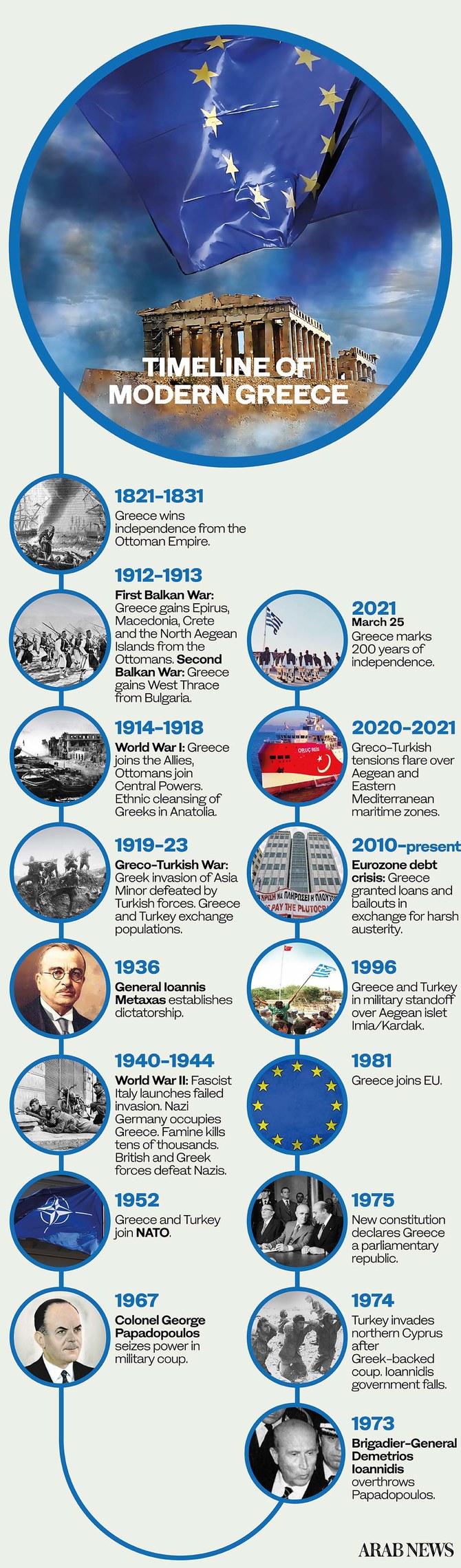

WASHINGTON, D.C.: It is difficult, if not impossible, to understand the revolution that led to Greek independence without considering the diaspora’s role. Some aspects of its influence are straightforward and direct, reflecting its active involvement in the Greek cause.
The actual call to arms was propagated outside Greek territory by Alexandros Ypsilantis in February 1821. He traveled from the Russian Empire to Ottoman territory, specifically Moldova, where he called for self-determination. The revolution was formally launched in Iasi in eastern Romania on Feb. 24, 1821.
It is noteworthy that Ypsilantis was head of the Friendly Society, a secret organization set up by Greeks abroad with the aim of achieving self-determination. On the occasion of the 200th anniversary of the Greek Revolution, and in recognition of the diaspora’s contribution to Greece, a proposal has been tabled to celebrate Feb. 24 as Diaspora Day.
Individual acts of rebellion and representation aside, there are deeper reasons that make the diaspora a protagonist of the Greek Revolution. Over time, elements of the diaspora got exposed, and actively contributed, to the spread of new, radical ideas inspired by the American and French revolutions.
Their prominent economic status in the Ottoman Empire, their trading skills and their advanced educational levels became a rallying cry in support of the Greek cause, both for their countrymen and the high diplomatic courts of foreign powers, especially the likes of Russia and the UK.
But how did the diaspora come to play such a central role in the revolution, and what factors account for its prominence?
By the 18th century, Greeks residing in the Phanar (Fener) district of Istanbul, the spiritual center of the Orthodox Church, had acquired powerful positions in the Ottoman administration. Well-educated and having adopted a cosmopolitan approach, the Phanariots were able to acquire administrative positions in the empire, particularly in today’s Romania and Moldova.
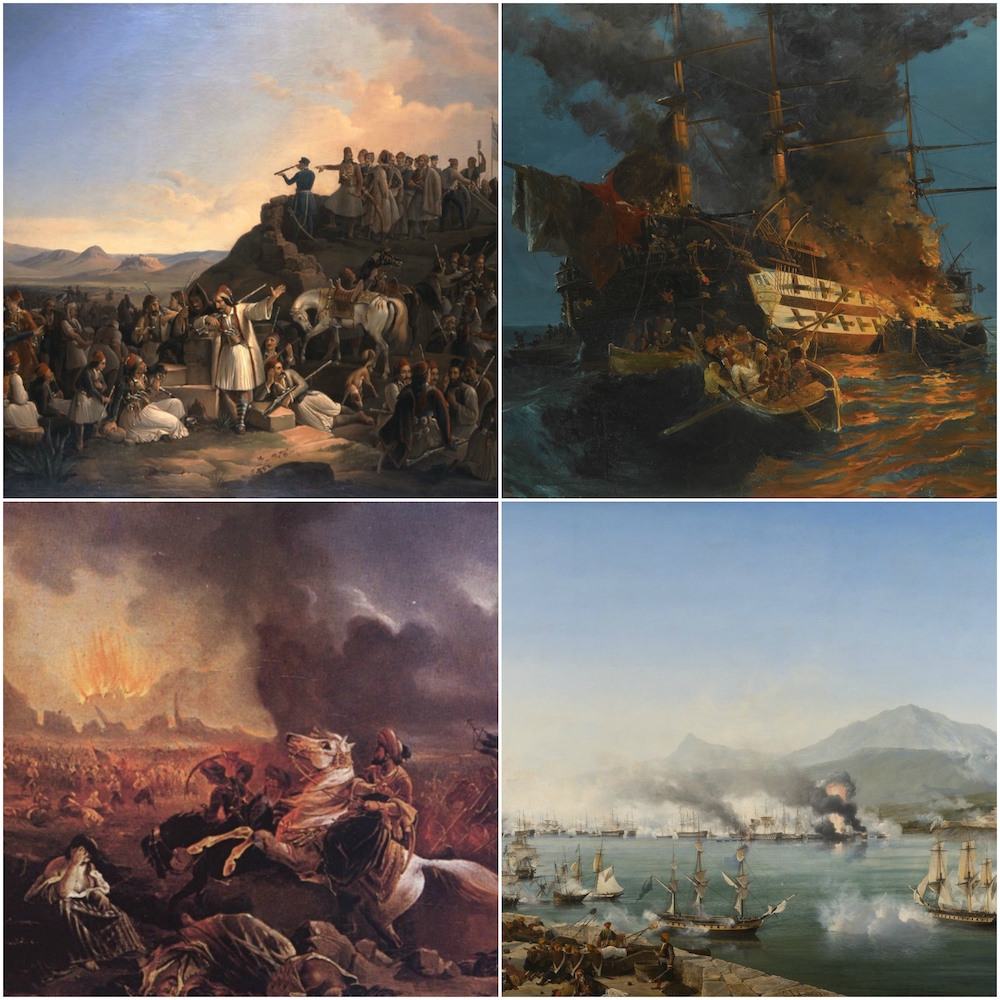
This gave them access to power, which they combined with the tactics of the great powers to undermine the Ottomans and acquire self-determination. A concrete example is the 1770 uprising in Peloponnesus, which the sultan was eventually able to crush.
Known in Greek historiography as the Orlov Affair, this was an attempt to achieve self-determination under the leadership of the Orlov brothers, highly ranked Russian navy officers who sought to implement the Russian plan of revolt against the Ottomans.
Although unsuccessful, the revolt underlined the faith that many Greeks had in Russia as a potential liberator, not least due to the strong religious bond of the two sides and their mutual desire, at least during certain time periods, to weaken the sultan.
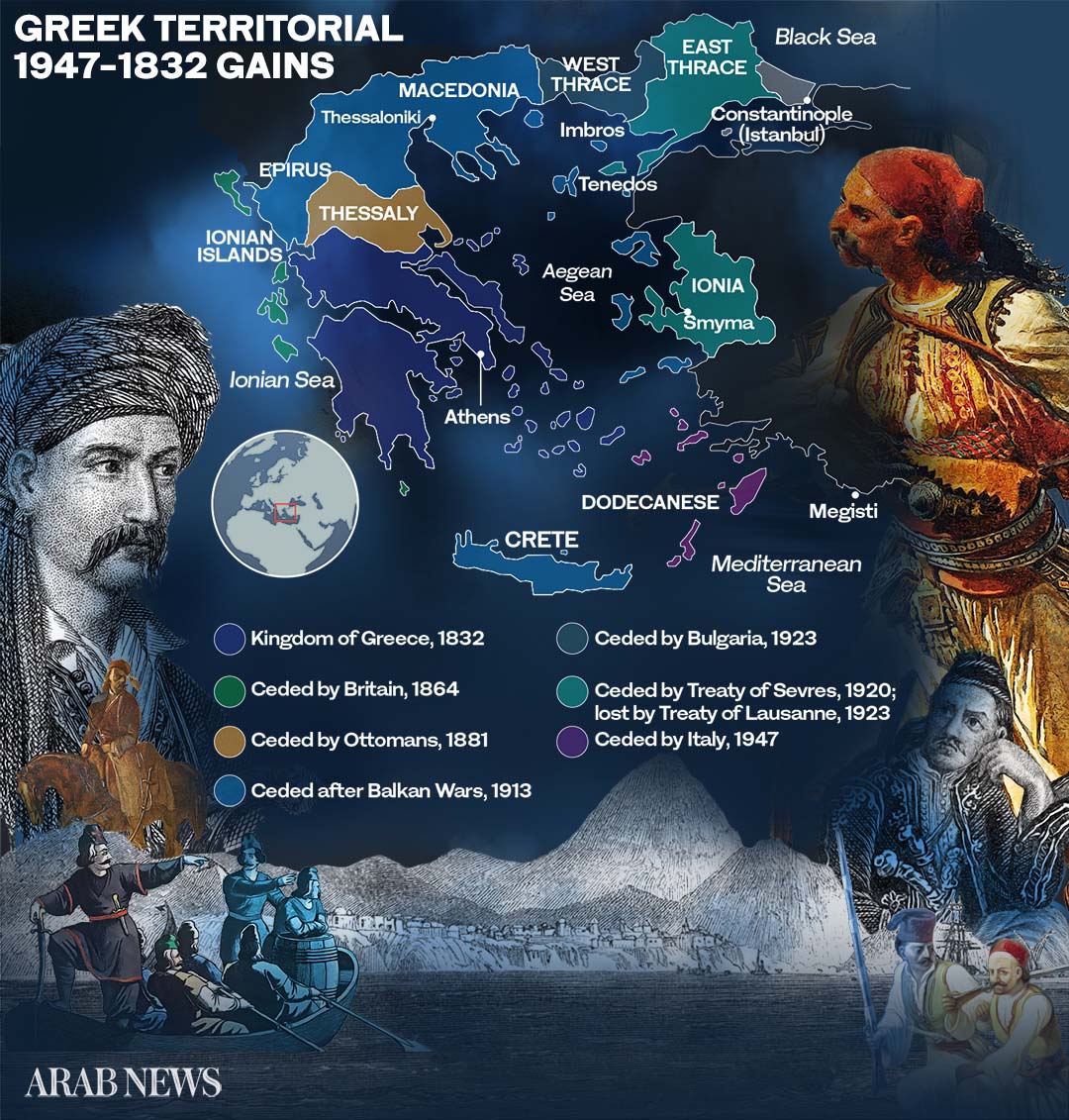
Important as the Christian Orthodox faith was in bringing together Christians to revolt against the sultan, the contribution of secular nationalists was equally powerful.
In the 18th century, and especially after the 1774 Treaty of Kucuk Kaynarca — which brought an end to the Russian-Ottoman War and allowed for unfettered access to the Bosphorus Strait by Christian ships — Greeks were able to dominate the trade routes of the eastern Mediterranean.
Investing in education, many resided in various European metropoles of the time, such as Paris, Vienna, Marseille and Odessa. Major ports of the empire — especially Izmir, Chios and Thessaloniki — became the movement’s center.
Their collective contribution to the pursuit of knowledge and science gave rise to the Modern Greek Enlightenment Μovement, a school of thought inspired by the ideals spread by the American and French revolutions.
Normative principles of equality and justice entered their vocabulary and pushed them to translate and print, sometimes in secret, classic works of the antiquity and enlightenment. They admired Ancient Greece and its achievements, seeing them as the result of the creative pursuits of humanity when set free to explore, question and innovate.
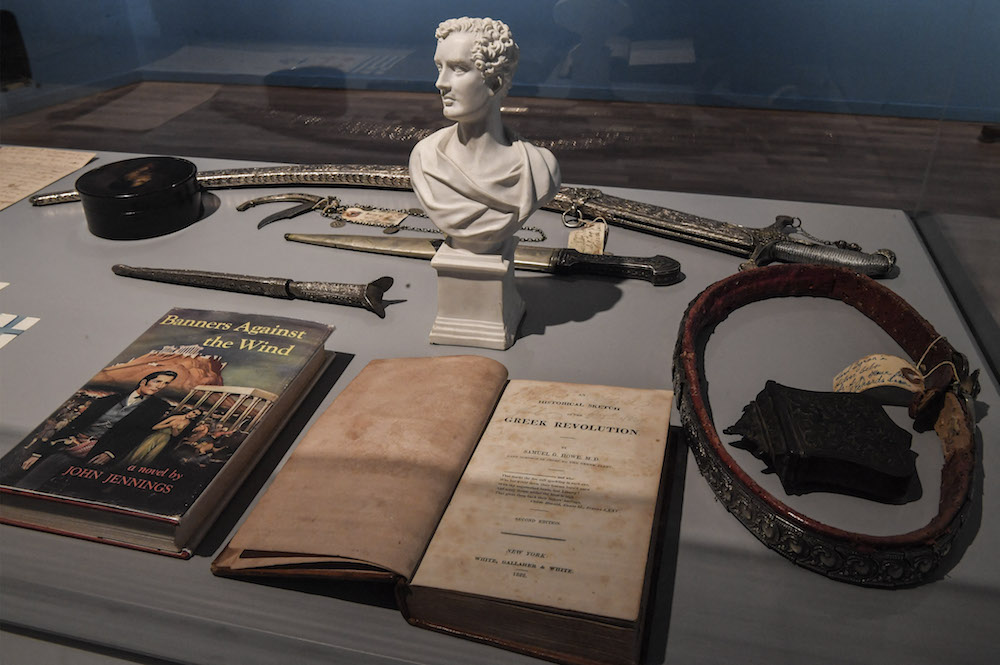
Books on Greek Revolution by Samuel Howe, items and articles are displayed at the new museum dedicated to the Philhellene foreign volunteers who fought and died for Greece on March 12, 2021. (AFP/File Photo)
They also emphasized the need for widespread education among the Greek people, and sought to link the desire for cultural excellence with liberty and the freedom to pursue one’s ambitions under conditions of equality.
Their approach soon led them to an inescapable conclusion: The Greek people ought to rise against the sultan and achieve self-determination in the name of progress and a desire to overthrow the conservative establishment that kept the masses trapped in prejudice and ignorance.
There is no better example of the Modern Greek Enlightenment and its influence than the works and deeds of Rigas Velestinlis (1757-1798). A pioneer of the enlightenment, he found himself in Vienna by the time he was 30. He devoted himself to the cause of Greek independence, but did more than any other in brandishing the modern zeitgeist that the enlightenment era called for.
He edited the first modern Greek newspaper called Efimeris from Vienna, where he was able to settle at age 30. His vision of Greece’s future was ecumenical and progressive, to the extent that many among the clergy condemned his revolutionary zeal.

Greek revolutionary hero Rigas Velestinlis, painted by Andreas Kriezis. (Supplied)
Velestinlis called for an uprising of the people against the Ottoman yoke, not on the basis of nationalism — after all, he and countless others identified as Romios, a Greek Orthodox subject of the sultan — but by envisaging a confederation of the Balkan peoples, with Greece at its heart.
He went as far as to publish a draft constitution addressing the peoples of “Rumeli, Asia Minor, the islands of the Aegean and the principalities of Moldavia and Wallachia.” In it, he called for a Balkan-wide republic guaranteeing equality and justice for all its citizens.
Going further, he stressed how equality was meant to apply to all, “Christians and Turks,” in a spirit of brotherhood and equality before the law. Small wonder that the Greek patriarchate condemned Velestinlis as a dangerous utopian, endangering Hellenism — the national character or culture of Greece — and flirting with revolution and resurrection.
He was eventually captured by the Austrians in Trieste, and was killed at the hands of the Ottomans in Belgrade. Yet his vision of self-determination lived on, along with his persistent calls to heed the calls of liberty.
The Greek Revolution, like any major event, was the result of various forces, movements and motives. The struggle for self-determination, however, had begun much earlier than 1821, and was not necessarily expressed through the bayonet.
The role of the Greek diaspora, especially after the mid-18th century, in preparing the ground for the revolution in ideological, organizational and diplomatic terms is undoubtedly a central aspect of that era and a glorious chapter in Greek history.
----------------
* Dimitris Tsarouhas is a professor of international relations, specializing in Greek politics, Greece-Turkey relations, EU-Turkey relations and EU affairs. Twitter: @dimitsar


