

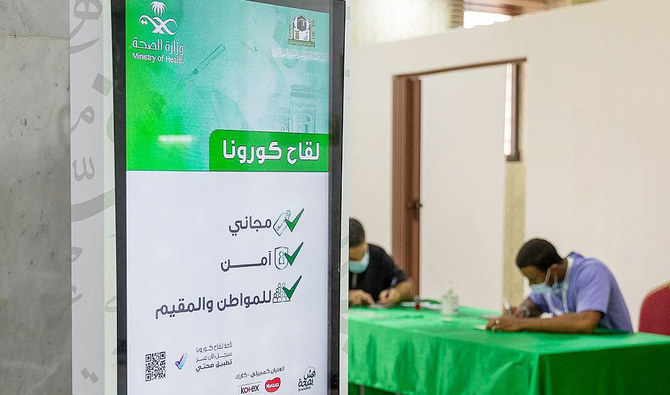

JEDDAH: The phenomenon of vaccine hesitancy is causing headaches for health officials and communities in Saudi Arabia, but the Kingdom is finding a new ally in the fight against damaging rumors and fake news — recently vaccinated Saudis.
Because of anti-vaccine posts on social media platforms, some Saudis are hesitant to receive a jab, despite efforts by specialists, infectious disease consultants and health officials to refute widespread claims and rumors.
However, pro-vaccine campaigns have failed to prevent a worrying number of Saudis choosing to opt out of registering for a jab.
When the pandemic began last year, popular posts circulated online telling stories of people that died from coronavirus.
But the narrative of popular stories on social media has shifted in recent months.
With the emergence of vaccines, stories have begun to circulate of people refusing to receive vaccines due to rumors that they can cause adverse reactions. The posts usually feature so-called “anti-vaxxers” and self-proclaimed health experts, with one claiming that the jab “infiltrates” the body at a genetic level.
Many of the false claims have been refuted by health experts, while Minister of Health Dr. Tawfiq Al-Rabiah stepped in on Twitter to urge Saudis to take the vaccine.
In a recent tweet, Al-Rabiah told the story of an elderly man who was encouraged to avoid the vaccine. He refused to book an appointment, but died soon after becoming infected with coronavirus.
Earlier this month, health ministry spokesman Dr. Mohammed Al-Abd Al-Aly rejected news that the Kingdom had halted use of the Oxford-AstraZeneca vaccine.
HIGHLIGHT
In a recent tweet, Health Minister Dr. Tawfiq Al-Rabiah told the story of an elderly man who was encouraged to avoid the vaccine. He refused to book an appointment, but died soon after becoming infected with coronavirus.
Mashail Al-Mutairi, a 43-year-old mother of three, warned that vaccines are a key step in protecting the community against coronavirus, especially children.
“I’ve taken my first jab and now I’m on my way to take my second jab this week. The reason why I keep insisting to everyone I know that they need to take this vaccine is because they are forgetting that there is a group in our community that cannot take this vaccine,” she told Arab News.
“I’m talking specifically about children. As my kids are under the age of 18, they’re not eligible to receive the vaccine just yet. They’re the ones that are going to be the most vulnerable in the community. I’m doing this for myself, for my family and for my children especially,” she added.
“If we don’t increase the level of herd immunity quickly, then this will cause a problem for children in the near future. Though they’ll be protected, schools will be out and they will continue online schooling which will place a heavy toll on them both mentally and physically,” Al-Mutairi said.
“This nightmare will be bad for parents, but more so for the kids themselves.”
Basma Saeedi, a 26-year-old pharmacy graduate, received the Pfizer vaccine earlier this month and is urging people to follow suit in order to achieve herd immunity. The benefits that vaccines offer is especially important to her, as she lost her grandmother to coronavirus.
It was this loss that led to her registering for and receiving the jab.
“I want to protect the rest of my family against it. I took the vaccine to gain immunity against the virus and everyone should think about making sure they don’t lose a loved one to such an ugly disease,” she told Arab News.

keywords


