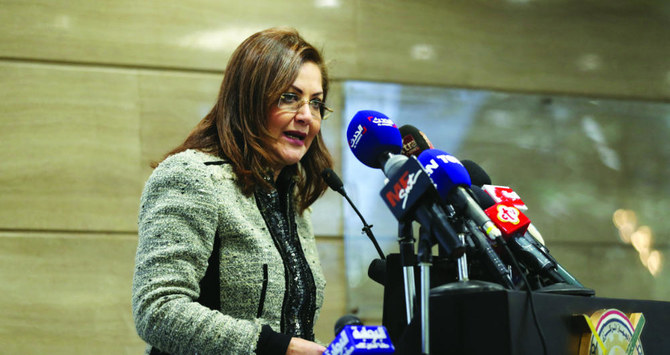
Egypt to implement raft of family planning measures and services

Hala Al-Saeed. (AFP)
Short Url
Updated 19 March 2021
Follow

Egypt to implement raft of family planning measures and services

CAIRO: Egyptian Minister of Planning and Economic Development Hala Al-Saeed has said a study is underway to issue a Family Insurance Fund for Egyptian families using birth control, in cooperation with the Financial Regulatory Authority, as part of a national project of family development.
The goal of this project is to control population growth, as a way to improve the quality of life of Egyptians, the minister said, adding it would include the economic empowerment of women aged 18 to 45 by providing job opportunities and encouraging them to achieve financial independence
The minister said that criteria for benefiting from the insurance scheme will include periodic family examinations every six months and breast cancer tests, in addition to the obligation to wait a specified period between having children, and only having a certain number of children per family.
The first stage of the scheme will take place over a period of three years, she said.
During the first phase, 2 million women will be trained as part of the National Initiative for Women’s Empowerment. Smaller projects are also planned for about 1 million women.
Al-Saeed said there will be coordination with the Ministry of Higher Education to formulate programs for young people to raise awareness of family planning regulations. Television programs on the issue of family planning will be part of this plan to raise national awareness.
In addition, an online platform, the Egyptian Family System,  will automate the services of the Family Insurance Fund with links to units of health and family development. The project will also include providing family planning methods free of charge to all, said the minister.
She indicated that the project also aims at raising the efficiency of Al-Takamol hospitals by creating family-planning units, providing vaccinations and primary care services.
Clinics to monitor women’s health, nurseries for the children of working women and provision of necessary care and support needed for Egyptian women will be part of this program, with 1,500 female doctors trained in family planning methods, in addition to increasing the participation of NGOs that provide family planning services.
Twelve million home visits, 30,000 seminars and 500 activities targeting 6 million women will also form part of the program.
Legislative intervention is being planned to develop a regulatory framework governing the policies taken to control population growth. It includes the criminalization of child marriage, and expanding the scope of punishment to include children’s guardians. Child labor and the failure to register births will also be tackled with punitive measures.


Saudi intervention ends Socotra power crisis

Updated 5 sec ago
Follow

Saudi intervention ends Socotra power crisis

  • Sudden shutdown of the power plants after the operating company withdrew and disabled control systems
  • Saudi engineering and technical teams moved immediately after receiving an appeal from local authorities

ADEN: Electricity has returned to Yemen’s Socotra archipelago after urgent Saudi intervention ended days of outages that disrupted daily life and crippled vital institutions, including the general hospital, the university and the technical institute.

The breakthrough followed a sudden shutdown of the power plants after the operating company withdrew and disabled control systems, triggering widespread blackouts and deepening hardship for residents.

The Saudi Development and Reconstruction Program for Yemen said that its engineering and technical teams moved immediately after receiving an appeal from local authorities. Specialists were dispatched to reactivate operating systems that had been encrypted before the company left the island.

Generators were brought back online in stages, restoring electricity across most of the governorate within a short time.

The restart eased intense pressure on the grid, which had faced rising demand in recent weeks after a complete halt in generation.

Health and education facilities were among the worst affected. Some medical departments scaled back services, while parts of the education sector were partially suspended as classrooms and laboratories were left without power.

Socotra’s electricity authority said that the crisis began when the former operator installed shutdown timers and password protections on control systems, preventing local teams from restarting the stations. Officials noted that the archipelago faced a similar situation in 2018, which was resolved through official intervention.

Local sources said that the return of electricity quickly stabilized basic services. Water networks resumed regular operations, telecommunications improved, and commercial activity began to recover after a period of economic disruption linked to the outages.

In the health sector, stable power, combined with operational support, secured the functioning of Socotra General Hospital, the archipelago’s main medical facility.

Funding helped to provide fuel and medical supplies and support healthcare staff, strengthening the hospital’s ability to receive patients and reducing the need to transfer cases outside the governorate, a burden that had weighed heavily on residents.

Medical sources said that critical departments, including intensive care units and operating rooms, resumed normal operations after relying on limited emergency measures.

In education, classes and academic activities resumed at Socotra University and the technical institute after weeks of disruption.

A support initiative covered operational costs, including academic staff salaries and essential expenses, helping to curb absenteeism and restore the academic schedule.

Local authorities announced that studies at the technical institute would officially restart on Monday, a move seen as a sign of gradual stabilization in public services.

Observers say that sustained technical and operational support will be key to safeguarding electricity supply and preventing a repeat of the crisis in a region that depends almost entirely on power to run its vital sectors.