NEW YORK: With former President Donald Trump’s tax returns finally in hand, a team of New York prosecutors led by a newly hired former mob-buster is sending out fresh subpoenas and meeting face-to-face with key witnesses, scrutinizing Trump’s business practices in granular detail.
Amid the swirl of activity, the Manhattan district attorney’s office is scheduled Friday to meet again with Trump’s longtime former personal lawyer Michael Cohen, according to a person familiar with the investigation.
It would be the eighth time he has spoken with investigators working for District Attorney Cyrus R. Vance Jr., dating to Cohen’s time in federal prison for tax evasion and campaign finance violations.
The person familiar with the inquiry wasn’t authorized to speak publicly about the interview and spoke to The Associated Press on the condition of anonymity.
In a recent interview with Cohen, investigators asked questions about Trump’s Seven Springs estate as part of an inquiry into whether the value of the 213-acre Westchester County property was improperly inflated to reduce his taxes.
Investigators asked Cohen about individuals involved in the appraisal of the estate and benefits derived from its valuation, including a $21 million income tax deduction.
Cohen was released to home confinement last year amid coronavirus fears, and his recent meetings have been conducted via video conference.
Vance’s office declined to comment, as did Cohen’s lawyer, Lanny Davis. A message seeking comment was sent to the Trump Organization.
Vance announced last week that he would leave office at the end of the year and not seek reelection, but in a memo to staff, he stressed that the investigation wouldn’t stop.
“The work continues,” Vance wrote, echoing his short statement after the US Supreme Court ruled last month that he could have Trump’s tax records.
Vance recently hired former mafia prosecutor Mark Pomerantz — who, as a federal prosecutor, oversaw the prosecution of Gambino crime boss John Gotti — as a special assistant district attorney to assist in the wide-ranging probe of Trump’s finances.
The inquiry, according to court filings, includes an examination of whether Trump or his businesses lied about the value of assets to gain favorable loan terms and tax benefits. The district attorney also is scrutinizing hush-money payments paid to women on Trump’s behalf.
After a lengthy legal battle, his office is now in possession of eight years of Trump’s tax records, including final and draft versions of tax returns, source documents containing raw financial data and other financial records held by his accounting firm.
Vance’s focus on Seven Springs involves an environmental conservation arrangement Trump made in return for a tax deduction at the end of 2015, following failed attempts to turn the property into a golf course and luxury homes.
Trump granted an easement to a conservation land trust to preserve 158 acres (60 hectares) and received a $21 million income tax deduction, equal to the value of the conserved land, according to records. The amount was based on a professional appraisal that valued the full Seven Springs property at $56.5 million as of Dec. 1, 2015.
That was a much higher amount than the evaluation by local government assessors, who said the entire estate was worth $20 million. Trump bought the property, including a palatial Georgian-style mansion that once belonged to the family of newspaper publisher Katharine Graham, for $7.5 million in 1995.
In a sign of prosecutors’ deepening interest in Seven Springs, Vance’s office has sent new subpoenas in recent weeks to local governments in the towns the property spans — Bedford, North Castle and New Castle — following up on an initial round of subpoenas issued in mid-December.
Vance’s office has also subpoenaed material from people who worked on projects to develop the property for Trump, including an engineer who said his duties involved presenting plans to the local planning board.
The engineer, Ralph Mastromonaco, said Wednesday that he received Vance’s subpoena in mid-February and promptly handed over the requested documents, including records of his work on the property and correspondence with the Trump Organization.
Mastromonaco was subpoenaed for similar material in December 2019 by New York Attorney General Letitia James, who also is investigating whether Trump and his company improperly inflated the value of his assets on annual financial statements in order to secure loans and obtain tax benefits.
“I really know absolutely nothing about this whole mess,” Mastromonaco said Wednesday.
Vance’s investigators have also peppered Cohen with questions about the role that Allen Weisselberg played as chief financial officer of Trump Organization.
Weisselberg’s attorney, Mary Mulligan, declined to comment Wednesday.
But it emerged in recent days that his former daughter-in-law, Jen Weisselberg, is cooperating with both Vance’s and James’ inquiries, according to her attorney.
“She will continue to cooperate fully with the various law enforcement agencies that are investigating her ex-husband’s family and the very powerful interests they represent,” her lawyer, Duncan Levin, said in a statement to AP. “Jennifer refuses to be silenced any longer by those who are conspiring to prevent her from sharing what she has learned over the past 25 years.”

Trump probe heats up as prosecutors get hold of ex-president’s tax returns

Short Url
https://arab.news/v4szk
Trump probe heats up as prosecutors get hold of ex-president’s tax returns
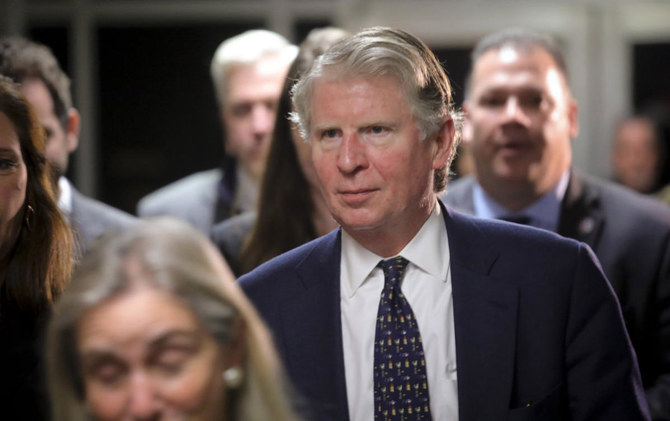
- Veteran mob-buster leads team of prosecutors in scrutinizing Trump's business practices
Judge bars federal prosecutors from seeking the death penalty against Luigi Mangione
- Judge Margaret Garnett’s Friday ruling foiled the Trump administration’s bid to see Mangione executed
- Garnett dismissed a federal murder charge against Mangione, finding it technically flawed. She left in place stalking charges that could carry a life sentence
NEW YORK: Federal prosecutors can’t seek the death penalty against Luigi Mangione in the killing of UnitedHealthcare CEO Brian Thompson, a federal judge ruled Friday, foiling the Trump administration’s bid to see him executed for what it called a “premeditated, cold-blooded assassination that shocked America.”
Judge Margaret Garnett dismissed a federal murder charge that had enabled prosecutors to seek capital punishment, finding it technically flawed. She wrote that she did so to “foreclose the death penalty as an available punishment to be considered by the jury” as it weighs whether to convict Mangione.
Garnett also dismissed a gun charge but left in place stalking charges that carry a maximum punishment of life in prison. To seek the death penalty, prosecutors needed to show that Mangione killed Thompson while committing another “crime of violence.” Stalking doesn’t fit that definition, Garnett wrote in her opinion, citing case law and legal precedents.
In a win for prosecutors, Garnett ruled they can use evidence collected from his backpack during his arrest, including a 9mm handgun and a notebook in which authorities say Mangione described his intent to “wack” an insurance executive. Mangione’s lawyers had sought to exclude those items, arguing the search was illegal because police hadn’t yet obtained a warrant.
During a hearing Friday, Garnett gave prosecutors 30 days to update her on whether they’ll appeal her death penalty decision. A spokesperson for the US attorney’s office in Manhattan, which is prosecuting the federal case, declined to comment.
Garnett acknowledged that the decision “may strike the average person — and indeed many lawyers and judges — as tortured and strange, and the result may seem contrary to our intuitions about the criminal law.” But, she said, it reflected her “committed effort to faithfully apply the dictates of the Supreme Court to the charges in this case. The law must be the Court’s only concern.”
Mangione, 27, appeared relaxed as he sat with his lawyers during the scheduled hearing, which took place about an hour after Garnett issued her written ruling. Prosecutors retained their right to appeal but said they were ready to proceed to trial.
Outside court afterward, Mangione attorney Karen Friedman Agnifilo said her client and his defense team were relieved by the “incredible decision.”
Jury selection in the federal case is set for Sept. 8, followed by opening statements and testimony on Oct. 13. The state trial’s date hasn’t been set. On Wednesday, the Manhattan district attorney’s office urged the judge in that case to schedule a July 1 trial date.
“That case is none of my concern,” Garnett said, adding that she would proceed as if the federal case is the only case unless she hears formally from parties involved in the state case. She also said the federal case will be paused if the government appeals her death penalty ruling.
Thompson, 50, was killed on Dec. 4, 2024, as he walked to a midtown Manhattan hotel for UnitedHealth Group’s annual investor conference. Surveillance video showed a masked gunman shooting him from behind. Police say “delay,” “deny” and “depose” were written on the ammunition, mimicking a phrase used by critics to describe how insurers avoid paying claims.
Mangione, an Ivy League graduate from a wealthy Maryland family, was arrested five days later at a McDonald’s in Altoona, Pennsylvania, about 230 miles (about 370 kilometers) west of Manhattan.
Following through on Trump’s campaign promise to vigorously pursue capital punishment, Attorney General Pam Bondi ordered Manhattan federal prosecutors last April to seek the death penalty against Mangione.
It was the first time the Justice Department sought the death penalty in President Donald Trump’s second term. He returned to office a year ago with a vow to resume federal executions after they were halted under his predecessor, President Joe Biden.
Garnett, a Biden appointee and former Manhattan federal prosecutor, ruled after hearing oral arguments earlier this month.
Besides seeking to have the death penalty rejected on the grounds Garnett cited, Mangione’s lawyers argued that Bondi’s announcement flouted long-established Justice Department protocols and was “based on politics, not merit.”
They said her remarks, followed by posts to her Instagram account and a TV appearance, “indelibly prejudiced” the grand jury process resulting in his indictment weeks later.
Prosecutors urged Garnett to keep the death penalty on the table, arguing that the charges were legally sound and Bondi’s remarks weren’t prejudicial, as “pretrial publicity, even when intense, is not itself a constitutional defect.”
Prosecutors argued that careful questioning of prospective jurors would alleviate the defense’s concerns about their knowledge of the case and ensure Mangione’s rights are respected at trial.
“What the defendant recasts as a constitutional crisis is merely a repackaging of arguments” rejected in previous cases, prosecutors said. “None warrants dismissal of the indictment or categorical preclusion of a congressionally authorized punishment.”
Judge Margaret Garnett dismissed a federal murder charge that had enabled prosecutors to seek capital punishment, finding it technically flawed. She wrote that she did so to “foreclose the death penalty as an available punishment to be considered by the jury” as it weighs whether to convict Mangione.
Garnett also dismissed a gun charge but left in place stalking charges that carry a maximum punishment of life in prison. To seek the death penalty, prosecutors needed to show that Mangione killed Thompson while committing another “crime of violence.” Stalking doesn’t fit that definition, Garnett wrote in her opinion, citing case law and legal precedents.
In a win for prosecutors, Garnett ruled they can use evidence collected from his backpack during his arrest, including a 9mm handgun and a notebook in which authorities say Mangione described his intent to “wack” an insurance executive. Mangione’s lawyers had sought to exclude those items, arguing the search was illegal because police hadn’t yet obtained a warrant.
During a hearing Friday, Garnett gave prosecutors 30 days to update her on whether they’ll appeal her death penalty decision. A spokesperson for the US attorney’s office in Manhattan, which is prosecuting the federal case, declined to comment.
Garnett acknowledged that the decision “may strike the average person — and indeed many lawyers and judges — as tortured and strange, and the result may seem contrary to our intuitions about the criminal law.” But, she said, it reflected her “committed effort to faithfully apply the dictates of the Supreme Court to the charges in this case. The law must be the Court’s only concern.”
Mangione, 27, appeared relaxed as he sat with his lawyers during the scheduled hearing, which took place about an hour after Garnett issued her written ruling. Prosecutors retained their right to appeal but said they were ready to proceed to trial.
Outside court afterward, Mangione attorney Karen Friedman Agnifilo said her client and his defense team were relieved by the “incredible decision.”
Jury selection in the federal case is set for Sept. 8, followed by opening statements and testimony on Oct. 13. The state trial’s date hasn’t been set. On Wednesday, the Manhattan district attorney’s office urged the judge in that case to schedule a July 1 trial date.
“That case is none of my concern,” Garnett said, adding that she would proceed as if the federal case is the only case unless she hears formally from parties involved in the state case. She also said the federal case will be paused if the government appeals her death penalty ruling.
Thompson, 50, was killed on Dec. 4, 2024, as he walked to a midtown Manhattan hotel for UnitedHealth Group’s annual investor conference. Surveillance video showed a masked gunman shooting him from behind. Police say “delay,” “deny” and “depose” were written on the ammunition, mimicking a phrase used by critics to describe how insurers avoid paying claims.
Mangione, an Ivy League graduate from a wealthy Maryland family, was arrested five days later at a McDonald’s in Altoona, Pennsylvania, about 230 miles (about 370 kilometers) west of Manhattan.
Following through on Trump’s campaign promise to vigorously pursue capital punishment, Attorney General Pam Bondi ordered Manhattan federal prosecutors last April to seek the death penalty against Mangione.
It was the first time the Justice Department sought the death penalty in President Donald Trump’s second term. He returned to office a year ago with a vow to resume federal executions after they were halted under his predecessor, President Joe Biden.
Garnett, a Biden appointee and former Manhattan federal prosecutor, ruled after hearing oral arguments earlier this month.
Besides seeking to have the death penalty rejected on the grounds Garnett cited, Mangione’s lawyers argued that Bondi’s announcement flouted long-established Justice Department protocols and was “based on politics, not merit.”
They said her remarks, followed by posts to her Instagram account and a TV appearance, “indelibly prejudiced” the grand jury process resulting in his indictment weeks later.
Prosecutors urged Garnett to keep the death penalty on the table, arguing that the charges were legally sound and Bondi’s remarks weren’t prejudicial, as “pretrial publicity, even when intense, is not itself a constitutional defect.”
Prosecutors argued that careful questioning of prospective jurors would alleviate the defense’s concerns about their knowledge of the case and ensure Mangione’s rights are respected at trial.
“What the defendant recasts as a constitutional crisis is merely a repackaging of arguments” rejected in previous cases, prosecutors said. “None warrants dismissal of the indictment or categorical preclusion of a congressionally authorized punishment.”
© 2026 SAUDI RESEARCH & PUBLISHING COMPANY, All Rights Reserved And subject to Terms of Use Agreement.


