

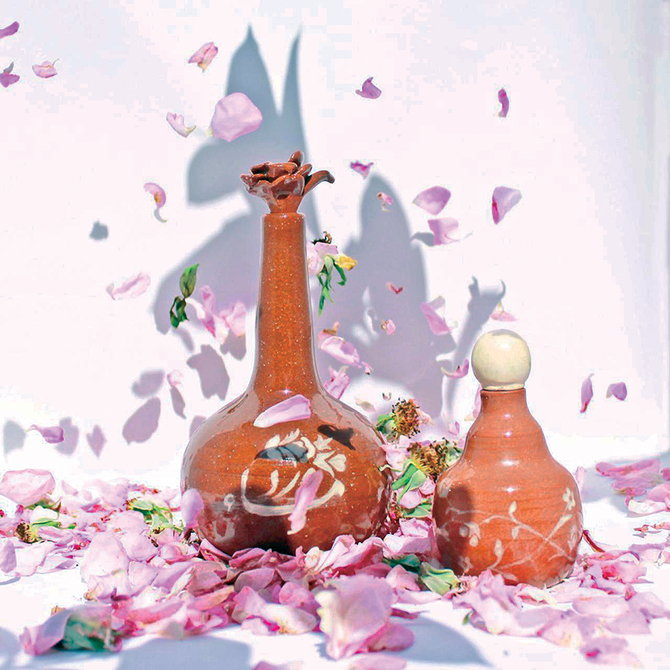
Startup of the Week: Al Mihrab; Unique pieces inspired by Islamic art

Short Url
Updated 16 March 2021
Follow

Startup of the Week: Al Mihrab; Unique pieces inspired by Islamic art

RIYADH: A Jeddah-based artist is on a mission to redefine and modernize classical Islamic art by creating affordable handmade pieces inspired by her heritage.

Afnan Tash, the artist behind Al Mihrab, creates unique pieces inspired by Islamic art across the ages, utilizing materials such as paper, glass, wood and metal.

She said that her “great focus is on adding a special beauty to everything that is created.”

Tash takes her inspiration from classic cultural elements of the Kingdom’s western province: The qibla compass, indicating the direction of Makkah; the Holy Ka’aba; and the namesake of the project, the mihrab, or semicircular niche in the wall of a mosque that indicates the qibla.

“Art has the special purpose of serving mankind and facilitating our lives. It increases our familiarity with beauty, raises our artistic tastes, and enriches our experiences and outlook on life,” she told Arab News. Tash hopes to renew these elements and present them in a way that better reflects contemporary life, while preserving their beauty. 
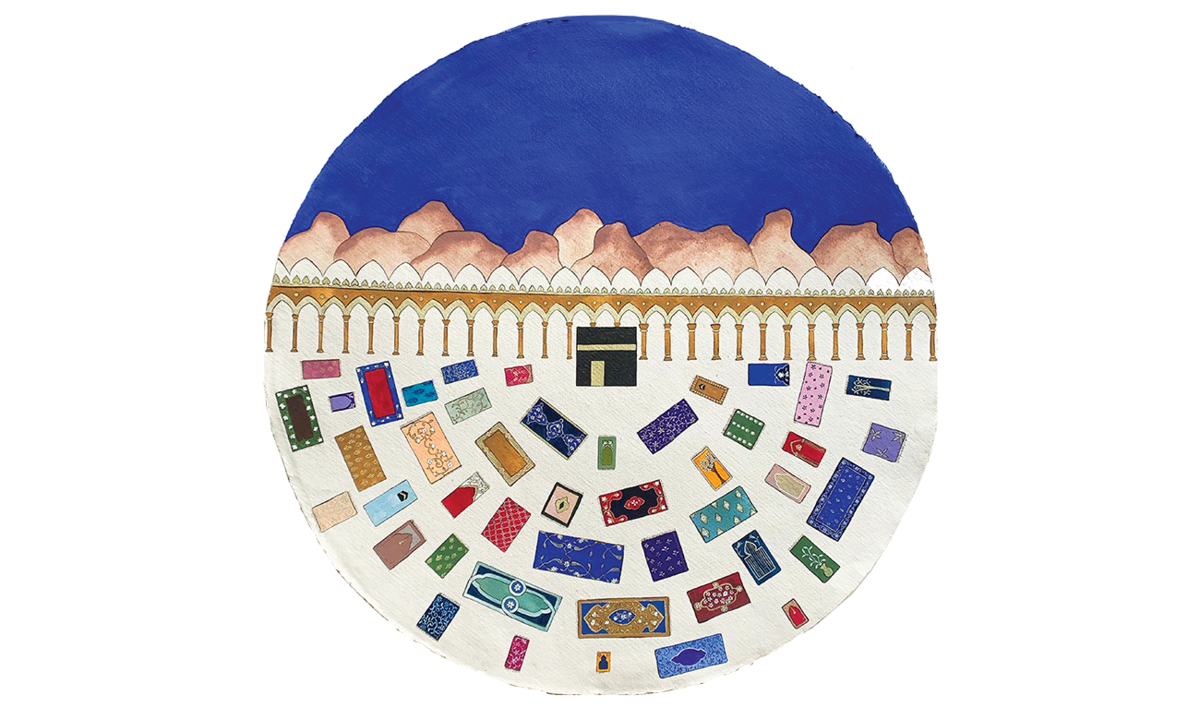
For Tash, art has a way of transcending reality and creating something unique to each viewer.

Her work involves a variety of techniques and materials, and she has experimented with several mediums. While her interests include drawing and photography, she has a special attachment to gilding and miniature painting, both of which feature frequently in her work.

For that reason, though the work may appear deceptively simple, the focus and attention required takes a lot of effort, she said.

“What surprises me most about this type of art is the presence it requires and the amount of time needed to ensure that every step is perfectly done. The minute details require a lot of care and attention.”

Tash likened the project to a long journey with no end or specific result in mind.

“When I started Al Mihrab in 2014, I had a completely different perception of myself, and it might be different again tomorrow. So I seek to invest in my love of beauty and art by reading, seeing and learning, and through the products and artworks that we offer,” she said.

Tash’s work can be bought online at salla.sa/al.mihrab, and she can be found on Instagram, @al.mihrab


Saudi Arabia’s construction costs see 1% annual rise in November: GASTAT 

Updated 22 December 2025
Follow

Saudi Arabia’s construction costs see 1% annual rise in November: GASTAT 

RIYADH: Saudi Arabia’s construction costs rose at a steady pace in November, signaling resilience in the sector as the Kingdom continues to manage rising labor and energy expenses. 

The Construction Cost Index climbed to 101.75 points in November, up 1 percent from a year earlier and broadly unchanged from October, according to data from the General Authority for Statistics. 

The steady momentum in Saudi Arabia’s construction sector aligns with a broader trend across the Gulf Cooperation Council, as regional economies push to diversify away from hydrocarbons. 

In July, real estate consultancy Knight Frank said Saudi Arabia’s construction output value is expected to reach $191 billion by 2029, representing a 29.05 percent increase from 2024, driven by residential development, ongoing giga-projects and rising demand for office space. 

In its latest report, GASTAT stated: “The CCI recorded a 1 percent increase in November 2025, maintaining the same growth rate observed in October 2025. This increase is mainly attributed to a 1 percent rise in construction costs for the residential sector and a 1 percent rise in construction costs for the non-residential sector.” 

In the residential sector, labor costs rose 1.5 percent year on year in November, while equipment and machinery rental costs increased 1.3 percent over the same period. 

Energy prices recorded a sharp increase of 9.9 percent compared with November 2024. 

Basic material costs edged up 0.2 percent, driven by a 1.4 percent rise in cement and concrete prices and a 1.1 percent increase in raw material costs. 

In the non-residential sector, the Construction Cost Index increased 1 percent year on year in November, mainly due to a 1.2 percent rise in equipment and machinery rental costs. 

Labor costs increased 1.1 percent, while energy prices continued their upward trend, rising 9.9 percent over the year. 

Basic material costs rose 0.3 percent, reflecting a 2.5 percent increase in wood and carpentry prices and a 1.4 percent rise in raw material costs. 

The Construction Cost Index tracks changes in construction input costs across 51 items, with prices collected monthly from 13 regions through field surveys of contractors, engineering offices and construction material suppliers. The base year is 2023, and the index is published monthly.