- Moscow meeting to discuss a transitional government as part of an intra-Afghan peace deal
- Taliban say no final decision yet on their participation in the peace conference hosted by Russia
ISLAMABAD: Pakistan has been invited to participate in next week's Moscow meeting on the Afghan peace process, the foreign office confirmed on Sunday, as sources say Islamabad's special envoy for Afghanistan will lead the Pakistani delegation.
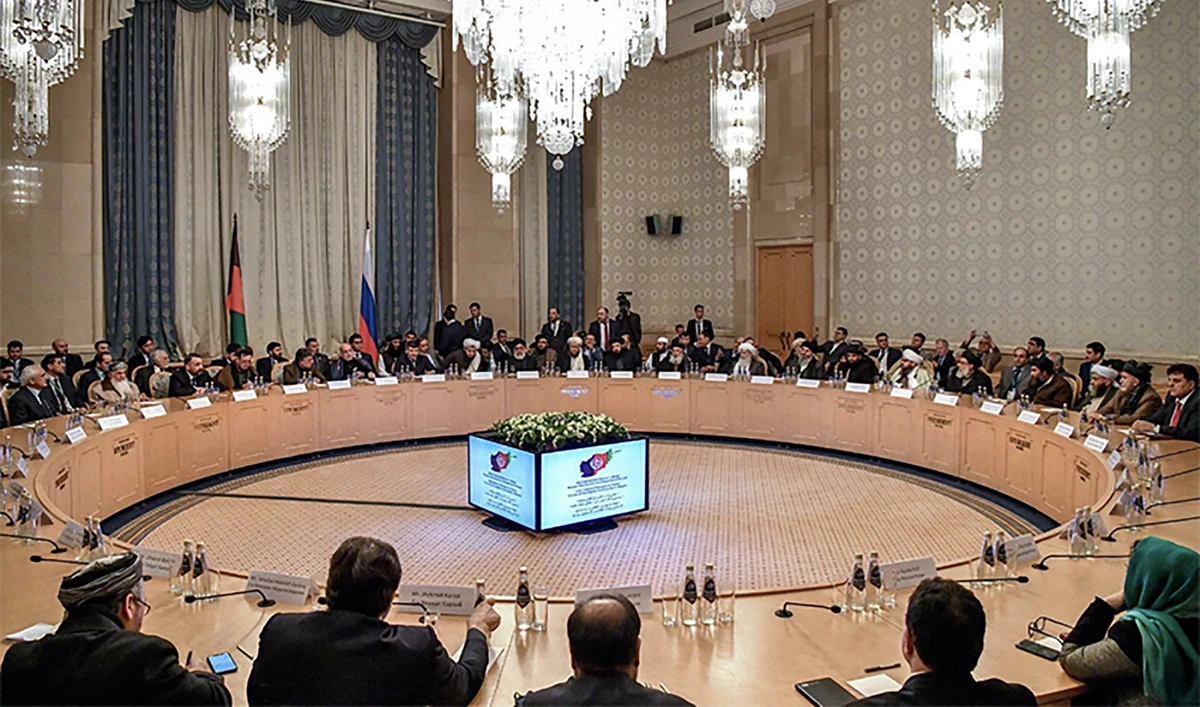
During the Moscow conference, which starts on Thursday, Afghan and Taliban leaders as well as representatives from China and the United States are expected to discuss a transitional power-sharing government as part of an intra-Afghan peace deal.
The power-sharing interim administration proposal for Afghanistan has been advocated by both the US and Russia and is intended to jump-start stalled talks in Doha, Qatar, between the Taliban and a team that includes Afghan officials on a political settlement to end decades of conflict.
"As for the consultations in Moscow, we have received the invitation," Pakistan's foreign office spokesperson Zaid Hafeez Chaudhri told Arab News.
Sources privy to the matter have confirmed that Pakistan’s special representative for Afghanistan, Mohammad Sadiq, would lead the delegation.
Sadiq is now in Tehran for talks on the Afghan peace process with Iranian officials.
"During his visit, Ambassador Sadiq will discuss the ongoing Afghan peace process with his Iranian interlocutors," Chaudhri said.
According to a Saturday evening tweet by Iran's deputy foreign minister for West Asia, Rasoul Mousavi, Sadiq will meet Iranian Foreign Minister Mohammad Javad Zarif to “discuss developments in Afghanistan.”
It remains unclear whether Iran will also participate in the upcoming Moscow meeting.
It is also unclear whether the Taliban will arrive in Moscow. The group's political spokesperson, Mohammad Naeem, confirmed to Arab News on Sunday that they had received Russia's invitation, but a final decision has yet to be taken.
The Taliban have previously attended conferences in Russia and also visited Moscow in January, after the US announced to review its former administration's last year's agreement with the group on the withdrawal of troops from Afghanistan.
The Kabul government, meanwhile, is preparing its delegation, National Security Adviser Hamdullah Mohib confirmed on Saturday.
Besides government representatives and the Taliban, other Afghan leaders have been invited as well, Habib ur Rehamn Hekmatyar, son of Hizb-e-Islami chief Gulbuddin Hekmatyar, told Arab News as he confirmed his father's attendance.
He expects the Moscow conference to be more inclusive than Doha talks, as Afghan delegates would not only comprise those selected by President Ashraf Ghani's government.
"Ashraf Ghani had constituted a team of his own people for the Doha talks and sent them there who will follow his instructions," he said. "Many main sides, including Hizb-e-Islami and Jamiat-e-Islami, are not part of the Doha negotiations."
As talks in Doha have yielded little since their start in September last year and appear to have reached a deadlock, consultations are underway to host meetings in Turkey.
The United Nations office in Kabul has already started consultations for an Afghan peace conference in Turkey, after the UN's envoy for Afghanistan, Deborah Lyons, met with the Taliban and members of the Afghan government in Doha last week.