Saudi wealth fund PIF to support corporate credit growth, S&P says

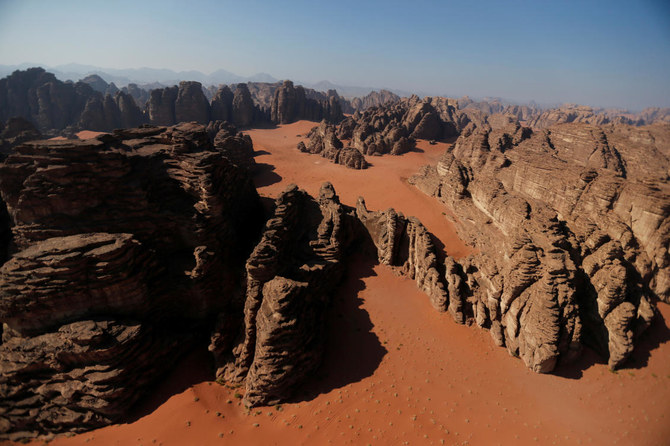
General view of NEOM in northwestern Saudi Arabia. S&P expect PIF investments to support credit growth in the Kingdom. (Reuters)
Short Url
Updated 08 March 2021
Follow

Saudi wealth fund PIF to support corporate credit growth, S&P says

  • Domestic growth seen to stay strong
  • Rising housing demand among Saudis

DUBAI: Investments by Saudi Arabia’s wealth fund Public Investment Fund (PIF) will support credit growth among companies in the Kingdom, ratings agency S&P Global Ratings said on Monday.
PIF, a $400 billion investment vehicle, is at the center of economic reforms to transform the oil-dependent economy.
The fund plans to inject at least SR150 billion ($40 billion) annually in the local economy until 2025, and to increase its assets to SR4 trillion by that date.
“The Public Investment Fund has recently announced investment initiatives that we expect will spur corporate credit growth, mostly in construction-related industries,” S&P said.
“This will offset the gradual lifting of support aimed at easing the impact of the pandemic,” it said.
The Saudi central bank said on Sunday it had extended a deferred payment program to support private sector financing for an additional three months until June 30 as part of measures to stem the impact of the coronavirus pandemic on the economy.
It also said a guaranteed financing program had been extended for an additional year until March 14, 2022 to support small and medium enterprises.
Domestic credit growth in Saudi Arabia, the biggest Arab economy, is expected to stay strong this and next year after a 14 percent year-on-year increase in 2020, S&P said.
Part of the growth is due to rising demand for housing from Saudi nationals, which has boosted mortgage growth.
“Over the next couple of years, we forecast that mortgage portfolios will expand by about 30 percent a year,” said S&P.


Saudi POS spending jumps 28% in final week of Jan: SAMA

Updated 06 February 2026
Follow

Saudi POS spending jumps 28% in final week of Jan: SAMA

RIYADH: Saudi Arabia’s point-of-sale spending climbed sharply in the final week of January, rising nearly 28 percent from the previous week as consumer outlays increased across almost all sectors. 

POS transactions reached SR16 billion ($4.27 billion) in the week ending Jan. 31, up 27.8 percent week on week, according to the Saudi Central Bank. Transaction volumes rose 16.5 percent to 248.8 million, reflecting stronger retail and service activity. 

Spending on jewelry saw the biggest uptick at 55.5 percent to SR613.69 million, followed by laundry services which saw a 44.4 percent increase to SR62.83 million. 

Expenditure on personal care rose 29.1 percent, while outlays on books and stationery increased 5.1 percent. Hotel spending climbed 7.4 percent to SR377.1 million. 

Further gains were recorded across other categories. Spending in pharmacies and medical supplies rose 33.4 percent to SR259.19 million, while medical services increased 13.7 percent to SR515.44 million. 

Food and beverage spending surged 38.6 percent to SR2.6 billion, accounting for the largest share of total POS value. Restaurants and cafes followed with a 20.4 percent increase to SR1.81 billion. Apparel and clothing spending rose 35.4 percent to SR1.33 billion, representing the third-largest share during the week. 

The Kingdom’s key urban centers mirrored the national surge. Riyadh, which accounted for the largest share of total POS spending, saw a 22 percent rise to SR5.44 billion from SR4.46 billion the previous week. The number of transactions in the capital reached 78.6 million, up 13.8 percent week on week. 

In Jeddah, transaction values increased 23.7 percent to SR2.16 billion, while Dammam reported a 22.2 percent rise to SR783.06 million. 

POS data, tracked weekly by SAMA, provides an indicator of consumer spending trends and the ongoing growth of digital payments in Saudi Arabia.  

The data also highlights the expanding reach of POS infrastructure, extending beyond major retail hubs to smaller cities and service sectors, supporting broader digital inclusion initiatives.  

The growth of digital payment technologies aligns with Saudi Arabia’s Vision 2030 objectives, promoting electronic transactions and contributing to the Kingdom’s broader digital economy.