

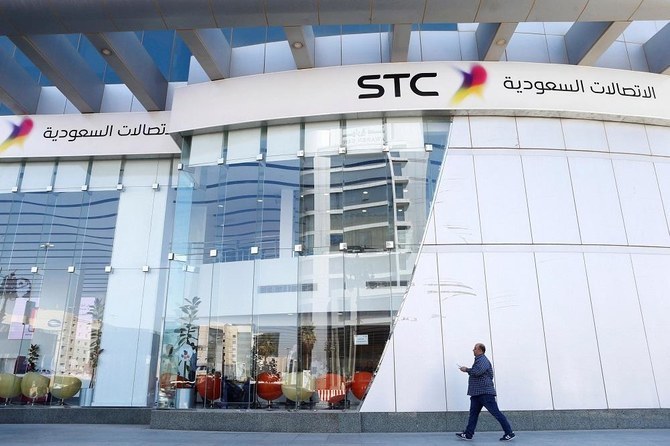
Saudi Telecom launches largest digital operations center in the Middle East

STC has worked on a plan to build a superfast 5G network in more than 47 cities around Saudi Arabia. (File/AFP)
Short Url
Updated 08 March 2021
Follow

Saudi Telecom launches largest digital operations center in the Middle East

  • It is the largest facility of its kind in the Middle East and North Africa

RIYADH: Saudi Telecom launched a vast digital operations center on Monday to boost the Kingdom’s cyber defenses as it rolls out super-fast broadband.
It is the largest facility of its kind in the Middle East and North Africa, the Saudi Press Agency reported.
The center will have a capacity exceeding 8.4 terabits per second (tbps), and will be linked to more than 4 submarine cables, used for the first time in the region.
“The center will strengthen the Saudi position as a leading regional center for business 'HUB,' and represents a basic building block for the company to be a regional center with a system of digital services in MENA,” Saudi Telecom CEO Nasser Sulaiman Al-Nasser said.
It is equipped with the largest and most modern cybersecurity operations center in the region, run by highly skilled experts, the telecoms company said.

STC has worked on a plan to build a superfast 5G network in more than 47 cities around Saudi Arabia, which will be expanded to include more than 71 cities, in the next phase, Nasser said.

Regional governments are investing heavily in superfast broadband networks while at the same time shoring up their cyber defences to counter a rise in threats from both nation state hackers as well as criminal gangs.


European gas prices soar almost 50% as Iran conflict halts Qatar LNG output

Updated 21 sec ago
Follow

European gas prices soar almost 50% as Iran conflict halts Qatar LNG output

  • Analysts warn prolonged disruption could push prices higher
  • Some shipments of oil, LNG through Strait of Hormuz suspended
  • Benchmark Asian LNG price up almost 39 percent

LONDON: ​Benchmark Dutch and British wholesale gas prices soared by almost 50 percent on Monday, after major liquefied natural gas exporter Qatar Energy said it had halted production due to attacks in the Middle East.

Qatar, soon to cement its role as the world’s second largest LNG exporter after the US, plays a major role in balancing both Asian and European markets’ demand of LNG.

Most tanker owners, oil majors and ‌trading houses ‌have suspended crude oil, fuel and liquefied natural ​gas shipments ‌via ⁠the ​Strait of ⁠Hormuz, trade sources said, after Tehran warned ships against moving through the waterway.

Europe has increased imports of LNG over the past few years as it seeks to phase out Russian gas following Russia’s invasion of Ukraine.

Around 20 percent of the world’s LNG transits through the Strait of Hormuz and a prolonged suspension or full closure would increase global competition for other ⁠sources of the gas, driving up prices internationally.

“Disruptions to ‌LNG flows would reignite competition between ‌Asia and Europe for available cargoes,” said ​Massimo Di Odoardo, vice president, gas ‌and LNG research at Wood Mackenzie.

The Dutch front-month contract at the ‌TTF hub, seen as a benchmark price for Europe, was up €14.56 at €46.52 per megawatt hour, or around $15.92/mmBtu, by 12:55 p.m. GMT, ICE data showed.

Prices were already some 25 percent higher earlier in the day but extended gains ‌after QatarEnergy’s production halt.

Benchmark Asian LNG prices jumped almost 39 percent on Monday morning with the S&P Global ⁠Energy Japan-Korea-Marker, widely used ⁠as an Asian LNG benchmark, at $15.068 per million British thermal units, Platts data showed.

“If LNG/gas markets start to price in an extended period of losses to Qatari LNG supply, TTF could potentially spike to 80-100 euros/MWh ($28-35/mmBtu),” Warren Patterson, head of commodities strategy at ING, said. The British April contract was up 40.83 pence at 119.40 pence per therm, ICE data showed.

Europe is also relying on LNG imports to help fill its gas storage sites which have been depleted over the winter and are currently around 30 percent full, the latest data from Gas Infrastructure ​Europe showed. In the European carbon ​market, the benchmark contract was down €1.10 at €69.17 a tonne