

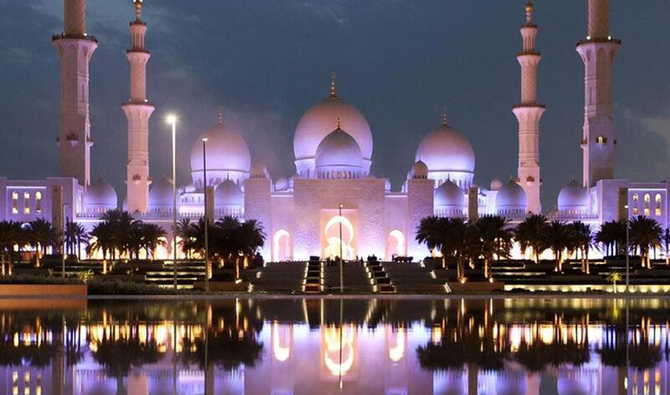

JAKARTA: Top Emirati officials have broken ground for a replica of Sheikh Zayed Grand Mosque in Indonesia.
The mosque will be constructed in Solo in Central Java province, the hometown of Indonesian President Joko Widodo.
The replica of the UAE’s largest mosque was gifted to Widodo during the visit of Abu Dhabi Crown Prince Mohammed bin Zayed Al-Nahyan to Jakarta in July 2019.
The crown prince’s visit to Indonesia was the first by a UAE leader since that of his father Zayed bin Sultan Al-Nahyan in 1990.
On the Emirati side, the ground-breaking ceremony was attended by Energy and Infrastructure Minister Suhail Al-Mazroui, and General Authority of Islamic Affairs and Endowments Chairman Dr. Mohammed Al-Kaabi.
On the Indonesian side, it was attended by Religious Affairs Minister Yaqut Cholil Qoumas, State-Owned Enterprises Minister Erick Thohir and Solo Mayor Gibran Rakabuming Raka, who is Widodo’s eldest son.
“The mosque will be almost 100 percent similar to the one in Abu Dhabi, but it will also incorporate some Indonesian ornaments and will maximize the use of local materials,” Husin Bagis, Indonesia’s ambassador to the UAE, told Arab News on Sunday.
The mosque, which will be built on a 3-hectare plot, will feature four minarets, with the main dome surrounded by smaller domes. It will be able to accommodate about 10,000 worshippers.
The ambassador said it could become a major religious tourism destination in the Muslim-majority Southeast Asian country. “Now worshippers can go to Solo to marvel at Sheikh Zayed Grand Mosque’s splendor,” he added.
The $20 million mosque project is expected to be ready to welcome worshippers in September 2022.
Construction is being fully financed by the UAE, Qoumas said during the ground-breaking ceremony.
“The mosque, which has a contemporary historical value, will be dedicated to all Muslims and will be managed by the Indonesian government,” he added.
The mosque compound will include an Islamic center to provide UAE-sponsored training for clerics to promote religious moderation.
The ground-breaking ceremony capped a series of events as part of Indonesia-Emirati Amazing Week in Jakarta, Solo, Bandung and Surabaya, which started on March 1 and witnessed the signing of a number of agreements.
The visit by Al-Mazroui and his delegation is a follow-up to $22.9 billion worth of UAE investment deals signed by Widodo during his visit to Abu Dhabi in January 2019.
The agreements, which cover energy, infrastructure, defense and mining, are seen as the biggest foreign investment in Indonesia’s history, and a major advancement of its ties with the Gulf state.
In October 2020, one of the roads in Abu Dhabi’s diplomatic quarters was renamed President Joko Widodo Street.
The Indonesian ambassador said: “Following the grand mosque construction in Solo, the UAE will also construct a mosque named after President Widodo on a location near President Joko Widodo Street.”


