JERUSALEM: Israel reopened most of its economy Sunday as part of its final phase of lifting coronavirus lockdown restrictions, some of them in place since September.
The easing of restrictions comes after months of government-imposed shutdowns and less than three weeks before the country’s fourth parliamentary elections in two years. Israel, a world leader in vaccinations per capita, has surged forward with immunizing nearly 40% of its population in just over two months.
Bars and restaurants, event halls, sporting events, hotels and all primary and secondary schools that had been closed to the public for months could reopen with some restrictions in place on the number of people in attendance, and with certain places open to the vaccinated only.
Israeli Prime Minister Benjamin Netanyahu’s government approved the easing of limitations Saturday night, including the reopening of the main international airport to a limited number of incoming passengers each day.
Netanyahu is campaigning for reelection as Israel’s coronavirus vaccine champion at the same time that he is on trial for corruption.
Israel has sped ahead with its immunization campaign. Over 52% of its population of 9.3 million has received one dose and almost 40% two doses of the Pfizer vaccine, one of the highest rates per capita in the world. After striking a deal to obtain large quantities of Pfizer/BioNTech vaccines in exchange for medical data, Israel has distributed over 8.6 million doses since launching its vaccination campaign in late December.
While vaccination rates continue to steadily rise and the number of serious cases of COVID-19, the illness caused by the virus, drops, Israel’s unemployment rate remains high. As of January, 18.4% of the workforce was out of work because of the pandemic, according to Israel’s Central Bureau of Statistics.
At the same time that it has deployed vaccines to its own citizens, Israel has provided few vaccines for Palestinians in the West Bank and Gaza Strip, a move that has underscored global disparities. It has faced criticism for not sharing significant quantities of its vaccine stockpiles with the Palestinians. On Friday, Israel postponed plans to vaccinate Palestinians who work inside the country and its West Bank settlements until further notice.
Israeli officials have said that its priority is vaccinating its own population first, while the Palestinian Authority has said it would fend for itself in obtaining vaccines from the WHO-led partnership with humanitarian organizations known as COVAX.
Israel has confirmed at least 800,000 cases of COVID-19 since the start of the pandemic and 5,861 deaths, according to the Health Ministry.


![]()


With many vaccinated, Israel reopens economy before election
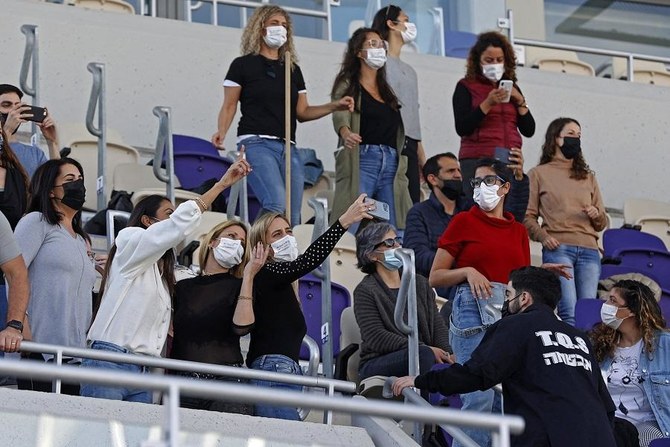
With many vaccinated, Israel reopens economy before election
Gold slips over 1 percent on strong dollar, easing rate-cut bets
- Chile central bank issues first gold purchase in decades
- BMI expects silver to average $93/oz in 2026
Gold prices fell more than 1 percent on Thursday, pressured by a stronger dollar and diminishing hopes for a reduction in borrowing costs as the ongoing Iran war stoked inflation concerns.
Spot gold dipped 1.1 percent at $5,118.16 per ounce by 1:31 p.m. ET (1731 GMT). US gold futures for April delivery settled 1 percent lower at $5,125.80.
The dollar gained for a third consecutive session. The greenback is a competitive safe-haven asset, and a stronger US currency makes gold more expensive for holders of other currencies.
“The higher dollar index, rising treasury yields and lack of interest-rate cuts are the negative factors, but the conflict in the Middle East has been generating some safe-haven flows,” said Phillip Streible, chief market strategist at Blue Line Futures.
Two tankers were ablaze in Iraqi waters in an apparent escalation in Iranian attacks that have cut off Middle East energy supplies. In reaction, oil prices rose sharply for the day.
Iran will avenge the blood of its martyrs, keep the Strait of Hormuz closed and attack US bases, new Supreme Leader Ayatollah Mojtaba Khamenei said.
Higher crude prices feed into inflation by raising transportation and production costs. Gold is considered an inflation hedge, but high interest rates weigh on it by making yield-bearing assets more attractive.
“If they can prevent oil prices from climbing further, gold should be in a good place... On the bullish side for gold, the main argument is that central bank buying and steady exchange-traded fund inflows, which have remained positive all year,” Streible added.
Chile’s central bank issued its first major gold purchase since at least 2000. In February, the bank boosted its gold reserves to $1.108 billion, up from $42 million in January, equivalent to 2.2 percent of total reserves.
Elsewhere, spot silver eased 1 percent to $84.90. Prices gained more than 146 percent last year.
Analysts at BMI wrote in a note they expect silver to average $93 per ounce in 2026, with strong investment demand consolidating the gains witnessed in 2025, and offsetting price-induced demand destruction in solar panels and jewelry.
Spot platinum lost 1.1 percent to $2,145.75, and palladium fell 1 percent to $1,620.86.
Spot gold dipped 1.1 percent at $5,118.16 per ounce by 1:31 p.m. ET (1731 GMT). US gold futures for April delivery settled 1 percent lower at $5,125.80.
The dollar gained for a third consecutive session. The greenback is a competitive safe-haven asset, and a stronger US currency makes gold more expensive for holders of other currencies.
“The higher dollar index, rising treasury yields and lack of interest-rate cuts are the negative factors, but the conflict in the Middle East has been generating some safe-haven flows,” said Phillip Streible, chief market strategist at Blue Line Futures.
Two tankers were ablaze in Iraqi waters in an apparent escalation in Iranian attacks that have cut off Middle East energy supplies. In reaction, oil prices rose sharply for the day.
Iran will avenge the blood of its martyrs, keep the Strait of Hormuz closed and attack US bases, new Supreme Leader Ayatollah Mojtaba Khamenei said.
Higher crude prices feed into inflation by raising transportation and production costs. Gold is considered an inflation hedge, but high interest rates weigh on it by making yield-bearing assets more attractive.
“If they can prevent oil prices from climbing further, gold should be in a good place... On the bullish side for gold, the main argument is that central bank buying and steady exchange-traded fund inflows, which have remained positive all year,” Streible added.
Chile’s central bank issued its first major gold purchase since at least 2000. In February, the bank boosted its gold reserves to $1.108 billion, up from $42 million in January, equivalent to 2.2 percent of total reserves.
Elsewhere, spot silver eased 1 percent to $84.90. Prices gained more than 146 percent last year.
Analysts at BMI wrote in a note they expect silver to average $93 per ounce in 2026, with strong investment demand consolidating the gains witnessed in 2025, and offsetting price-induced demand destruction in solar panels and jewelry.
Spot platinum lost 1.1 percent to $2,145.75, and palladium fell 1 percent to $1,620.86.
Latest updates


© 2026 SAUDI RESEARCH & PUBLISHING COMPANY, All Rights Reserved And subject to Terms of Use Agreement.