Kabul welcomes Pakistan's rejection of a future Taliban government — Afghan envoy

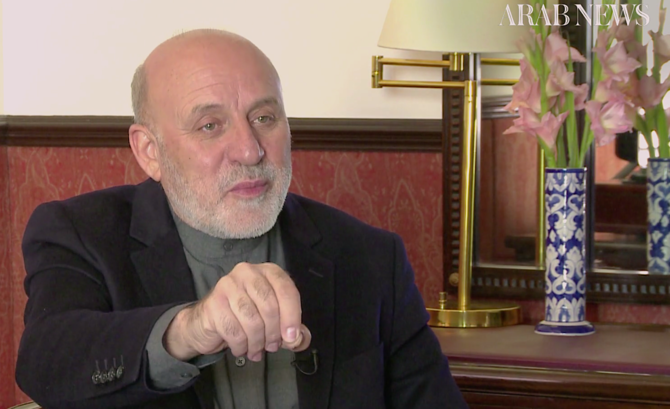
In this file photo, Mohammad Umer Daudzai is giving an interview to Arab News in Islamabad, Pakistan, on January 9, 2019. (AN photo)
Short Url
Updated 01 March 2021
Follow

Kabul welcomes Pakistan's rejection of a future Taliban government — Afghan envoy

  • Pakistan Army spokesperson told reporters last week that ‘Taliban control of Kabul again is not possible’
  • Afghan president’s special envoy says Pakistani leaders promised to openly call for a cease-fire in Afghanistan

ISLAMABAD: Afghanistan’s special envoy has welcomed the Pakistani military’s announcement that it would oppose the return of the Taliban to power in Afghanistan.
The Afghan president’s special envoy for Pakistan, Mohammad Umer Daudzai, was on a three-day visit to Islamabad last week as peace talks between the Taliban and the Afghan government have resumed in Qatar to yield a power-sharing arrangement in the country torn by a decades-long conflict.
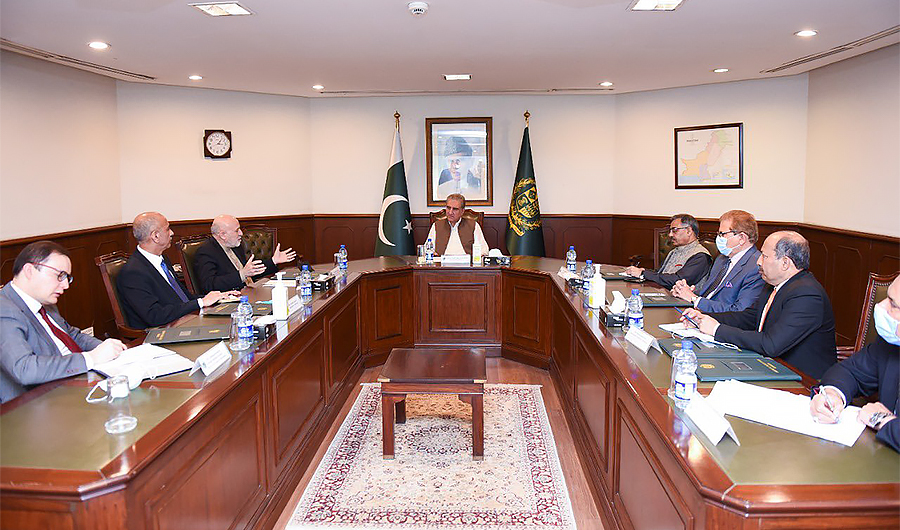


Afghan president's special envoy for Pakistan, Mohammad Umer Daudzai (first in the left row) meets Pakistan's Foreign Minister, Shah Mahmood Qureshi (center) in Islamabad, Pakistan, on February 26, 2021. (Photo courtesy: Mohammad Umer Daudzai/Twitter)

During the peace talks, which started in September and have been suspended several times since, Afghan government negotiators have been pushing for a permanent cease-fire and are expected to protect the existing system of governance — in place since the ouster of the Taliban by a US-led invasion of Afghanistan in 2001.
As Daudzai was visiting Islamabad, which has been seen as critical to getting the Taliban back to the negotiating table and pushing them to reduce violence in Afghanistan, Pakistan Army spokesperson Maj. Gen. Babar Iftikhar told reporters on Wednesday that “Taliban control of Kabul again is not possible, and Pakistan will not support any such move.”
Daudzai welcomed the statement as a “very positive development” and one that is not accidental.
“The statement by the Pakistan’s army spokesman is new, which is not by chance. Armies take assessment of the environment in their neighborhood and the Pakistan army has realized that Afghan army, police and the system are strong, and the Taliban cannot topple the system,” he told Arab News in an interview on Friday.
He said that during his trip that wrapped on Friday, Pakistani leaders had told him they would openly call for a cease-fire in Afghanistan instead of the “ambiguous and useless words ‘reduction in violence’” that had been used by international representatives in official talks.
Daudzai told Arab News that ahead of December’s visit of Taliban delegates to Islamabad, Pakistani Prime Minister Imran Khan had assured Afghan President Ashraf Ghani that he would take up the cease-fire issue with the group.
“But later we realized that the Taliban did not show flexibility on the issue,” Daudzai said.
The Taliban have been rejecting cease-fire since the beginning of intra-Afghan negotiations.
“If Pakistan says that it does not have control over the Taliban but has some influence, we request Pakistan to take advantage of its influence and convince the Taliban to hold fruitful negotiations,” the Afghan envoy said, as he expressed hope for progress before Ghani’s planned visit before the beginning of the fasting month of Ramadan in mid-April.
“We want major progress before the president’s visit to Pakistan so both sides make any important announcement,” he said.


Pakistan, ADB sign $730 loan agreements to boost SOE reforms, energy infrastructure

Updated 25 December 2025
Follow

Pakistan, ADB sign $730 loan agreements to boost SOE reforms, energy infrastructure

  • Both sign $330 million Power Transmission Strengthening Project and $400 million SOE Transformation Program loan agreements
  • Economic Affairs Division official says Transmission Project will secure Pakistan’s energy future by strengthening national grid’s backbone

KARACHI: Pakistan and the Asian Development Bank (ADB) on Thursday signed two loan agreements totaling $730 million to boost reforms in state-owned enterprises (SOEs) and energy infrastructure in the country, the bank said.

The first of the two agreements pertains to the SOE Transformation Program worth $400 million while the second loan, worth $330 million, is for a Power Transmission Strengthening Project, the lender said. 

The agreements were signed by ADB Country Director for Pakistan Emma Fan and Pakistan’s Secretary of Economic Affairs Division Humair Karim. 

“The agreements demonstrate ADB’s enduring commitment to supporting sustainable and inclusive economic growth in Pakistan,” the ADB said. 

Pakistan’s SOEs have incurred losses worth billions of dollars over the years due to financial mismanagement and corruption. These entities, including the country’s national airline Pakistan International Airlines, which was sold to a private group this week, have relied on subsequent government bailouts over the years to operate.

The ADB approved the $400 million loan for SOE reforms on Dec. 12. It said the program seeks to improve governance and optimize the performance of Pakistan’s commercial SOEs. 

Karim highlighted that the Power Transmission Strengthening Project will enable reliable evacuation of 2,300 MW from Pakistan’s upcoming hydropower projects, relieve overloading of existing transmission lines and enhance resilience under contingency conditions, the Press Information Department (PID) said. 

“The Secretary emphasized that both initiatives are transformative in nature as the Transmission Project will secure Pakistan’s energy future by strengthening the backbone of the national grid whereas the SOE Program will enhance transparency, efficiency and sustainability of state-owned enterprises nationwide,” the PID said. 

The ADB has supported reforms by Pakistan to strengthen its public finance and social protection systems. It has also undertaken programs in the country to help with post-flood reconstruction, improve food security and social and human capital. 

To date, ADB says it has committed 764 public sector loans, grants and technical assistance totaling $43.4 billion to Pakistan.