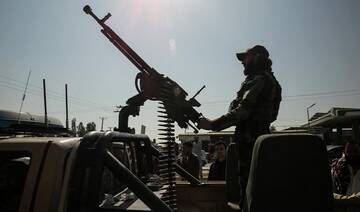
KANO, Nigeria: An operation to rescue more than 300 girls kidnapped in Nigeria had failed to pinpoint their location by late on Friday, almost 24 hours after gunmen seized them in a raid on their school.
The raid in Zamfara state, where the governor ordered all boarding schools to close immediately, was the second such kidnapping in little over a week in the country’s northwest, a region increasingly targeted by militants and criminal gangs.
Zamfara police said they had begun search-and-rescue operations with the army to find the “bandits” who took the 317 girls from the Government Girls Science Secondary School in the town of Jangebe.
“There’s information that they were moved to a neighboring forest, and we are tracking and exercising caution,” Zamfara police commissioner Abutu Yaro told a news conference.
All the abductees remained at large, but the parent of one of them, Mohammed Usman Jangebe, said seven of their schoolmates had resurfaced after escaping the raiders by hiding in gutters.
The assailants stormed in at around 1 a.m., firing sporadically, said Zamfara’s information commissioner, Sulaiman Tanau Anka.
“Information available to me said they came with vehicles and moved the students. They also moved some on foot,” he told Reuters.
By late Friday, there had been no claim of responsibility for the raid.
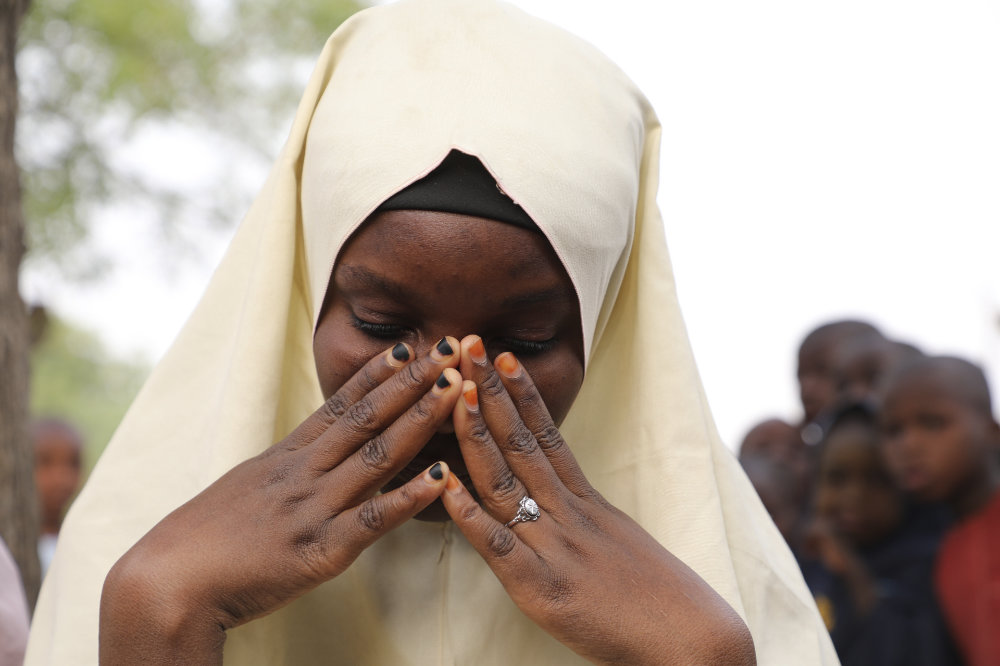
One of the students of a boarding school in Jangebe, Nigeria, was lucky enough to have missed by kidnappers who raided a secondary school on Feb. 26, 2021. (AP Photo/ Ibrahim Mansur)
School kidnappings were first carried out by jihadist groups Boko Haram and Islamic State West Africa Province but the tactic has now been adopted by other militants whose agenda is unclear.
They have become endemic around the increasingly lawless north, to the anguish of families and frustration of Nigeria’s government and armed forces. Friday’s was the third such incident since December.
The rise in abductions is fueled in part by sizeable government payoffs in exchange for child hostages, catalizing a broader breakdown of security in the north, officials have said, speaking on condition of anonymity.
The government denies making such payouts, and President Muhammadu Buhari reiterated on Friday that it would will not succumb to blackmail.
In a statement isued late on Friday, he also appealed to state administrations not to reward bandits with money or vehicles.
Rage and frustration
Jangebe town seethed with anger over the abduction, said a government official who was part of the delegation to the community.
Young men hurled rocks at journalists driving through the town, injuring a cameraman, the official said, speaking on condition of anonymity.
“People mobilized to block security operatives, journalists and government officials from getting access to the main town,” he said.
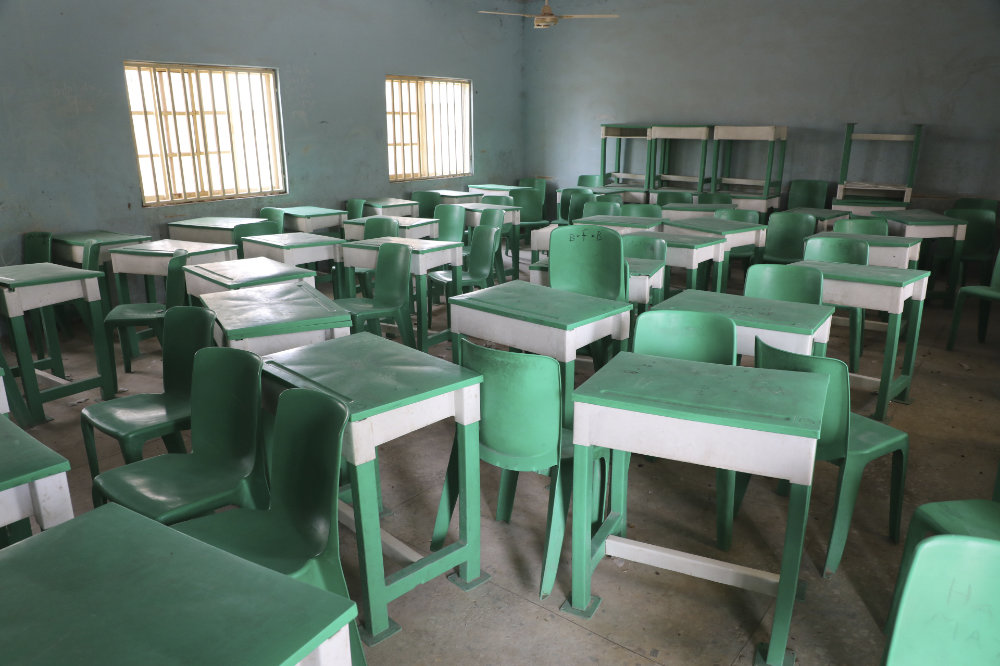
Empty classroom at a girls school in Jangebe, Nigeria, where gunmen abducted 317 girls on Feb. 25, 2021. (AP Photo/ Ibrahim Mansur)
Parents also had no faith in authorities to return their kidnapped girls, said Mohammed Usman Jangebe told Reuters by phone.
“We are going to rescue our children, since the government isn’t ready to give them protection,” he said.
“All of us that have had our children abducted have agreed to follow them into the forest. We will not listen to anyone now until we rescue our children.”
Military shakeup
Buhari replaced his long-standing military chiefs this month amid the worsening violence.
Last week, unidentified gunmen kidnapped 42 people including 27 students, and killed one pupil, in an overnight attack on a boarding school in the north-central state of Niger. The hostages are yet to be released.
In December, dozens of gunmen abducted 344 schoolboys in northwest Katsina state. They were freed after six days but the government denied paying a ransom.
Islamic State’s West Africa branch in 2018 kidnapped more than 100 schoolgirls in northeast Nigeria, all but one of whom — the only Christian — were released. A ransom was paid, according to the United Nations.
Perhaps the most notorious kidnapping in recent years was when Boko Haram militants abducted 276 schoolgirls from Chibok in Borno state in April 2014. The incident drew widespread global attention, with then US first lady Michelle Obama among the prominent figures calling for their return.
Many have been found or rescued by the army, or freed years later after negotiations between the government and Boko Haram, according to sources, but 100 are still missing.
Ikemesit Effiong, head of research at Lagos-based risk consultancy SBM Intelligence, said many northern governors were keen to pay to avoid protracted hostage situations attracting international outrage, which in turn gave an incentive for more abductions.
“When you have these mass abductions now and you see victims are released relatively quickly, unlike Chibok, the one thing that has changed is money,” Effiong said.