DUBAI, United Arab Emirates: Bahrain’s crown prince spoke with the Israeli prime minister on Thursday about the return to nuclear talks with Iran, Bahrain’s state-run news agency reported, as the US administration tries to revive the tattered 2015 nuclear accord.
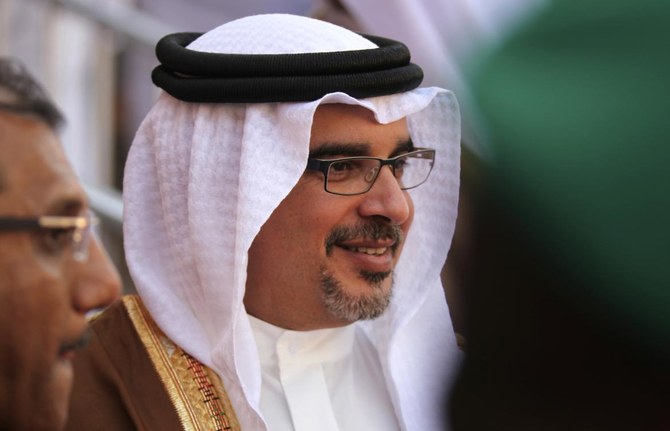
Bahraini Crown Prince Salman bin Hamad Al-Khalifa, also the country’s prime minister, stressed to Israeli Prime Minister Benjamin Netanyahu “the importance of the participation of regional countries in any negotiations on the Iranian nuclear file” to support “security and stability in the region,” according to the official Bahrain News Agency.
The statement marks the first response from a Gulf Arab leader to President Joe Biden’s announcement earlier this month that he was seeking a return to nuclear negotiations with Iran. Nearly three years ago, former President Donald Trump abandoned the landmark accord and reimposed harsh sanctions on Iran. His withdrawal was welcomed by Gulf nations and Israel, Iran’s foes in the region that are most directly threatened and staunchly opposed the deal.
The sheikhdoms in the Arabian Gulf, along with Israel, were excluded from the last nuclear negotiations and remain highly skeptical of Iran’s intentions. They have indicated they would only be open to a deal if it included limits on Iran’s non-nuclear activities, including missile development and support for rebel groups and militias in the Middle East. A main reason Trump gave for withdrawing from the nuclear deal was that it did not address those issues.
In Thursday’s call, the Bahraini crown prince urged that any nuclear negotiations with Iran “include broader issues,” without elaborating.
The readout from Israel made no mention of Washington’s outreach to Tehran. It said only that the crown prince repeated his invitation for Netanyahu to visit Bahrain once the pandemic allows and that the kingdom is interested in investing jointly with other countries in a vaccine production factory planned to be located in Israel.
Following the United Arab Emirates, the island kingdom of Bahrain normalized relations with Israel last fall, an agreement forged out of mutual enmity for Iran.

Bahrain’s crown prince calls Israel PM on Iran nuclear talks
https://arab.news/g7ny5
Bahrain’s crown prince calls Israel PM on Iran nuclear talks
- The statement marks the first response from a Gulf Arab leader to President Joe Biden’s announcement earlier this month
Turkiye to forge on with tight economic policy, some fine-tuning, VP Yilmaz says
- The central bank forecasts inflation between 13-19 percent by end-2026
ISTANBUL: Turkiye is committed to carrying on its tight economic policies in order to cool inflation, and though it may fine-tune the program it will not change course, Vice President Cevdet Yilmaz said in comments embargoed to Friday.
“There is no plan to pause our program,” Yilmaz said at a briefing with reporters in Istanbul on Thursday. “All programs are dynamic, and adjustments can always be made.”
Yilmaz, who plays a key role overseeing economic policy at the presidency, said any such adjustments would aim to support production, investment and exports while moderating consumption.
Turkiye has pursued tight monetary and fiscal policies for more than two years in order to reduce price pressure, leading to high financing and borrowing costs that have weighed on businesses and households. Inflation has eased slowly but steadily over the last year but remains elevated at 31 percent annually.
Last month, Is Bank CEO Hakan Aran warned that focusing solely on one target — inflation — could create side effects, suggesting a “pause and restart” might be healthy once the program achieves certain targets.
Yılmaz said the government expects improvements in inflation in the first quarter, which should reflect to market expectations for year-end inflation around 23 percent. The government projects inflation to dip as far as 16 percent by year end, within a 13-19 percent range, and falling to 9 percent in 2027. The central bank forecasts inflation between 13-19 percent by end-2026.
Yilmaz noted inflation fell by nearly 45 points despite pressure from elevated food prices, hit by agricultural frost and drought.
The agricultural sector is expected to support growth and help ease price rises this year, which could help achieve official inflation targets, he said.
Yilmaz said the government wants to avoid a rapid drop in inflation that could hurt economic growth, jobs and social stability.
Turkiye’s economic program was established in 2023 after years of unorthodox easy money that aimed to stoke growth but that sent inflation soaring and the lira plunging. The program aims to dislodge high inflation expectations while boosting production and exports, in order to address long-standing current account deficits.
The central bank, having raised interest rates as high as 50 percent in 2024, eased policy through most of last year, bringing the key rate down to 38 percent.
Asked whether lower rates could trigger an exit from the lira currency, Yilmaz said: “What matters is real interest rates. Lowering rates as inflation falls does not affect real rates, so we do not expect such an impact.”
He added that the government will strengthen mechanisms that selectively support companies while improving overall financial conditions.


