

PROFILE: The golden voice of Egyptian singer Nouran Abu Taleb

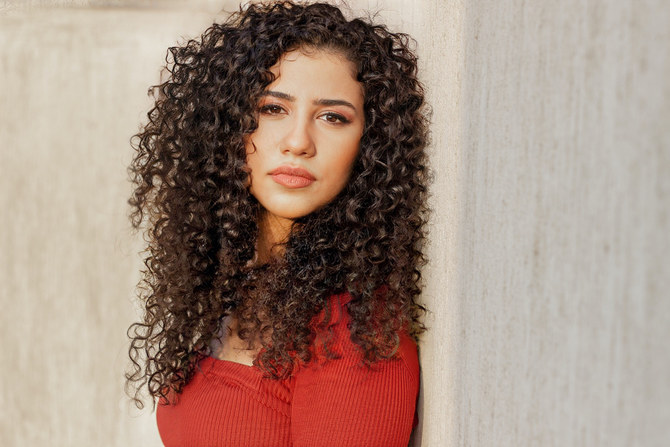
Nouran Abu Taleb is an Egyptian singer. (Supplied)
Short Url
Updated 25 February 2021
Follow

PROFILE: The golden voice of Egyptian singer Nouran Abu Taleb

  • The Egyptian singer has made a name for herself performing covers, but is now prepping an album of original material

CAIRO: Anyone who grew up in Egypt in the 1980s will almost certainly remember the theme song for the opening credits of soap opera “Zay Al-Hawwa,” performed by Ali El-Haggar and Hanan Mady. That’s why a recent cover version by Egyptian singer Nouran Abu Taleb — accompanied by bassist Samer George — triggered intense bouts of nostalgia among Egyptians of a certain age.

Abu Taleb’s version of this TV classic is delicately intimate, her hypnotic voice giving it a touch of magic. 

“Covering songs help you mature as an artist and curate your own vision. I’ve also found that nurturing different music influences helped me figure out what kind of music I wanted to be making,” Abu Taleb tells Arab News. 

The cover is part of an ongoing series from Abu Taleb and George, which has so far included a version of Egyptian singer Mohamed Mounir’s “Shababeek,” which earned Abu Taleb an invite perform the song live with Mounir; and a rendition of Kuwaiti band Guitara’s “Ya Ghali,” originally released in 2003, which garnered 16 million views on YouTube. 

The aim of Abu Taleb’s collaboration with George is not to simply reproduce the original songs, however. Beyond their nostalgic quality, what has attracted people to their work, Abu Taleb says, is the unusual sound of a vocalist being accompanied only by a bass guitar — something that allows them to experiment with the compositions.  

“Samer has been doing these voice-and-bass collabs for a while now, but mainly in English jazz, where they are more common. People are not really used to seeing a bass guitar accompanying a vocalist. So to use bass as a solo instrument in Arabic songs was completely new,” she says. 

Abu Taleb only joined forces with George in 2018, after they had both performed separately on the same bill. “Samer is one of the most well-established jazz musicians in Egypt,” Abu Taleb says. “The bass guitar has a Western sound. My background, on the other hand, is more in Arabic and Oriental music, and I perform in Arabic.” That blend led George to suggest performing a tribute show to the iconic Lebanese diva Fayrouz — “(her) songs have a bit of both worlds,” Abu Taleb explains.

That show was a hit, and the duo went on to repeat their performance on a number of occasions. With things going so well, they decided it was time to expand their sound, and formed a band with percussionist Hany Bedair and clarinetist Mostafa Said — once again performing covers, with the exception of a Sufi-themed song written by Abu Taleb. (These days, the band also includes pianist George Nabil and drummer Marwan Wahid Zaki.)

Eventually, though, they did release an original track, 2019’s bossa nova-inspired “Fawazeer.” Other singles followed including their own soap-opera theme for the opening credits of 2019’s “Alamat Istifham.” In October, Abu Taleb released “Fil Lail,” a pop track that has garnered more than 130,000 views on YouTube. 

Genre-hopping has been a distinctive feature of Abu Taleb’s career so far, and one that looks set to continue on her debut album, which she hopes to release this year. The record will see her collaborating with the poets Nada El-Shabrawy and Hazem Wefy, among others, and will span several genres, she says, including electronic and slow rock. 

While Abu Taleb writes both music and lyrics, she also enjoys collaborating with other writers on both and is especially proud of mostly collaborating with other female writers on her lyrics so far. 

“The quality of lyrics is particularly important to me,” she says. “So is poetic imagery.”

And while love songs are seen as outdated and cheesy by many of her peers, Abu Taleb says she will not shy away from them — not wanting to limit her creativity. 

“I know our generation has grown bored with love songs, particularly since underground music made an appearance about a decade ago. We were looking for something different that talked about the people,” she says. “But I enjoy singing about everything, including love.”


Mini op-ed: Why emotional wellbeing is not only an individual concern in Arab societies

Updated 11 sec ago
Follow

Mini op-ed: Why emotional wellbeing is not only an individual concern in Arab societies

ABU DHABI: Across much of the world, emotional wellbeing is now being discussed in similar ways with familiar language: self-care, boundaries, resilience.

These terms have helped people speak more openly about stress and mental health, often for the first time. That matters. But the language also carries an assumption, one that is not always questioned. It suggests that healing begins, and largely takes place, within the individual.

In many Arab societies, that idea does not fully apply. The self is rarely experienced in isolation. Identity forms early through family life, shared responsibility, and social roles that extend beyond personal choice.

Sophie Gregoire Trudeau and Nancy Zabaneh. (Supplied) 

Emotions are often managed in relation to others, not apart from them. This difference has practical consequences, particularly as pressure and uncertainty.

Wellbeing is not just something that happens on a mat or during a six-day retreat, it shows itself in daily life, in our relationships, in how we respond under pressure, and in the choices we make when no one is watching.

That observation runs counter to a global trend that treats emotional health as a private task.

Western approaches have introduced useful tools, including emotional vocabulary, self-reflection, and psychological insight. But when these ideas travel without adaptation, they can overlook the social structures that shape behavior in societies where family and community play a central role.

Healing often begins with the individual in the West. In the East, the sense of self is more closely tied to family, community, and spirituality. Both are powerful — wellbeing lives where self-awareness meets belonging.

In the Gulf, fast economic growth, changing work patterns, and constant digital connection have altered how people live and relate to one another. Traditional support systems still play an important role, but they are under pressure.

At the same time, imported wellness language can feel out of place when it prioritizes inward focus over shared responsibility.

In this region, community and compassion belong together and remain a source of balance and meaning. Emotional awareness, in this setting, is less about self-improvement and more about how people treat one another, whether at home, at work, or during moments of stress.

The UAE has begun to reflect this broader view at a policy level. The National Strategy for Wellbeing 2031 frames emotional and mental health as a part of social wellbeing, not simply personal coping.

That emphasis is reinforced by the government’s designation of 2026 as the Year of Family, which places family relationships at the center of social stability and long-term wellbeing.

Together, these initiatives point to the vital role of families, schools, and workplaces, while leaving open the question of how collective responsibility and individual needs should be balanced in practice.

If there is one message, it is that wellbeing begins with connection to ourselves, to each other, and to what we value most.

As emotional awareness becomes a global language, its meaning will continue to shift. The task ahead may not be choosing between individual insight and collective care, but recognizing where each works, where it falls short, and how the two can exist alongside one another.

Nancy Zabaneh is a Dubai-based wellbeing educator and trauma-informed facilitator of Palestinian origin who has lived and worked in the UAE for more than 25 years. Sophie Gregoire Trudeau is a Canadian author and mental health advocate and has a decade of experience in the public eye as Canada’s former first lady. They are writing ahead of the Kayan Wellness Festival in Abu Dhabi.