

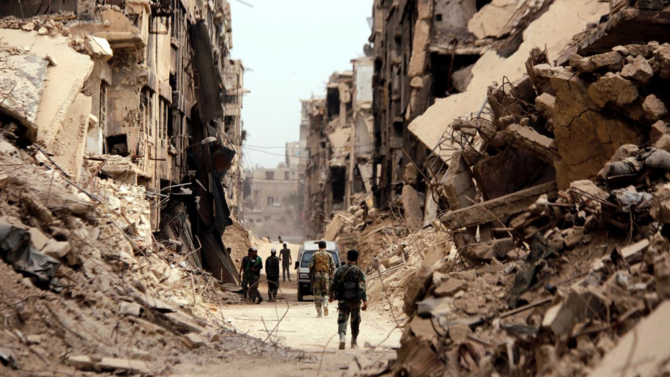

LONDON: The civil war in Syria is being forgotten by the British people as apathy toward the decade-long conflict grows, according to a UK-based charity.
The results of a YouGov survey, released on Wednesday, showed only a little more than half (58 percent) of those polled were aware the war was still going on. A spokesman for Syria Relief said Britons have “turned off their minds” to what is happening in the country.
The poll, which marks the upcoming 10th anniversary of the start of the conflict, found 38 percent of 1,753 people questioned in the UK were not sure of the current status of the war, while four percent believed it had ended.
Public awareness of the conflict was higher in August 2019, when a survey found that 77 percent people knew about the conflict, according to Syria Relief.
“I believe that after 10 years the UK has become fatigued about the Syrian crisis because of its protracted nature,” Charles Lawley, head of communications and advocacy at Syria Relief, told Arab News. “They are accepting that this is a place where tragedies happen on a daily basis, so they turn their minds off to it — and this is a great tragedy.
“I think it is a symptom of British society becoming less concerned about issues beyond our own borders and, to be frank, it is almost as if the suffering of Syrians is boring them.”
This year also marks 10 years since the regime of Syrian President Bashar Assad targeted 10 schools and a hospital in attacks that claimed the lives of more than 20 people, more than half of them children, something that would not be tolerated in the UK, Lawley said.
“If this would have happened in Britain it would have been treated akin to our 9/11: a national tragedy that would be remembered for generations,” he said. “Yet because it happened in Syria, no one knows about it.
“We wouldn’t tolerate children being bombed as they sit in the classrooms of British schools so why on earth do we tolerate it in Syria or anywhere else in the world?”
Extensive media coverage of the COVID-19 pandemic and Brexit negotiations has meant that UK national news updates on the Syrian conflict have been increasingly rare in the past few years, which makes the efforts of charities to help the victims of the conflict much harder, Lawley said.
“It is so difficult for organizations like Syria Relief to get the UK or the world to care about suffering and death in Syria,” he said. “When we just allow Syria to be a place where bombs can be dropped on schools or hospitals, we devalue the lives of Syrians.
“But, tragically, our apathy to the plight of the Syrian people compounds their suffering as there is no pressure on governments to act to stop warring parties in the conflict from committing crimes against humanity.
“Ultimately, the British people need to remember that Syrians are people too. Their lives are just as valuable as any human life; the only difference between them and (us) is where they were born. They didn’t ask for this.”
While the UK has pledged billions of pounds in aid for Syria since 2012, politicians and the media in the UK need to do more to shine a light on the conflict and the suffering of ordinary Syrians, Lawley said, especially after the government’s recent announcement of cuts to the aid budget.
“The UK government is the third-biggest donor to the Syrian humanitarian aid response and should be proud about the enormous amount of good it is doing to help the people impacted by the conflict,” he said.
“However, with the recent announcement of the government about plans to cut the aid budget, this is making us at Syria Relief, and many of our colleagues in the (nongovernmental organization) community very concerned about what this could mean to the Syrian people — many of whom are some of the most vulnerable people on the globe.
“I think the government should be shouting from the rooftops about the incredible things that the UK aid budget has achieved. If it had, I think there would have been more opposition from the public about the announcement to cut the budget.
“Being a global leader in helping the world’s poorest and most vulnerable people should be worn as a badge of national pride, not treated like a dirty little secret.”
The war in Syria began in 2011 amid pro-democracy protests in Deraa. Tensions escalated after the Assad regime crushed dissenters who staged a “day of rage” on March 15, which ultimately led to more people flooding city streets demanding the president step down.


