

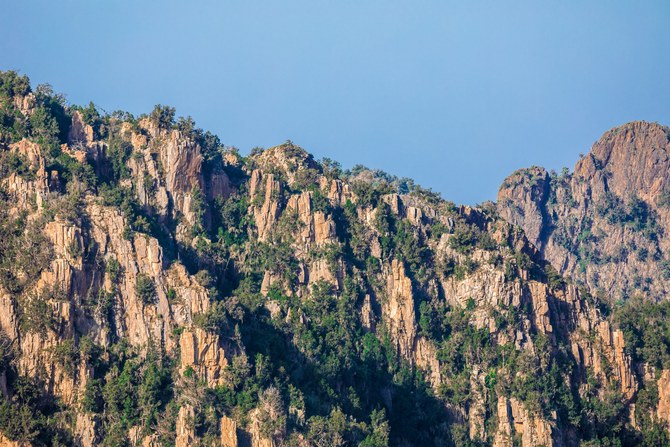
Saudi Arabia announces launch of Soudah Development Company

1 / 6
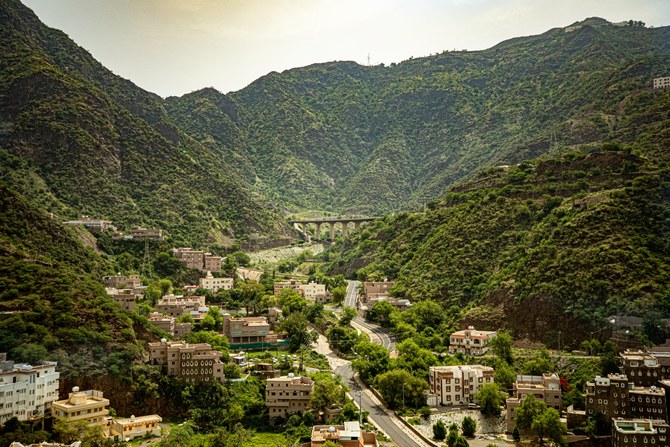
Saudi Arabia’s Crown Prince Mohammed bin Salman launched on Wednesday the Soudah Development Company. (SPA)
2 / 6
Saudi Arabia’s Crown Prince Mohammed bin Salman launched on Wednesday the Soudah Development Company with an investment of SR 11 billion. (SPA)
3 / 6
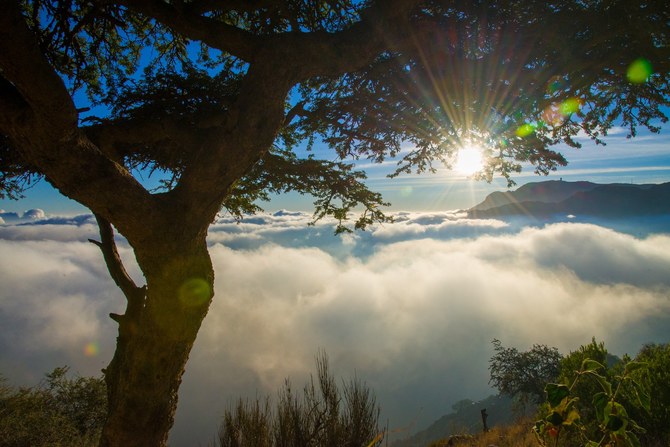
Saudi Arabia’s Crown Prince Mohammed bin Salman launched on Wednesday the Soudah Development Company. (SPA)
4 / 6
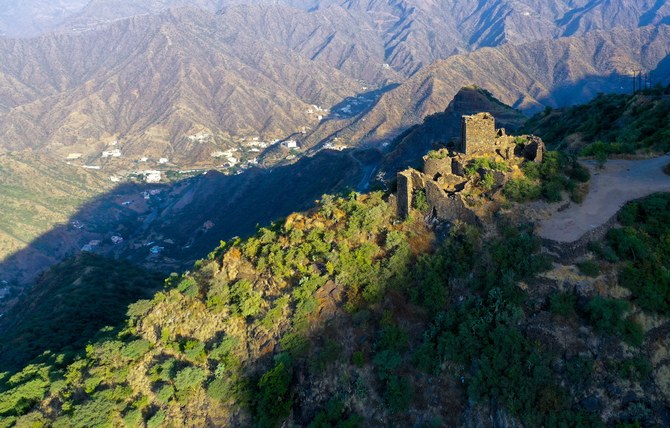
Saudi Arabia’s Crown Prince Mohammed bin Salman launched on Wednesday the Soudah Development Company. (SPA)
5 / 6
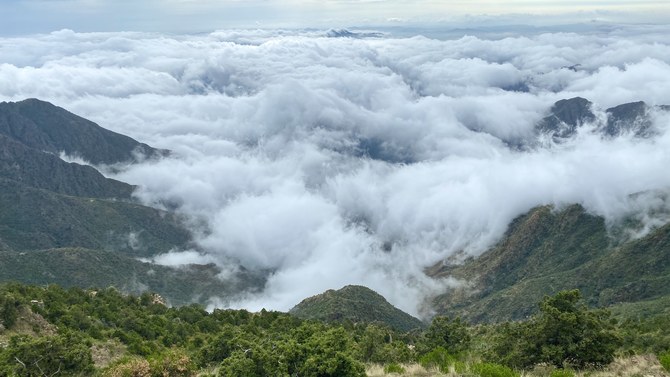
Saudi Arabia’s Crown Prince Mohammed bin Salman launched on Wednesday the Soudah Development Company. (SPA)
6 / 6
Saudi Arabia’s Crown Prince Mohammed bin Salman launched on Wednesday the Soudah Development Company. (SPA)
Short Url
Updated 25 February 2021
Follow

Saudi Arabia announces launch of Soudah Development Company

  • The company aims to attract more than two million visitors annually, and create 8,000 direct and indirect permanent jobs by 2030
  • Investment of $3 billion in tourism infrastructure and attractions to create a world-class mountain destination in the Asir region

RIYADH: Saudi crown prince and chairman of the Public Investment Fund (PIF), Mohammed bin Salman, announced on Wednesday the launch of the Soudah Development Company (SDC) in the Asir region.

The new entity, fully owned by PIF, will lead the development of a luxury mountain destination with immersive cultural experiences. It will be a celebration of natural assets empowering the local and national economies.

Launched to be a key driver of the Kingdom’s Vision 2030 ambitions, SDC will infuse SR11 billion ($3 billion) into infrastructure and tourism projects, aimed at enhancing the visitor experience in Soudah and parts of Rijal Alma’a governorate.

The planned developments include 2,700 hotel rooms, 1,300 residential units, and 30 commercial and entertainment attractions.

SDC aims to develop Soudah and Rijal Alma’a into a repeat, year-long sustainable destination for residents and visitors that will contribute an estimated SR29 billion to the Kingdom’s cumulative GDP by 2030.

FASTFACT

Tourism

SDC to collaborate with the private sector to enhance tourism infrastructure with hotel, residential units and commercial and entertainment attractions by 2030.

The company also intends to partner and collaborate with the local community and private sector to build a robust and diverse network of year-long offerings across the hospitality, residential, commercial and entertainment sectors.

It aims to attract more than 2 million visitors annually, targeting adventure-seekers and culture travelers who are looking for one-off experiences. It is also forecast to create 8,000 direct and indirect permanent jobs by 2030.

“Our investment in the Asir region reflects our confidence in the character of the location, which is a rich amalgamation of identity, heritage and experience,” said Yasir Othman Al-Rumayyan, PIF governor. “Through careful and considerate development, SDC will provide yet another remarkable destination in the diverse and growing portfolio of Saudi Arabian experiences capturing the imagination of a broad range of investors and travelers.”

The fund will inject at least SR150 billion a year into the local economy and aims to grow assets under management to more than SR7 trillion by 2030.

The destination adds another dimension to Saudi Arabia’s ambitious tourism goals, and complements those destinations created on the Red Sea coast and around the capital city of Riyadh.

Preserving the environmental integrity of the destination will be a priority for the SDC, and the development will follow a rigorous regulatory framework and urban planning code.


Acwa signs key terms to develop 5GW of renewable energy capacity in Turkiye

Updated 23 February 2026
Follow

Acwa signs key terms to develop 5GW of renewable energy capacity in Turkiye

JEDDAH: Saudi utility giant Acwa has signed key investment agreements with Turkiye’s Ministry of Energy and Natural Resources to develop up to 5 gigawatts of renewable energy capacity, starting with 2GW of solar power across two plants in Sivas and Taseli.

Under the investment agreement, Acwa will develop, finance, and construct, as well as commission and operate both facilities, according to a press release.

The program builds on the company’s first investment in Turkiye, the 927-megawatt Kirikkale Independent Power Plant, valued at $930 million, which offsets approximately 1.8 million tonnes of carbon dioxide annually, the statement added.

A separate power purchase agreement has been concluded with Elektrik Uretim Anonim Sirketi for the sale of electricity generated by each facility.

Turkiye aims to boost solar and wind capacity to 120GW by 2035, supported by around $80 billion in investment, while recent projects have already helped prevent 12.5 million tonnes of CO2 emissions and reduced reliance on imported natural gas.

Turkiye’s energy sector has undergone a rapid transformation in recent years, with renewable power emerging as a central pillar of its strategy.

Raad Al-Saady, vice chairman and managing director of ACWA, said: “The signing of the IA (implementation agreement) and PPA key terms marks a pivotal moment in Acwa’s partnership with Turkiye, reflecting the country’s strong potential as a clean energy leader and manufacturing powerhouse.”

He added: “Building on our long-standing presence, including the 927MW Kirikkale Power Plant commissioned in 2017, this step elevates our partnership to a new level,” Al-Saady said.

In its statement, Acwa said the 5GW renewable energy program will deliver electricity at fixed prices, enhancing predictability for grid planning and supporting long-term industrial investment.

By replacing imported fossil fuels with domestically generated clean energy, the initiative is expected to reduce Turkiye’s exposure to global energy market volatility, strengthening energy security and lowering long-term power costs.

The company added that the economic impact will extend beyond the anticipated investment of up to $5 billion in foreign direct investment, with thousands of jobs expected during the construction phase and hundreds of high-skilled roles created during operations.

The energy firm concluded that its existing progress in Turkiye reflects a strong appreciation for Turkish engineering, construction, and manufacturing capacity, adding that localization has been a strategic priority, and it has already achieved 100 percent local employment at its developments in the country.