

Lebanon, UK among world’s strictest coronavirus lockdowns

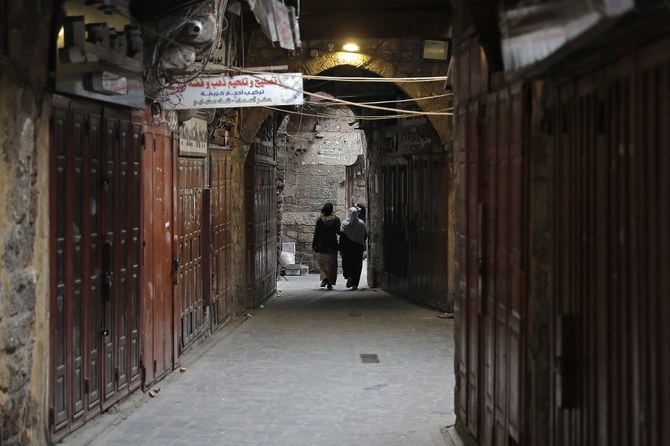
Lebanon’s state of medical emergency has been extended until March 31. (AFP file photo)
Short Url
Updated 24 February 2021
Follow

Lebanon, UK among world’s strictest coronavirus lockdowns

  • Palestine, Tunisia close behind, according to Oxford University analysis

LONDON: Britons and Lebanese are enduring some of the strictest lockdown conditions in the world, an analysis by Oxford University has found.

Only Eritrea’s and Venezuela’s lockdowns are stricter, according to a tracker compiled by Oxford’s Blavatnik School of Government. Lebanon’s lockdown policies are marginally tougher than Britain’s.

The analysis, which looked at measures to restrict COVID-19 taken by 180 countries and scored them out of 100, gave Lebanon a score of 87.04 and the UK 86.11. Palestine and Tunisia were close behind with a score of 83.33 and 80.56, respectively.

Lebanon’s lockdown easing started on Monday, with supermarkets and grocery stores allowed to reopen during the first phase.

Banks have also been cleared for reopening, but they have been limited to operating at 20 percent capacity.

Lebanon’s state of medical emergency has been extended until March 31, giving the government powers to implement other measures such as curfews and travel restrictions to combat COVID-19. 

Facemasks remain mandatory in public, and violations of the country’s social distancing and safety guidelines are punishable by fines.


Hundreds mourn in Syria’s Homs after deadly mosque bombing

Updated 27 December 2025
Follow

Hundreds mourn in Syria’s Homs after deadly mosque bombing

  • Officials have said the preliminary investigations indicate explosive devices were planted inside the mosque but have not yet publicly identified a suspect

HOMS: Hundreds of mourners gathered Saturday despite rain and cold outside of a mosque in the Syrian city of Homs where a bombing the day before killed eight people and wounded 18.
The crowd gathered next to the Imam Ali ibn Abi Talib Mosque in the Wadi Al-Dhahab neighborhood, where the population is predominantly from the Alawite minority, before driving in convoys to bury the victims.
Officials have said the preliminary investigations indicate explosive devices were planted inside the mosque but have not yet publicly identified a suspect.
A little-known group calling itself Saraya Ansar Al-Sunna claimed responsibility for the attack in a statement posted on its Telegram channel, in which it indicated that the attack intended to target members of the Alawite sect, an offshoot of Shia Islam whom hard-line Islamists consider to be apostates.
The same group had previously claimed a suicide attack in June in which a gunman opened fire and then detonated an explosive vest inside a Greek Orthodox church in Dweil’a, on the outskirts of Damascus, killing 25 people as worshippers prayed on a Sunday.
A neighbor of the mosque, who asked to be identified only by the honorific Abu Ahmad (“father of Ahmad“) out of security concerns, said he was at home when he heard the sound of a “very very strong explosion.”
He and other neighbors went to the mosque and saw terrified people running out of it, he said. They entered and began trying to help the wounded, amid blood and scattered body parts on the floor.
While the neighborhood is primarily Alawite, he said the mosque had always been open to members of all sects to pray.
“It’s the house of God,” he said. “The mosque’s door is open to everyone. No one ever asked questions. Whoever wants to enter can enter.”
Mourners were unable to enter the mosque to pray Saturday because the crime scene remained cordoned off, so they prayed outside.
Some then marched through the streets chanting “Ya Ali,” in reference to the Prophet Muhammad’s cousin and son-in-law whom Shiite Muslims consider to be his rightful successor.