

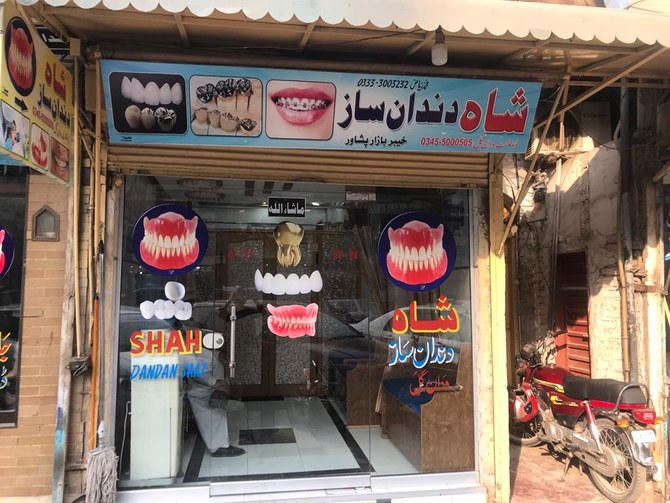

PESHAWAR: Hundreds of public posts for dentists have been lying vacant in Pakistan's northwestern Khyber Pakhtunkhwa province, leading to quack doctors performing procedures on patients, according to a senior official of the provincial doctors association (PDA).
The province, which merged with the erstwhile Federally Administered Tribal Areas (FATA), has been experiencing a shortage of specialist doctors, specifically dental surgeons.
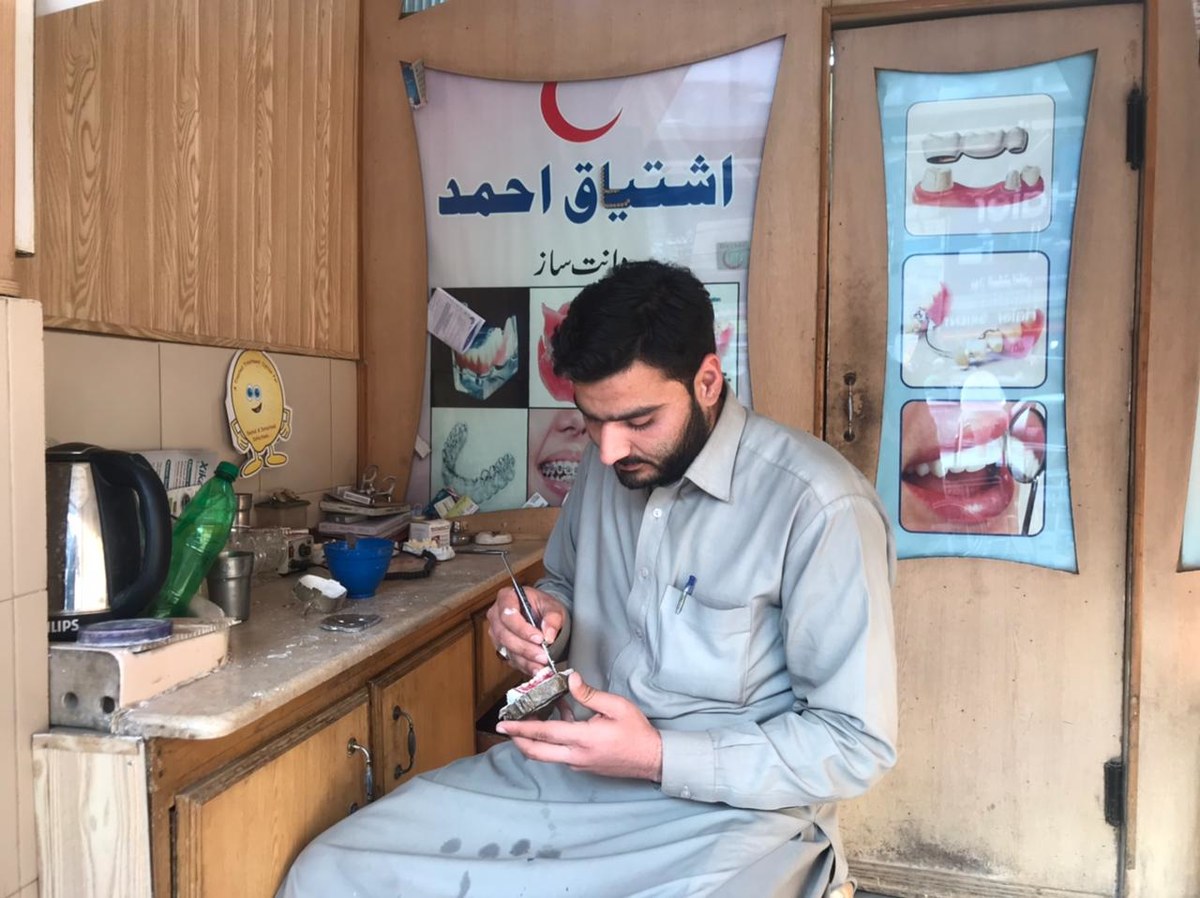
A technician at a dental lab in Peshawar creates a dental mould on February 18, 2021. (AN Photo)
"In the absence of dental surgeons in hospitals, patients approach untrained dental technicians and quacks who play with patients' lives," President PDA Dr. Amir Taj told Arab News on Friday, and added that treatment by ill-trained or non professional doctors caused the spread of diseases like Hepatitis B.
“Over 600 posts of dental surgeons have been lying vacant in KP and the newly-merged districts. Keeping in view the 29. 6 million population of the province, the total dental surgeons in the province are 332 including 15 qualified dental doctors in tribal areas, meaning one professional dentist for 93, 375 people,” he added.
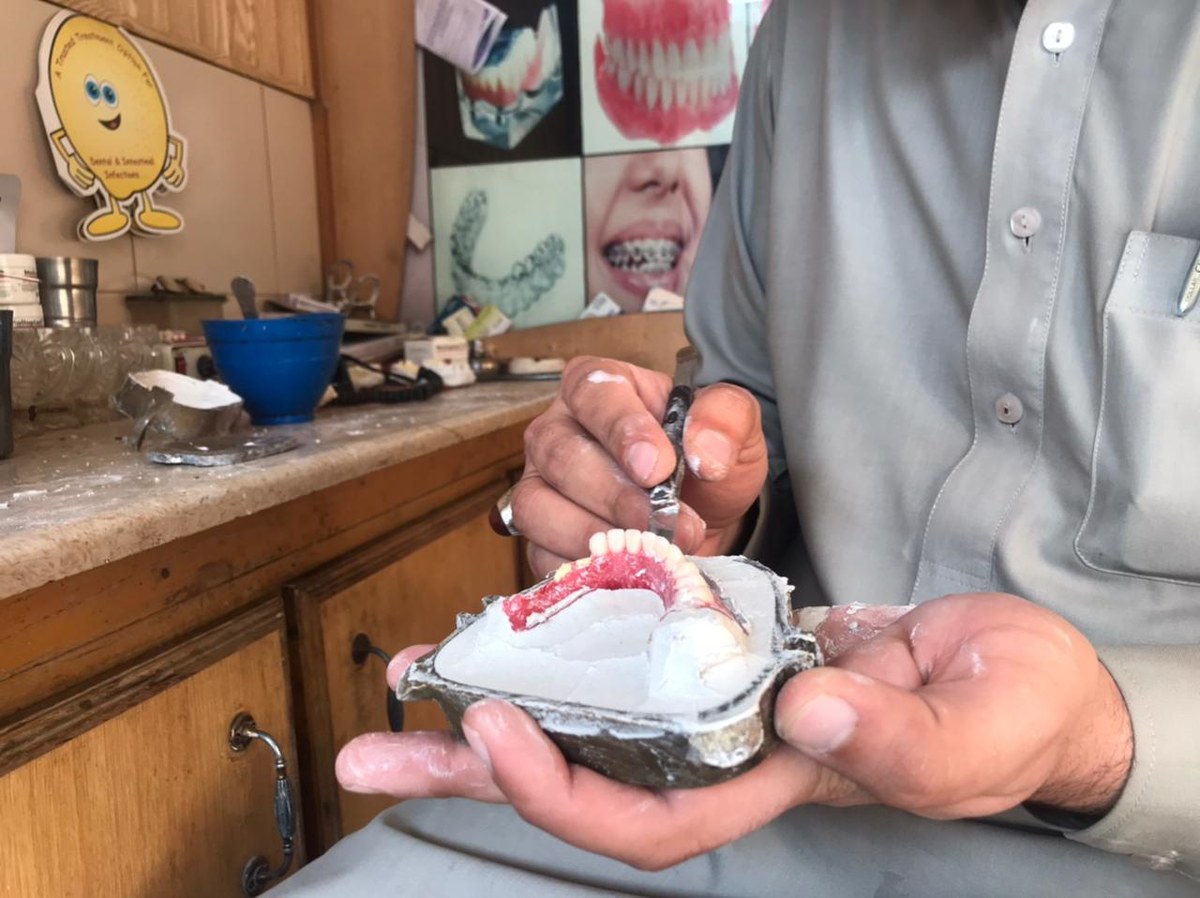
In this photo taken on February 18, 2021, a technician at a dental lab in Peshawar constructs a dental mould (AN photo)
As per global standards, two doctors, a dentist and eight nurses are required per 1,000 people.
Khalid Khan, a resident of Tank District, told Arab News that after a tooth extraction by a self-proclaimed dentist last year, he had a festering wound in his mouth for eight months.
"Ultimately, I had to come to Peshawar for treatment," Khan said. "The quack charged me Rs700 and later I had to spend Rs32,000 on treatment in Peshawar."
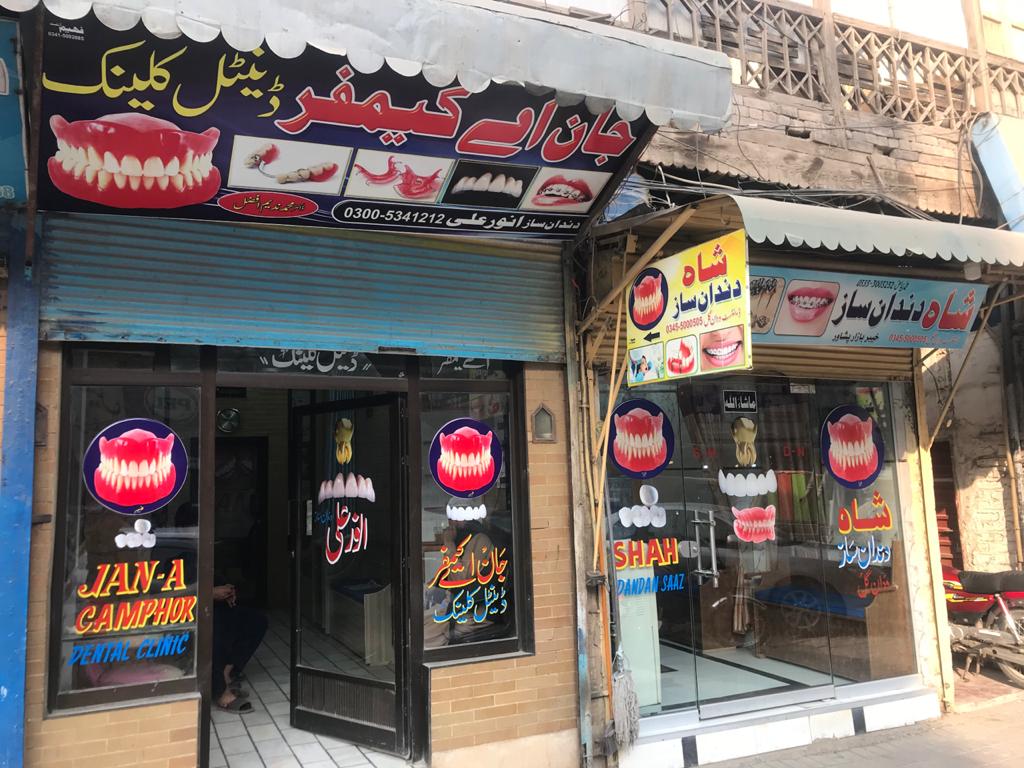
View of a dental clinic in Peshawar on February 18, 2021 (AN Photo)
But Syed Imtiaz Hussain Shah, provincial health secretary rejected the PDA's claims about dentists' vacant posts and said the KP government had already tasked the public service commission to make appointments on vacant posts at the earliest.
“There are some 34 vacant posts on which recruitment will be made very soon,” Shah told Arab News.
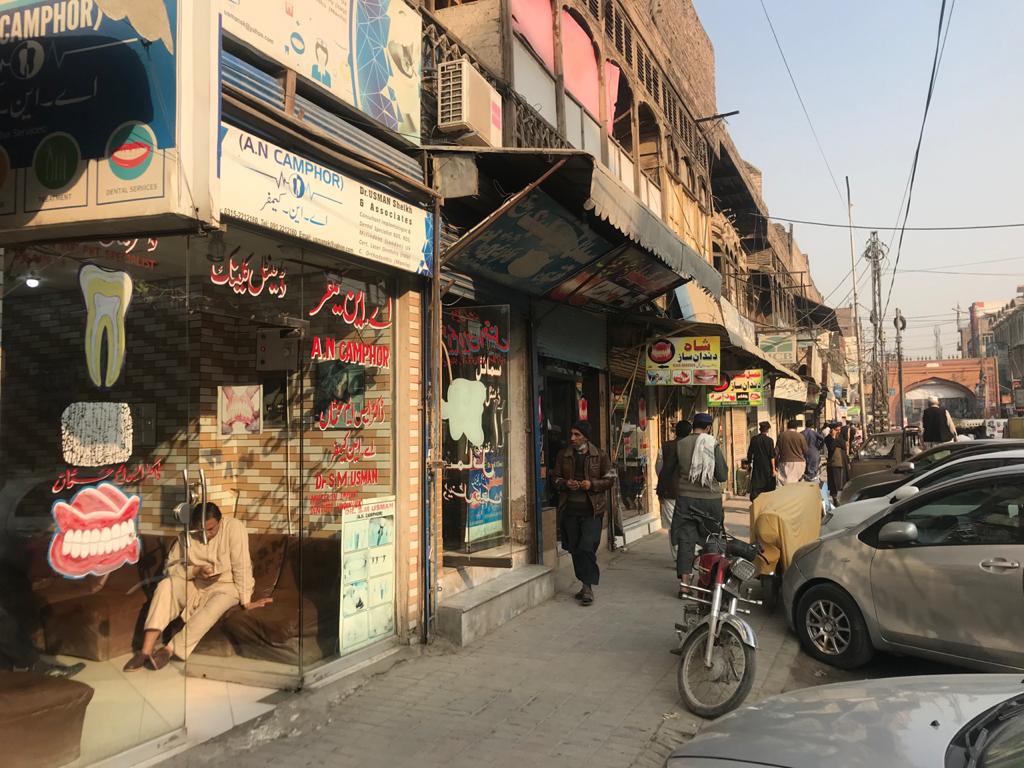
View of a dental clinic in Peshawar on February 18, 2021 (AN Photo)
Naeem Shah, a college student in southern Tank district who works part-time as a private health technician, said that one dental surgeon had been posted in the District Headquarters Hospital Tank while seven sanctioned posts for dentists were lying vacant, forcing hundreds of outdoor patients including women and children every month to wait their turn for hours.
“Most of the patients with their teeth problems are forced to approach dental quacks instead because they can’t wait for their turn at the hospital for hours, even for days,” Shah said.
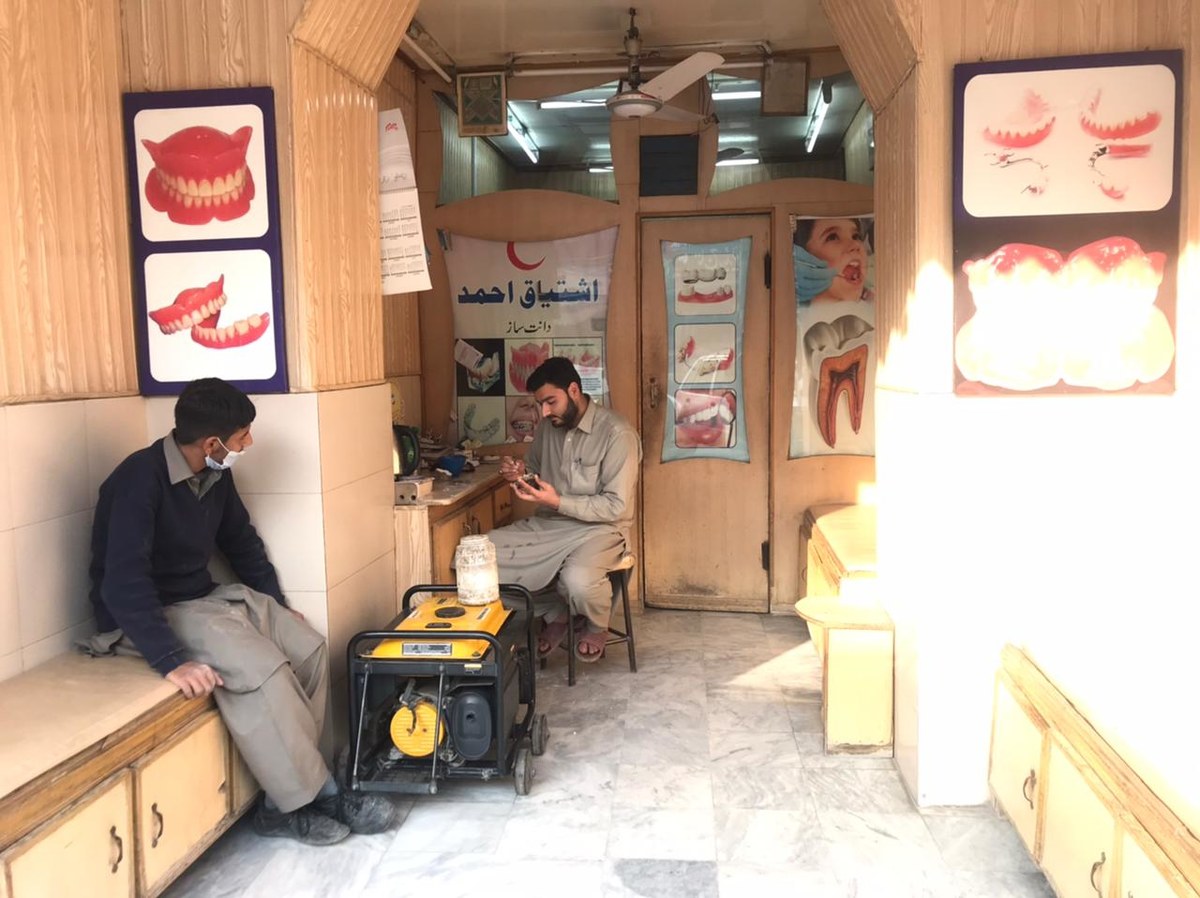
In this photo taken on February 18, 2021, a technician at a dental lab in Peshawar constructs a dental mould (AN photo)
Dr. Fazal Manan, a member of PDA and president at Hayatabad Medical Complex, said that he thought the numbers of vacant posts could be two times more than the projected 600 figure.
“As per PDA calculations, at least two dental surgeons need to be appointed in each rural headquarters hospitals and district headquarters hospitals throughout the province. Unfortunately, we don’t have dental practitioners in 80 percent of the hospitals in the province,” he said.
In the absence of professional practitioners, dental technicians and roadside quacks fit dentures after extracting teeth without any sterilization or infection control, causing diseases such as gingivitis, cavities and periodontal ailment, he added.
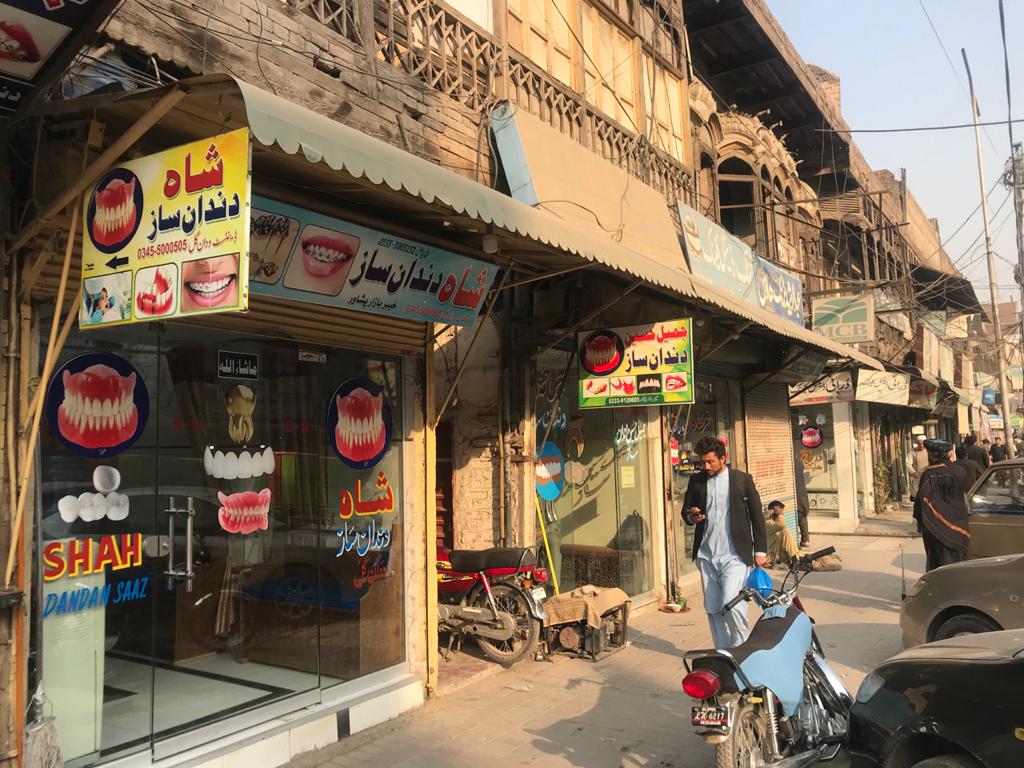
View of a dental clinic in Peshawar on February 18, 2021 (AN Photo)
“We demand the government make recruitments without further delay. We can't build more hospitals but the population is increasing, leaving health facilities overburdened at the main cities of the province,” he added.
Meanwhile, KP government spokesman Kamran Bangash told Arab News that his government had been hard at work to fix the 70 years of deprivation in the erstwhile tribal areas.
“I don’t know about dental doctors' deficiency or vacant posts in KP or tribal districts but if the PDA has any data then it should share with us,” Bangash said.


