

Pakistani 'oil city' masterplan for $10 billion Aramco refinery expected by year's end

Gwadar port, Pakistan, February 15, 2021. (AN photo by Khurshid Ahmed)
Short Url
Updated 20 February 2021
Follow

Pakistani 'oil city' masterplan for $10 billion Aramco refinery expected by year's end

  • During 2019 visit of Crown Prince Mohammed bin Salman, Saudi Arabia and Pakistan signed seven investment deals worth $21 billion 
  • Industrialization in Gwadar expected to increase per capita income to $15,000 by year 2025, officials say

GWADAR: The planning process for the country’s largest oil city — which will house a $10 billion Aramco Oil Refinery project — in Pakistan’s southwestern Balochistan province is expected to conclude before the end of the year, Pakistani officials said this week. 

The proposed mega oil city will be developed at an area of 80,000 acres in Gwadar District for the refining and processing of petroleum products mainly imported from the Gulf region for local and regional needs.  

“The planning for the mega oil city which will host Aramco Refinery and petrochemical complex is in progress and we will take 6 to 7 months to complete the master plan,” Shahzeb Khan Kakar, Director General of Gwadar Development Authority (GDA), told Arab News.
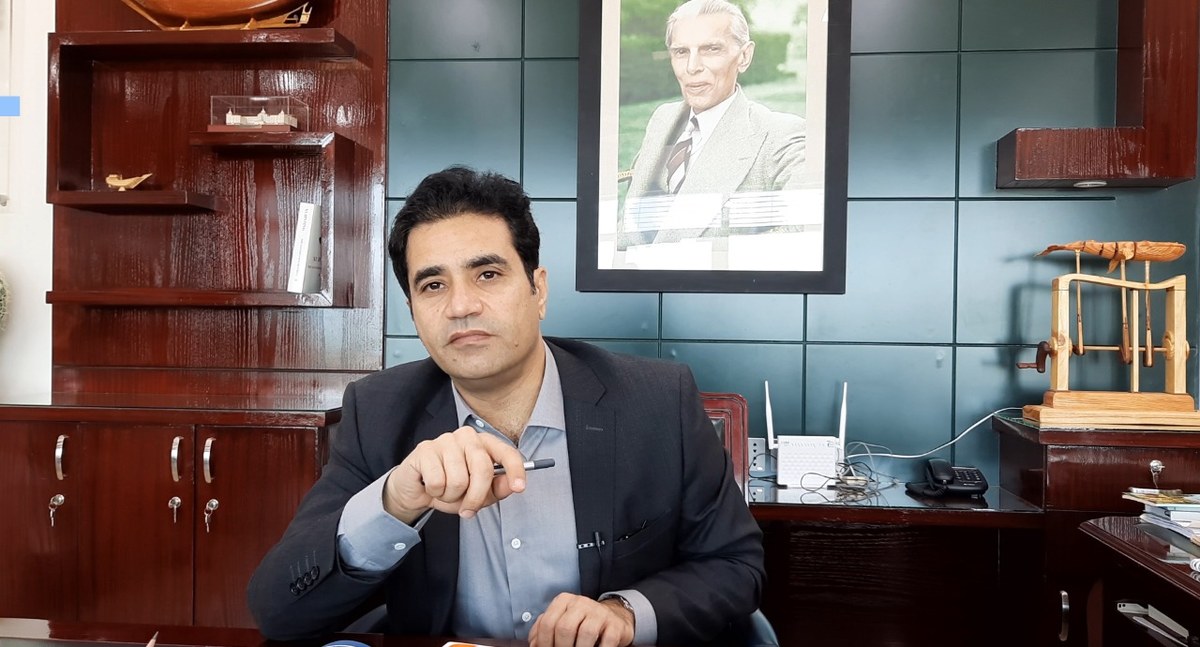


Shahzeb Khan Kakar, Director General of Gwadar Development Authority (GDA), speaks to Arab News on February 15, 2021 about Gwadar Oil City which will house Aramco Oil Refinery: (AN photo by Khurshid Ahmed)

During the 2019 visit of Saudi Crown Prince Mohammed bin Salman, Saudi Arabia and Pakistan signed seven investment deals worth $21 billion that included a long-term Aramco oil refinery project, mineral development, two RNLNG power plants, Acwa Power, Saudi Fund for Pakistan, petrochemical project, and food and agriculture projects. 

The $10 billion Aramco Oil Refinery with 250,000-300,000 bpd oil refining capacity is expected to take 5-6 years from its inception to commissioning. The project will have a $1 billion petrochemical complex which will lay the foundations of the petrochemical industry in Pakistan with the production of polyethylene and polypropylene. 

“Though the federal government is directly dealing with the Saudis, we will invite them after the planning is completed,” Kakar said and added: “The oil city is equally big as Gwadar. We have made the master plan of Gwadar as a smart city at an area of 88,000 acres keeping in view requirements up to 2050.”  
Apart from the oil city, authorities in Gwadar are also developing an industrial zone that aims to attract big investment-- which is slated for completion by 2023.
“Industrialization is expected to start from 2023 with the provision of basic utilities including electricity,” Attaullah Jogezai, Managing Director of Gwadar Industrial Estate Development Authority (GIEDA) told Arab News. 
Gwadar is touted as the 'crown jewel' of the multi-billion dollar China Pakistan Economic Corridor (CPEC). 
Keeping in view anticipated development projects backed by Saudi and Chinese investment, the GDA chief forecasted that the per capita income of Gwadar would surge to $15,000 by 2050.  

“Fisheries, oil refinery, petrochemical complexes, shipyard, tourism industry and most importantly, the operations of Gwadar port will generate huge income and increase per capita income,” Kakar explained. 
“This can be achieved by providing electricity, protection and a sound management system.”  
Authorities working on a 300 MW coal-fired power plant and a five million gallons per day desalination plant say both projects will be functional by January 2023. 
“Regulations have been framed to allocate lands in the industrial zone,” Manzoor Hussain, additional secretary of industries for Balochistan, told Arab News and added: “Now land will be allotted only to those industrialists who will set them up within given timeframe. Our mission is to create employment in the province.”  


Pakistan, IFC review steps to unlock private investment, jobs

Updated 11 sec ago
Follow

Pakistan, IFC review steps to unlock private investment, jobs

  • Talks focus on public-private partnerships, mobilizing private capital
  • Government flags IT, agriculture, mining, health care as priority sectors

KARACHI: Pakistan’s finance minister on Thursday reviewed ways to deepen cooperation with the International Finance Corporation (IFC) to mobilize private investment, expand public-private partnerships and support job creation, the finance ministry said in a statement.

Finance Minister Muhammad Aurangzeb met an IFC delegation led by Khawaja Aftab Ahmed, the lender’s director for the Middle East, Pakistan and Afghanistan, as Islamabad seeks to translate recent macroeconomic stabilization into sustained private-sector growth.

Pakistan has made progress under an International Monetary Fund–backed reform program, easing immediate default risks and restoring a measure of macroeconomic stability. But officials say the next phase hinges on reviving investment, expanding exports and creating jobs, particularly as fiscal space remains tight and development spending constrained.

“Both sides agreed on the need to align investment and advisory support with Pakistan’s medium-term development priorities, with a clear focus on job creation, sustainability, and export-oriented growth,” the finance ministry said.

According to the statement, the IFC briefed the minister on its expanding engagement in Pakistan across investment and advisory operations, including local-currency financing, private-sector investments and sustainability-oriented initiatives. Particular emphasis was placed on the IFC’s role in strengthening public-private partnership frameworks, including projects aimed at improving urban services, infrastructure performance and resource efficiency.

Aurangzeb outlined the government’s strategy of creating enabling ecosystems rather than direct state intervention, identifying priority areas such as the digital and information technology economy, agriculture and agri-value chains, minerals and mining, health care and skills-based human capital exports.

Both sides also discussed closer coordination within the World Bank Group to deploy advisory, financing and risk-mitigation instruments more effectively, while stressing the importance of timely execution of approved transactions to maintain investor confidence.

Pakistan’s engagement with the International Finance Corporation is part of a broader long-term partnership aimed at catalyzing private sector-led growth. Since its early involvement in the country, IFC has deployed a range of equity and loan investments across sectors including renewable energy, infrastructure, manufacturing and agribusiness, with cumulative investments reaching an estimated $13 billion over several decades. 

In recent years, IFC has boosted financing for strategic initiatives such as Pakistan’s first sustainable aviation fuel facility in Punjab, where it is providing up to $35 million in equity and debt capital to generate jobs, support exports and reduce carbon emissions.