

BBC to ‘reflect’ on ‘strikingly hostile’ interview with British Muslim leader

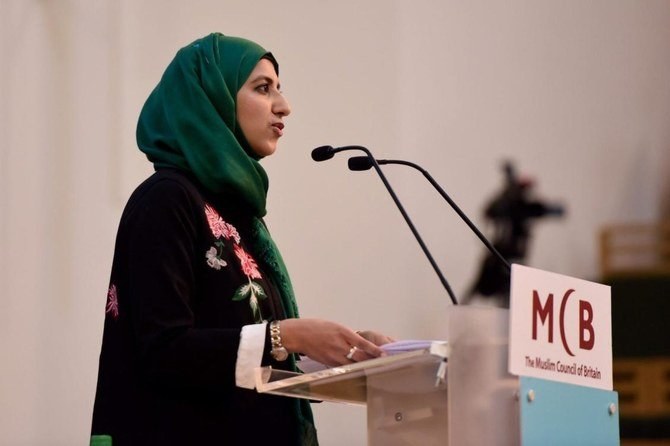
More than 100 public figures signed an open letter to the BBC criticizing a “disappointing and strikingly hostile” interview with the first female secretary-general of the MCB. (File/MCB)
Short Url
Updated 20 February 2021
Follow

BBC to ‘reflect’ on ‘strikingly hostile’ interview with British Muslim leader

  • More than 100 public figures signed letter protesting tone of questioning of Zara Mohammed, secretary-general of the Muslim Council of Britain

LONDON: The BBC said on Friday the corporation will “reflect” on a radio interview with the first female secretary-general of the Muslim Council of Britain, after concerns were raised about its tone.

The response came after 200 people, including politicians, journalists and academics, this week signed an open letter to the UK broadcaster about what it described as a “strikingly hostile” interview with Zara Mohammed that was broadcast by Radio 4’s “Woman’s Hour” program on Feb. 4.

Mohammed, 29, was repeatedly asked how many female imams there are in the UK. The letter said interviewer Emma Barnett “appeared intent on re-enforcing damaging and prejudicial tropes about Islam and Muslim women.” It called for the overall tone of the interview to be “seriously assessed,” and criticized a lack of representation of Muslims among BBC employees. Just over 2.5 percent of the BBC’s workforce identifies as Muslim.

BBC Director-General Tim Davie said in response to the letter: “As an employer and a broadcaster paid for by the public, we have a duty to reflect the whole of the UK in our staff and within our programs.

“You are correct, across the BBC, representation of Muslims within our staff is lower than the national average but it is not as low as you suggest.

“I want to assure you that improving the representation of our staff is a key priority for me and my executive team. We have more work to do but we are determined to get there.”

The producers of “Woman’s Hour” issued a statement in which they said: “While we appreciate that people can sometimes have very differing responses to our live interviews and discussions, we believe it was legitimate for the program to seek to explore some of the issues facing Muslims in the UK.

“‘Woman’s Hour,’ however, has always been a program that listens to feedback and learns from the responses we receive; we will reflect on the issues and concerns you raise in this open letter.”

Davie backed the statement and invited those with concerns to contact the corporation’s senior management to discuss the points raised in their open letter, the Guardian newspaper reported.

“It is frustrating that the BBC is using statistics regarding Muslim employees for the whole of the corporation, as opposed to what we highlighted specifically at BBC Studios TV and radio production,” said Yassmin Abdel-Magied and Mariam Khan, the organizers of the letter, in response to the BBC comments. “This includes the production of Woman’s Hour. Muslim representation in this crucial area of programming is negligible and requires urgent addressing, both at staff and leadership levels.

“It is also unfortunate that they have failed to engage with the specifics of our concerns over the content of the interview. However, we look forward to discussing these issues further and welcome a constructive conversation with both the director-general and senior executives at the BBC about these important issues.”

Study finds nearly half of UK news stories on Muslims show signs of bias

Updated 09 March 2026
Follow

Study finds nearly half of UK news stories on Muslims show signs of bias

  • Centre for Media Monitoring finds 20,000 out of 40,913 articles from 30 major news outlets contain bias and 70% link Muslims to negative behaviors or themes
  • Findings reveal ‘deeply concerning evidence of structural bias’ in portrayal of Muslims by UK press and point to ‘systemic problem’ within the media, says center’s director

LONDON: Nearly half of news articles published in the UK in 2025 that referenced Muslims or Islam contained some degree of bias, according to a report issued on Monday by the Centre for Media Monitoring. It also found that about 70 percent of stories linked Muslims to negative behaviors or themes.

The nonprofit organization, which tracks the ways in which Muslims and Islam are portrayed in the media, examined 40,913 articles from 30 major news outlets and found that about 20,000 showed some form of bias.

The study looked at “structural patterns” in coverage that “shape public narratives” about Muslims amid rising hostility toward the community.

“As the largest study of its kind ever conducted in the UK, this report presents deeply concerning evidence of structural bias in how Muslims are portrayed in the UK press,” said Rizwana Hamid, the director of the organization.

It found that 70 percent of the articles it reviewed highlighted negative aspects related to Muslims, though not all of the stories were biased in themselves. The wider patterns were also troubling: 44 percent of the coverage omitted key context, 17 percent relied on generalizations, and 13 percent included outright misrepresentation.

Taken together, the monitoring center said, the findings amounted to evidence of an “information integrity crisis” that distorts public understanding, and “a deeply concerning trend” in reporting on Muslims.

The research points to a “systemic problem within our media ecosystem,” Hamid said.

“When entire communities are repeatedly framed through lenses of suspicion or threat, it inevitably shapes public attitudes, political debate and the everyday lives of British Muslims,” she added.

News brands targeting right-wing audiences were more likely to produce biased coverage, the report found.

The Spectator magazine and GB News were identified as having the highest proportion of “very biased” articles, and as the “worst across all five bias categories”: negative framing, generalizations, misrepresentation, lack of context, and problematic headlines.

Other outlets highlighted for displaying high levels of biased content about Muslims included The Telegraph, The Jewish Chronicle, Daily Express, The Sun, Daily Mail and The Times.

In contrast, the BBC, other broadcasters and left-leaning outlets recorded the lowest rates of bias in the study.

The research comes as British Muslims report rising levels of discrimination. Official figures published in October revealed that religious hate crimes against Muslims rose by 19 percent in the year to March 2025 compared with the previous 12 months.