BBC criticized for ‘strikingly hostile’ interview with Muslim female leader

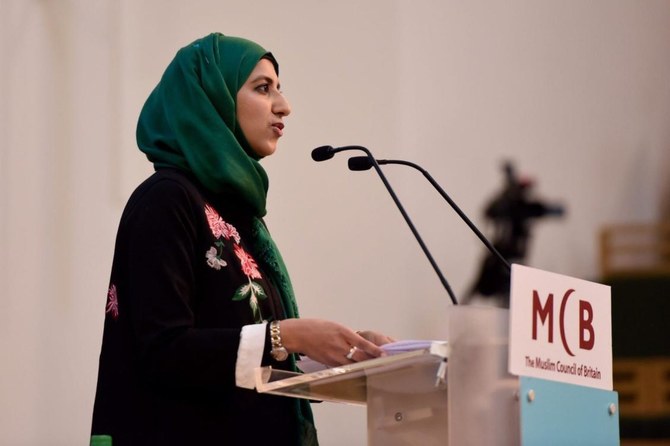
More than 100 public figures have signed an open letter to the BBC criticizing a “disappointing and strikingly hostile” interview with the first female secretary-general of the MCB. (File/MCB)
Short Url
Updated 17 February 2021
Follow

BBC criticized for ‘strikingly hostile’ interview with Muslim female leader

  • Over 100 public figures have written to the broadcaster in protest
  • Zara Mohammed is the first female head of the Muslim Council of Britain

LONDON: More than 100 public figures — including politicians, journalists and academics — have signed an open letter to the BBC criticizing a “disappointing and strikingly hostile” interview with the first female secretary-general of the Muslim Council of Britain (MCB).
Zara Mohammed, 29, was repeatedly asked how many female imams there were in Britain by Emma Barnett, presenter of the BBC Radio 4 program “Woman’s Hour,” during an interview on Feb. 4.
The letter called on the BBC to commit to programs ensuring diverse production and editorial teams, and to issue a statement recommitting to engaging with Muslim women and those from historically marginalized communities in good faith.
It said “the interview appeared intent on re-enforcing damaging and prejudicial tropes about Islam and Muslim women,” and the tone of the interview “must be seriously assessed.”
Mohammed, a Glaswegian consultant, became the first woman to lead the MCB, as well as its youngest.
“Despite Mohammed’s repeated claims that religious adjudication was not within the parameters of her role leading a civil society organization, Barnett asked the question about female imams four times, each time interrupting Mohammed’s answer,” the letter stated.
“The framing of the interview and clipping up of the ‘female imam’ segment for social media mirrored the style and tone of an accountability interview with a politician, rather than authentically recognizing and engaging in what this represented for British Muslim women.”
The BBC allegedly removed the original tweet with a clip of Mohammed’s interview after receiving complaints.


Bangladesh’s religio-political party open to unity govt

Updated 01 January 2026
Follow

Bangladesh’s religio-political party open to unity govt

  • Opinion polls suggest that Jamaat-e-Islami will finish a close second to the Bangladesh Nationalist Party in the first election it has contested in nearly 17 years

DHAKA: A once-banned Bangladeshi religio-political party, poised for its strongest electoral showing in February’s parliamentary vote, is open to joining a unity government and has held talks with several parties, its chief said.

Opinion polls suggest that Jamaat-e-Islami will finish a close second to the Bangladesh Nationalist Party in the first election it has contested in nearly 17 years as it marks a return to mainstream politics in the predominantly Muslim nation of 175 million.

Jamaat last held power between 2001 and 2006 as a junior coalition partner with the BNP and is open to working with it again.

“We want to see a stable nation for at least five years. If the parties come together, we’ll run the government together,” Jamaat chief Shafiqur Rahman said in an interview at his office in a residential area in Dhaka, ‌days after the ‌party created a buzz by securing a tie-up with a Gen-Z party.

Rahman said anti-corruption must be a shared agenda for any unity government.

The prime minister will come from the party winning the most seats in the Feb. 12 election, he added. If Jamaat wins the most seats, the party will decide whether he himself would be a candidate, Rahman said.

The party’s resurgence follows the ousting of long-time Prime Minister Sheikh Hasina in a youth-led uprising in August 2024. 

Rahman said Hasina’s continued stay in India after fleeing Dhaka was a concern, as ties between the two countries have hit their lowest point in decades since her downfall.

Asked about Jamaat’s historical closeness to Pakistan, Rahman said: “We maintain relations in a balanced way with all.”

He said any government that includes Jamaat would “not feel comfortable” with President Mohammed Shahabuddin, who was elected unopposed with the Awami League’s backing in 2023.