Briton held in Iran ‘completely shut off’ after losing phone access

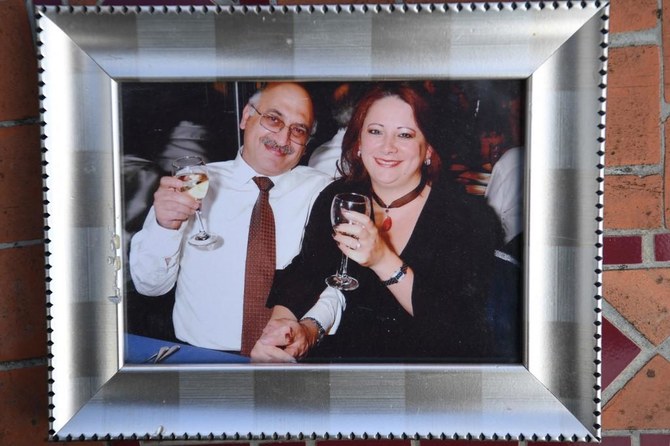
A British-Iranian dual citizen being held prisoner in Iran has lost access to a phone, depriving him of his lifeline to sanity and the outside world, according to his wife. (File/AFP)
Short Url
Updated 19 February 2021
Follow

Briton held in Iran ‘completely shut off’ after losing phone access

  • Anoosheh Ashoori’s wife: “Daily phone conversations were his route to sanity”
  • Rights groups, UN have long criticized Tehran for holding dual nationals as “diplomatic leverage”

LONDON: A British-Iranian dual citizen being held prisoner in Iran has lost access to a phone, depriving him of his lifeline to sanity and the outside world, according to his wife.
Anoosheh Ashoori “is completely shut off, and the daily phone conversations were his route to sanity and what was going on in the world, including how the campaign was going for his release. He is completely dependent on those calls,” his wife Sherry told The Guardian newspaper.
Ashoori, 66, is serving a 10-year sentence for allegedly spying for Israel — charges he denies. The father of two insists he is being held hostage and has attempted suicide in jail. 
He previously sent pleas to British Prime Minister Boris Johnson to do more to secure his release from Evin prison — infamous for its role in holding political prisoners and foreign nationals.
While detained, Ashoori has given first-hand accounts of a typical day in Evin, and also spoken out about the spread of coronavirus in the prison.
Iranian authorities are said to have strongly objected to a message he sent out in December that was picked up by Persian media and touched on the pandemic and his treatment.
He had recorded two other messages that discussed the impact of prison on dividing families, and the lavish lifestyles of Iranian officials’ children living abroad — though his wife did not distribute them to protect his safety. It is possible that authorities heard those recordings.
Rights groups and the UN have long criticized Tehran’s seemingly arbitrary detention of foreigners and dual nationals.
In a 2019 report, the UN special rapporteur on human rights in Iran, Javaid Rehman, expressed deep concern about the continued “arbitrary arrest, detention, ill-treatment and denial of appropriate medical treatment of dual and foreign nationals.” He said they are often subject to sham trials and used to obtain “diplomatic leverage.”
Iran is currently detaining a number of dual nationals. British-Iranian Nazanin Zaghari-Ractliffe is nearing the end of her five-year sentence, but has previously been threatened with fresh charges. Her husband says Tehran is holding her hostage.
German-Iranian Nahid Taghavi has been held in Evin since October 2020. She has serious medical conditions, including diabetes and high blood pressure, putting her at high risk from COVID-19. 
Amnesty International has called her detention “arbitrary,” saying: “She is a prisoner of conscience and must be immediately and unconditionally released.”


Iraqi lawmakers to elect president Tuesday, PM appointment next

Updated 55 min 9 sec ago
Follow

Iraqi lawmakers to elect president Tuesday, PM appointment next

  • Parliamentary speaker Haibat Al-Halbussi announced on Sunday that the new parliament will convene on Tuesday to elect a president

BAGHDAD: Iraq’s parliament will meet on Tuesday to elect the country’s new president, who will then appoint a prime minister expected to be Nouri Al-Maliki after he was endorsed by the largest Shiite bloc.
By convention, a Shiite Muslim holds the post of prime minister, the parliament speaker is Sunni and the largely ceremonial presidency goes to a Kurd.
Parliamentary speaker Haibat Al-Halbussi announced on Sunday that the new parliament will convene on Tuesday to elect a president, according to the official INA press agency.
The president will then have 15 days to appoint a prime minister, who is usually nominated by the largest Shiite bloc formed through post-election alliances.
On Saturday, the Coordination Framework alliance — whose Shiiite factions have varying links to Iran — endorsed former prime minister and powerbroker Al-Maliki as the country’s next premier.
The alliance, to which Al-Maliki belongs, spoke of his “political and administrative experience and his record in running the state.”
Kurdish parties have yet to agree on a presidential candidate, who must be endorsed by other blocs and win a two-thirds majority in parliament.
The presidency is usually held by the Patriotic Union of Kurdistan (PUK). This year, the rival Kurdistan Democratic Party (KDP) named its own candidate: Foreign Minister Fuad Hussein.
Although Maliki’s endorsement effectively guarantees him the post, forming a new government remains a daunting challenge that could drag on for months and still fail.
The designated premier has one month to form a government and present it to parliament for a vote of confidence.
The 75-year-old Maliki, a shrewd politician, is set to return to power at a time of seismic changes in the Middle East, as Tehran’s regional influence wanes and tensions with Washington rise.
Government formation in Iraq must balance internal political dynamics and power-sharing among major parties, all under the continued influence of Iraq’s two main allies: Iran and the United States.
A close Iran ally, Al-Maliki will be expected to address Washington’s longstanding demand that Baghdad dismantle Tehran-backed factions, many of which are designated terrorist groups by the US.
Last month, Iraqi officials and diplomats told AFP that Washington demanded the eventual government exclude Iran-backed armed groups, even though most of them hold seats in parliament, and have seen their political and financial clout increase.
But Iraq is struggling with weak economic growth and cannot risk punitive measures by the US, which has already sanctioned several Iraqi entities, accusing them of helping Tehran evade sanctions.