

Bangladesh seeks removal of Al Jazeera report from online platforms

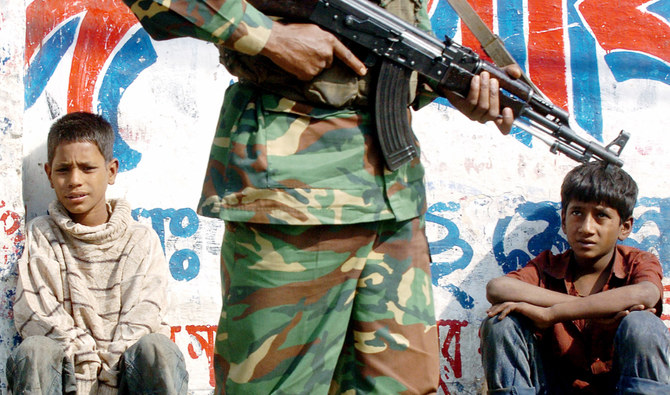
It is unclear when the Al Jazeera content will be removed. (AFP)
Short Url
Updated 19 February 2021
Follow

Bangladesh seeks removal of Al Jazeera report from online platforms

  • Al Jazeera claims gang linked to top officials colluded with country’s security forces
  • Sedition case filed against four people linked to the documentary

DHAKA: Bangladeshi officials have sought the removal from online platforms of a controversial investigative report by Al Jazeera after a high court ruling cleared legal grounds for the move.

The report, “All the Prime Minister’s Men,” broadcast by the Qatar-based TV channel on Feb. 1, alleged that Bangladeshi Army chief Gen. Aziz Ahmed had offered aid to his fugitive brothers, who are wanted for the murder of a rival politician, with the tacit approval of Prime Minister Sheikh Hasina.

The high court in Dhaka on Wednesday ordered the country’s telecom regulator to remove the content from several online platforms, including Facebook, YouTube, Twitter and Instagram.

However, the court rejected a writ filed by a Supreme Court lawyer seeking to ban Al Jazeera transmission in the country.

Mustafa Jabbar, Bangladesh’s post and telecommunication minister, told Arab News on Thursday: “We have already contacted Facebook authorities and placed a request to remove the Al Jazeera report content immediately.”

However, he added that the ministry will not block websites that carry the report.

“Technically, we can’t block any particular content on a particular website in Bangladesh. We need to block the website in such a case. But we don’t block any website that contains news and information as it hampers people’s rights of expression,” Jabbar said, adding that he expected Facebook to act soon.

It is unclear when the Al Jazeera content will be removed.

Brig. Gen. Nasim Parvez, director-general of system and service at the Bangladesh Telecommunication Regulatory Commission (BTRC), said the organization has also been in touch with Facebook over the matter.

“They (Facebook) will work in their way. It’s not a time-defined matter,” he told Arab News.

Senior high court lawyer Monjil Morshed said that while the court can request the removal of any content that appears harmful or demeaning to the state, the BTRC has no control over what is streamed from abroad.

“In this case, BTRC will make requests to Facebook and other online platform authorities, and they will conduct their own investigation before making any move,” he said.

Leading Bangladeshi journalist Naimul Islam Khan said that the decision to remove the Al Jazeera report was not “much needed.”

“The report had many shortcomings and we were critical (of its) weaknesses. In many cases it seemed politically motivated,” he told Arab News.
However, he added: “Personally, I don’t like any kind of interference in the freedom of expression and journalism.”

Meanwhile, another case related to the Al Jazeera report was filed with a Dhaka court on Wednesday, accusing Swedish-Bangladeshi journalist Tasneem Khalil, Hungary-based entrepreneur Zulkarnain Saer Khan, British journalist David Bergman and Al Jazeera Media Network Acting Director Mostefa Souag of sedition in connection with their involvement in the documentary’s production.

An order in the case is expected on Monday.


Sweden seizes false-flagged ship with suspected stolen Ukrainian grain

Updated 6 sec ago
Follow

Sweden seizes false-flagged ship with suspected stolen Ukrainian grain

  • The Russian embassy in Stockholm said it had been informed by the Swedish coast guard that 10 of the crew were Russian citizens

STOCKHOLM: Police in Sweden have seized a false-flagged cargo ship off its southern coast believed to belong to Russia’s shadow fleet and suspected of transporting stolen Ukrainian grain, authorities said Saturday.
The 96-meter (315-foot) Caffa left Casablanca in Morocco on February 24 and was headed for Saint Petersburg, Russia when armed Swedish police boarded it on Friday off the southern town of Trelleborg.
“The vessel is on the Ukraine sanctions list. Information indicates that it has essentially been used to transport grain that is stolen, as we understand it, from Ukraine,” the coast guard’s acting head of operations, Daniel Stenling, told a press conference.
“We have been able to establish that the vessel is sailing under a false flag. She is registered in Guinea, but that registration is in fact false,” he added.
“A majority” of the 11 crew members were Russian, Stenling said.
The Russian embassy in Stockholm said it had been informed by the Swedish coast guard that 10 of the crew were Russian citizens.
“The Russian embassy in Sweden is in contact with the competent Swedish authorities and is ready, if necessary, to provide consular assistance to the Russian nationals among the crew,” it wrote on Telegram.
One crew member was under investigation for violation of the maritime code on seaworthiness and on ship safety, Stenling said, refusing to disclose the suspect’s identity or crew role.
“The investigative measures we have taken so far reinforce our suspicions and our view that there are extensive maritime safety deficiencies on this vessel,” he said.
The Swedish Transport Agency was to inspect the ship and determine whether it was seaworthy and authorized to continue its journey.

- ‘Risk of accidents’ -

Moscow’s “shadow fleet” consists of vessels with opaque ownership used to skirt Western sanctions.
“It’s a problem for us that we are seeing more ships that don’t respect the law of the sea,” Stenling said, noting that “the risk of accidents increases when ships are not certified.”
“We might not even know what kind of crew is on board, what kind of skills they have, what certifications they hold, and they often lack insurance if something were to happen,” he added.
Ukrainian Foreign Minister Andriy Sybiga on Saturday thanked Sweden.
“Collective action against such vessels is gaining momentum. This is a welcome development,” he wrote on X.
“Sanctions work when they are strictly enforced. Together, we must stop the activities of Russia’s shadow fleet to protect Europe’s security and environment.”
