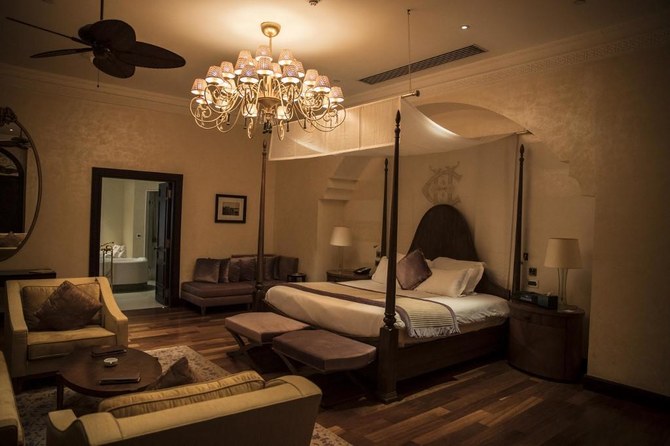
CAIRO: Egypt has completed construction on 4,000 new hotel rooms, which will enter into service once global travel restrictions are lifted, according to a source at the Egyptian Ministry of Tourism.
Egypt’s hotel capacity currently stands at 205,000 rooms and is set to exceed 215,000 rooms by the end of 2021, an increase of 4.8 percent.
Assistant Minister of Tourism and Antiquities for the Control of Hotel and Tourist Establishments Abdel Fattah Al-Assi said that the average tourist occupancy in hotels at the beginning of 2021 until mid-February was about 50 percent, compared to about 80 percent during the same period last year before the coronavirus pandemic took hold.
Egypt allowed the resumption of international tourism at the beginning of July 2020 in three governorates — the Red Sea, South Sinai and Matrouh — after initially halting all operations in mid-March 2020.
As part of the country’s latest efforts to control the spread of COVID-19, the Ministry of Tourism has decided to allow hotels to operate at a maximum of 50 percent.
A source said that the number of hotels that had obtained permits to receive tourists had reached 725 fixed properties and 75 floating hotels in Luxor and Aswan.
The Ministry of Tourism has launched the “Shatty Fe Masr” initiative to encourage local Egyptians to visit archaeological sites in areas such as Luxor, Aswan, the Red Sea and Alexandria. The source estimated the number of hotels that participated in the initiative at about 150, of which more than 50 percent of them had shares of floating hotels.
The source also said, “the occupancy in Hurghada is better than Sharm El Sheikh, in light of the high percentage of local tourism from Egyptians who prefer it to any other area.”
Reuters reported in January that Egypt’s tourism revenues in 2020 decreased 70 percent to $4 billion, as the number of travelers to the country fell from 13.1 million in 2019 to 3.5 million last year. Tourism accounts for about 15 percent of Egypt’s GDP.


![]()

Egypt set to exceed 215,000 hotel rooms by end of 2021
Short Url
https://arab.news/z9e5e
Egypt set to exceed 215,000 hotel rooms by end of 2021
- Egypt’s hotel capacity currently stands at 205,000 rooms and is set to exceed 215,000 rooms by the end of 2021
- The country allowed the resumption of international tourism at the beginning of July 2020 in 3 governorates


Latest updates


© 2026 SAUDI RESEARCH & PUBLISHING COMPANY, All Rights Reserved And subject to Terms of Use Agreement.