No flipping... Asharq News launches vertical viewing solution for smart devices

1 / 4
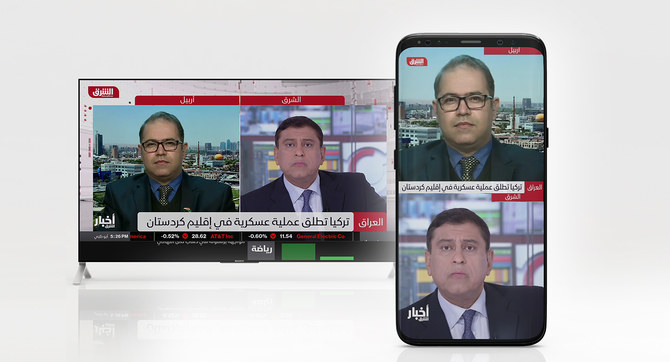
Asharq News is introducing state-of-the-art software across its platforms to carry out continuous, real-time transformation of horizontal video layouts to a vertical format. (AN Photo)
2 / 4
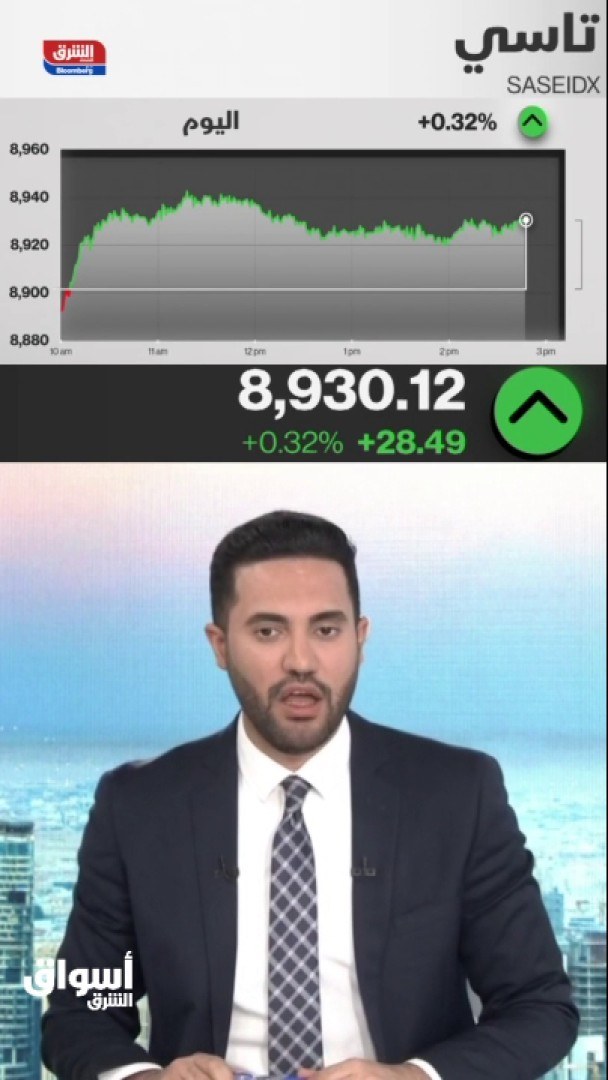
Asharq News is introducing state-of-the-art software across its platforms to carry out continuous, real-time transformation of horizontal video layouts to a vertical format. (AN Photo)
3 / 4
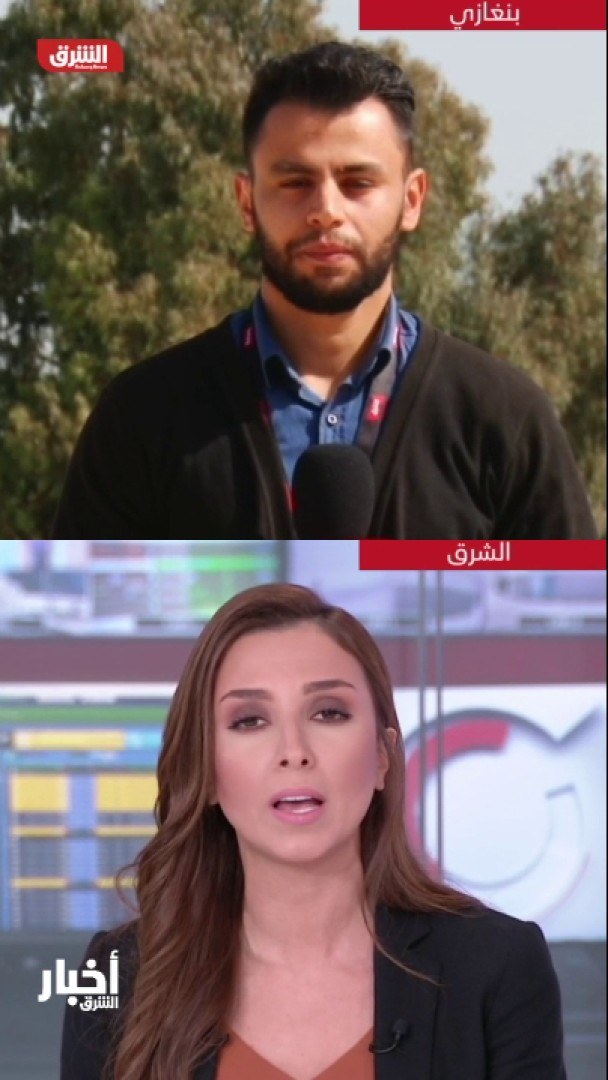
Asharq News is introducing state-of-the-art software across its platforms to carry out continuous, real-time transformation of horizontal video layouts to a vertical format. (AN Photo)
4 / 4
Asharq News is introducing state-of-the-art software across its platforms to carry out continuous, real-time transformation of horizontal video layouts to a vertical format. (AN Photo)
Short Url
Updated 17 February 2021
Follow

No flipping... Asharq News launches vertical viewing solution for smart devices

  • Broadcaster introduces state of the art software that transforms horizontal videos into a vertical format in real time
  • Many users, especially younger people, are reluctant to rotate their phones to watch widescreen videos

LONDON: The reluctance of many users, particularly young people, to flip smartphones and devices horizontally to watch videos has been a challenge for traditional broadcasters, whose widescreen TV format does not translate very well to vertical viewing.

The recently launched Asharq News channel announced on Wednesday that it has teamed up with French tech company Wildmoka to overcome the problem. It is introducing state-of-the-art software across its platforms that uses artificial intelligence and machine learning to carry out continuous, real-time transformation of horizontal video layouts to a vertical format. The channel said it is the first use of such technology in the region.

“The launch of the state-of-art solution is in line with our core priority to provide a seamless and impactful experience for our audiences in the Arab world and beyond through leveraging cutting-edge technology and implementing digital transformation,” said Nabeel Al-Khatib, general manager of Asharq News.

He added that smart devices are increasingly used for media consumption and that media companies need to take into consideration the rapid adoption of technology to ensure a smooth user experience.

The move toward vertical streaming caters to a large majority of viewers, especially the younger generation, who prefer not to flip their phones horizontally to watch a video. Although horizontal viewing might not seem like much of an imposition, vertical videos allow a smartphone to be held more naturally and easily in one hand.

“With this breakthrough solution, we can finally resolve the challenge that has puzzled news broadcasters for years — despite smartphones becoming the primary channels for news consumption, news broadcasters continue to live stream horizontally, something Asharq News has overcome,” said Steven Cheak, the broadcaster’s creative services and digital director.

Asharq News said the first phase of its vertical streaming was introduced this month across its websites. Phase two will extend the technology to the Asharq NOW app for use with video on demand.


Trending: BBC report suggests sexual abuse and torture in UAE-run Yemeni prisons

Updated 02 February 2026
Follow

Trending: BBC report suggests sexual abuse and torture in UAE-run Yemeni prisons

  • The investigation was produced by British-Yemeni BBC journalist Nawal Al-Maghafi

LONDON: A recent BBC video report diving into what it says was UAE-run prison in Yemen has drawn widespread attention online and raised fresh questions about the role of the emirates in the war-torn country.

The report, published earlier this month and recently subtitled in Arabic and shared on social media, alleged that the prison — located inside a former UAE military base — was used to detain and torture detainees during interrogations, including using sexual abuse as a method.

The investigation was produced by British-Yemeni BBC journalist Nawal Al-Maghafi, who toured the site, looking into cells and what appear to be interrogation rooms.

Al-Maghafi said the Yemeni government invited the BBC team to document the facilities for the first time.

A former detainee, speaking anonymously, described severe abuse by UAE soldiers: “When we were interrogated, it was the worst. They even sexually abused us and say they will bring in the doctor. The ‘so-called’ doctor was an Emirati soldier. He beat us and ordered the soldiers to beat us too. I tried to kill myself multiple times to make it end.”

Yemeni information minister, Moammar al Eryani also appears in the report, clarifying that his government was unable to verify what occurred within sites that were under Emirati control.

“We weren’t able to access locations that were under UAE control until now,” he said, adding that “When we liberated it (Southern Yemen), we discovered these prisons, even though we were told by many victims that these prisons exist, but we didn't believe it was true.”

The BBC says it approached the UAE government for comment, however Abu Dhabi did not respond to its inquiries.

Allegations of secret detention sites in southern Yemen are not new. The BBC report echoes earlier reporting by the Associated Press (AP), which cited hundreds of men detained during counterterrorism operations that disappeared into a network of secret prisons where abuse was routine and torture severe.

In a 2017 investigation, the AP documented at least 18 alleged clandestine detention sites — inside military bases, ports, an airport, private villas and even a nightclub — either run by the UAE or Yemeni forces trained and backed by Abu Dhabi.

The report cited accounts from former detainees, relatives, civil rights lawyers and Yemeni military officials.

Following the investigation, Yemen’s then-interior minister called on the UAE to shut down the facilities or hand them over, and said that detainees were freed in the weeks following the allegations.

The renewed attention comes amid online speculation about strains between Saudi Arabia and the UAE over Yemen.