TikTok’s ad business roars back as Trump’s threats recede

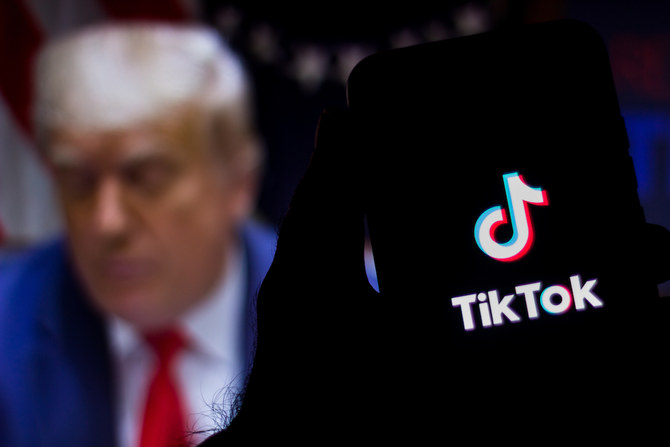
Donald Trump’s defeat in the US election was the turning point for many advertisers who were previously “on the fence” about TikTok, according to one media buyer. (Shutterstock/File Photo)
Short Url
Updated 16 February 2021
Follow

TikTok’s ad business roars back as Trump’s threats recede

  • Platform was accused by Trump administration of being front for the Chinese government
  • Big brands backed off on spending even as TikTok executives offered refunds to advertisers

NEW YORK: Accused by the Trump administration of being a front for the Chinese government, TikTok’s ad business looked bleak last July.

Big brands backed off on spending even as TikTok executives offered refunds to advertisers in the event the hot social media platform were to be banned from operating in the United States.

But after it became clear Joe Biden had won November’s US presidential election, that all changed.

“The interest in TikTok has exploded,” said Erica Patrick, vice president and director of social media at Mediahub Worldwide, which has worked with brands including Netflix and Twitch. She said she expects client spending to increase significantly over the next six months.

While the Biden administration pauses a government lawsuit filed by Trump officials, corporate sponsors have raced back to the popular short video sharing app, booking advertising campaigns and experimenting with new ways to reach consumers, three ad agency executives told Reuters.

The clamor around national security and TikTok during the previous administration appears to have been “more of a stunt,” and has not been a serious concern for advertisers, Patrick said.

Trump’s defeat in the election was the turning point for many advertisers who were previously “on the fence” about TikTok, according to one media buyer.

As business picks up, the platform has also approached major brands individually in an effort to address lingering concerns such as the placement of their ads, the buyer said.

Although TikTok’s US advertising business is estimated to be small still compared with larger social platforms, TikTok said it tracked a 500 percent increase in advertisers running campaigns in the United States over the course of 2020. It says it continuously has conversations with advertisers on brand safety.

Since late last year, TikTok has signed up McDonald’s, Kate Spade, Chobani and Bose, as well as nonprofits including St. Jude Children’s Research Hospital, a TikTok spokeswoman said.

Bose has found that ads on TikTok are watched for longer than on other platforms, said Christina Kelleher, manager of global social media for Bose.

St. Jude has raised about $50,000 since September through a donation button on TikTok, according to ALSAC, the fundraising and awareness organization for St. Jude.

“TikTok is one of our fastest growing platforms,” said Rick Shadyac, chief executive of ALSAC, adding that the organization’s first ad campaign in December with actress Ashley Tisdale had “tremendous engagement.”

As the app seeks to earn more money and capitalize on its large Gen Z audience, TikTok’s revenue ambitions have grown and now include selling top-dollar ad packages centered around holidays or major events.

To celebrate Black History Month, TikTok will hold a virtual event with 500 Black creators on Thursday and has invited brands to sponsor the event for $750,000, according to a TikTok slide deck obtained by Reuters.

The company has also asked brands for $1.5 million to sponsor a live finale event on Feb. 26 featuring artist performances and special guest appearances, the slide deck showed.

E-commerce is a growing priority, TikTok said in a statement, as the company aims to take on Facebook’s Instagram, which lets users buy products directly through the app.

TikTok said it is exploring letting users share affiliate product links on the app, which could allow influencers and TikTok to earn a commission from sales.

Influencer marketing, already a major form of advertising on TikTok, is booming as more brands rush to pay top stars famous for their dance routines or comedy skits to promote products to their millions of fans.

The Influencer Marketing Factory, which has worked with brands including Dunkin and Amazon to arrange content deals with social media stars, has seen a five-fold increase in requests from brands wanting to work with TikTok influencers since November, said Alessandro Bogliari, chief executive of the agency.

Even staid companies such as financial services firms are asking how they can get in on the app, after the GameStop trading mania showed younger consumers have more varied interests than some advertisers had expected, said Joe Gagliese, chief executive of influencer marketing agency Viral Nation.

“TikTok has diametrically changed, you’re seeing finance and sports on there,” Gagliese said. “That’s what’s fueling other brands to come in and play.”


Saudi Media Forum urges ethical coverage as crises redefine Arab journalism

Updated 04 February 2026
Follow

Saudi Media Forum urges ethical coverage as crises redefine Arab journalism

  • Raw news without context can mislead audiences and distort credibility, experts say

RIYADH: Arab media was born in crisis and shaped by conflict rather than stability, Malik Al-Rougi, general manager of Thaqafeyah Channel, said during the Saudi Media Forum in Riyadh on Wednesday.

Al-Rougi was speaking during a panel titled “Media and Crises: The Battle for Awareness and the Challenges of Responsible Coverage,” which examined how news organizations across the region navigated credibility and professional standards amid fast-moving regional developments.

“Today, when you build a media organization and invest in it for many years, a single crisis can destroy it,” he said.

Referring to recent events, Al-Rougi said that he had witnessed news channels whose credibility “collapsed overnight.”

“In journalistic and political terms, this is not a process of news production. It is a process of propaganda production,” he said. “The damage caused by such a post … is enormous for an institution in which millions, perhaps billions, have been invested.”

When a media outlet shifts from professionalism and credibility toward “propaganda,” he added, it moves away from its core role. 

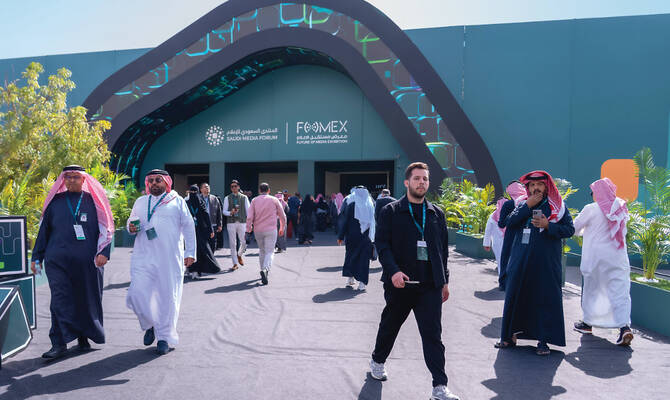
Saudi media leaders, journalists, and experts gathered at the Saudi Media Forum in Riyadh to discuss credibility, ethics, and innovation. (AN photo by Huda Bashatah/Supplied)

“A crisis can work for you or against you,” Al-Rougi added. “When, in the heart of a crisis, you demonstrate high credibility and composure, you move light-years ahead. When you fail to adhere to ethical standards, you lose light-years as well.”

Abdullah Al-Assaf, professor of political media studies at Imam Muhammad bin Saud Islamic University, said that in many crises across the Arab world, agendas and directives had often prevailed over professionalism.

“Credibility was buried,” he added.

Hasan Al-Mustafa, writer and researcher at Al-Arabiya channel, said that raw information could be subject to multiple interpretations if not placed within a proper political, security, historical or geographical context.

He added that such an approach was urgently needed during periods of political and security volatility in the Middle East. 

When, in the heart of a crisis, you demonstrate high credibility and composure, you move light-years ahead. When you fail to adhere to ethical standards, you lose light-years as well.

Malik Al-Rougi Thaqafeyah, Channel general manager

“This objectivity, or this reliability, is a great responsibility,” Al-Mustafa said. “It is reflected not only in its impact on the audience, but also on the credibility of the content creator.”

Al-Mustafa warned against populism and haste in coverage, saying that they risked deepening crises rather than providing informed public perspectives.

He also said that competition with social media influencers had pushed some traditional outlets to imitate influencer-driven models instead of strengthening their own professional standards.

“Our media has been crisis-driven for decades,” he said, describing much of the region’s coverage as reactive rather than proactive.

During a separate panel titled “The Official Voice in the Digital Age: Strategies of Influence,” speakers discussed how rapid technological and social changes were reshaping the role of institutional spokespersons.

Abdulrahman Alhusain, official spokesperson of the Saudi Ministry of Commerce, said that the role was no longer limited to delivering statements or reacting to events.

“Today, the spokesperson must be the director of the scene — the director of the media narrative,” he said.

Audiences, he added, no longer accept isolated pieces of information unless they were presented within a clear narrative and structure.

“In the past, a spokesperson was expected to deliver formal presentations. Today, what is required is dialogue. The role may once required defense, but now it must involve discussion, the exchange of views, and open, candid conversation aimed at development — regardless of how harsh the criticism may be.”

He said that spokespersons must also be guided by data, digital indicators and artificial intelligence to understand public opinion before speaking.

“You must choose the right timing, the right method and the right vocabulary. You must anticipate a crisis before it happens. That is your role.”

Abdullah Aloraij, general manager of media at the Riyadh Region Municipality, said that the most important skill for a spokesperson today was the ability to analyze and monitor public discourse.

“The challenge is not in transferring words, but in transferring understanding and impact in the right way,” he said.