

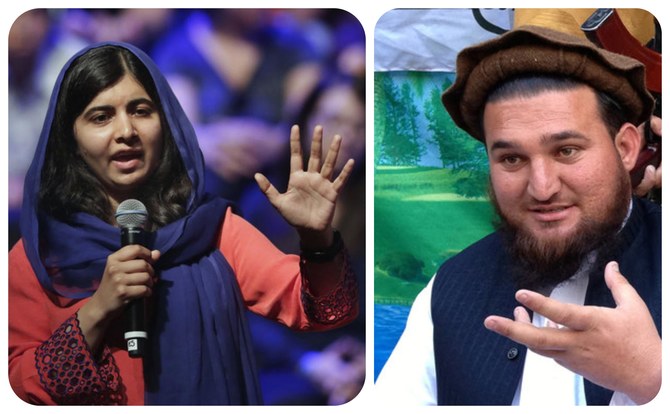

ISLAMABAD: Nobel Prize winning activist Malala Yousafzai on Tuesday asked the Pakistani government and military how a former spokesperson for the Pakistani Taliban, Ehsanullah Ehsan, had escaped custody last year after an unverified Twitter account posted a veiled death threat to her.
A high-profile local Taliban figure who announced and justified a 2012 attack on Malala for campaigning for women’s education, Ehsan escaped detention in January last year and announced his breakout on social media. He has claimed responsibility on behalf of his group for scores of other Taliban attacks also.
On Tuesday, a social media user who claimed to be Ehsan took to Twitter and tagging Malala and her father, also an activist, said: “Dear Malala! Please pay a visit to your first home [Swat Valley} soon, we still have a lot of debts to settle with you and your dad, the debt that you owe us, we will receive it.”
And then, “This time an expert will be sent for the calculation so that no doubt remains,” he said, in a veiled threat that she would be killed in the next attack.
It was unclear if the user was actually Ehsan or someone impersonating him.
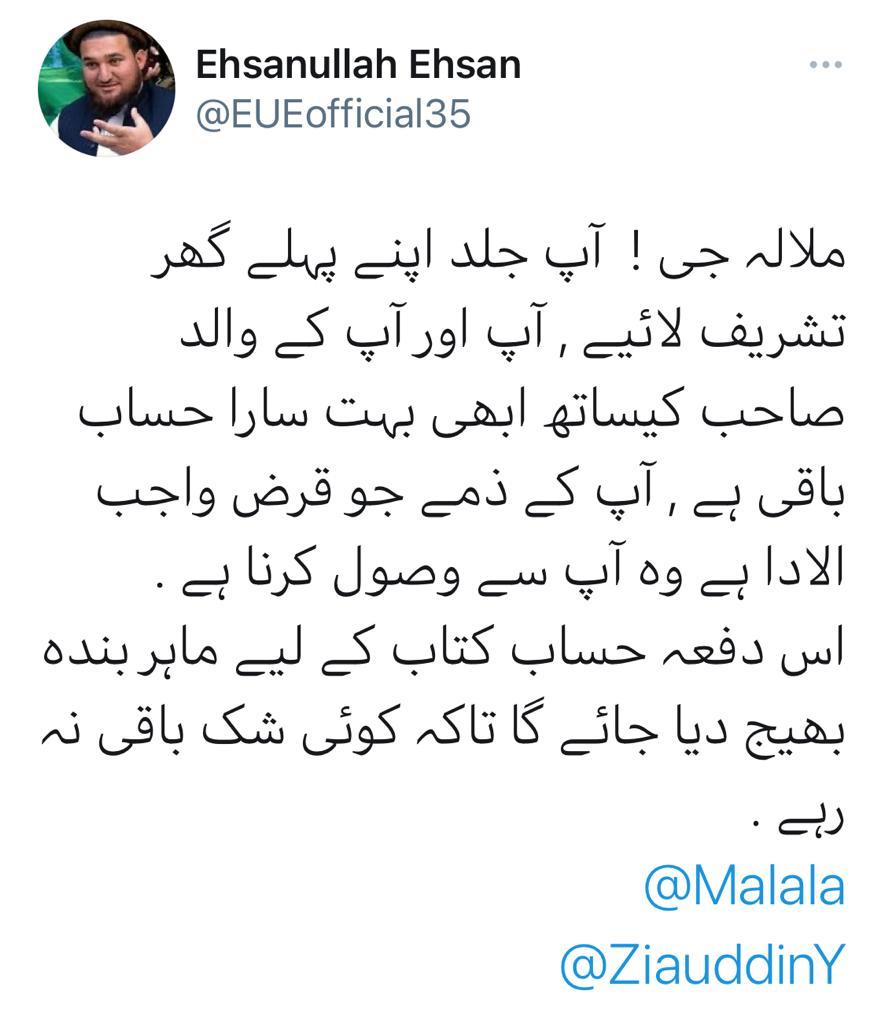
Reacting to the tweet, Malala wrote:
“This is the ex-spokesperson of Tehrik-i-Taliban Pakistan who claims responsibility for the attack on me and many innocent people. He is now threatening people on social media.”
“How did he escape,” she added, tagging Prime Minister Imran Khan and the media wing of the Pakistani military.
This is the ex-spokesperson of Tehrik-i-Taliban Pakistan who claims responsibility for the attack on me and many innocent people. He is now threatening people on social media. How did he escape @OfficialDGISPR @ImranKhanPTI? https://t.co/1RDdZaxprs
— Malala (@Malala) February 16, 2021
Since 2008, Malala has been advocating access to education for women and girls. In 2012, she was shot by a Pakistani Taliban gunman on her way home from school in Swat.
In 2014, she shared the Nobel Peace Prize with Indian children’s rights activist Kailash Satyarthi for her “struggle against the suppression of children and young people and for the right of all children to education.”
Ehsanullah is accused in several terror attacks in Pakistan including the 2014 assault on the Army Public School (APS) in Peshawar in 2014 in which more than 120 school children and 15 staff members were killed.
After Ehsan’s surrender in 2017, local Geo News TV aired an interview he gave in custody in which he asserted that the intelligence services of Pakistan’s arch-rival, India, had been funding and arming Pakistani Taliban fighters.
The Pakistan army pledged to put Ehsan on trial but had not done so until the time he escaped custody in 2020. His whereabouts are uncertain.


