ISLAMABAD: Pakistani Foreign Minister Shah Mahmood Qureshi said on Tuesday Islamabad wanted to “re-engage” with Egypt as it was an important nation in the Muslim Ummah.
Qureshi’s remarks came as he left on a two-day visit to Egypt on the invitation of his Egyptian counterpart Sameh Hassan Shoukry.
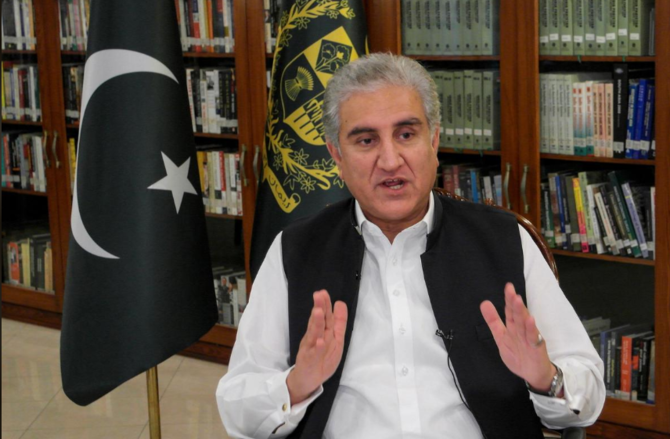
Egypt is an “important” country in the Muslim Ummah and also often called the gateway to Africa, Qureshi said in a recorded video message before he departed for Cairo.
“The [Egyptian] foreign minister has invited me and on that invitation I am going to Egypt so we can re-engage with this important country,” the foreign minister said. “It is our administration’s policy to strengthen our relations with the African continent since we believe we have not fully explored its markets yet. It is extremely important for our economic diplomacy to engage with markets in Africa.”
“There are plenty of opportunities for both countries,” Qureshi added. “We can get into defense cooperation with each other. Pakistan can also expand its economic base by constructively engaging with Egypt.”
While in Egypt, the foreign minister will meet Egyptian media and the business community and also visit Al-Azhar University in Cairo, Egypt’s oldest degree-granting university and renowned as one of the most prestigious universities for Islamic learning.
Qureshi’s visit comes less than two weeks after Pakistani Prime Minister Imran Khan reaffirmed Islamabad’s commitment to expand Pakistan-Egypt ties, particularly in the areas of trade, education and culture, in a meeting with the ambassador of Egypt to Pakistan, Tarek Dahroug.
Khan has also met Egyptian President Abdel Fattah El-Sisi twice since he became PM: first, on the sidelines of the Organization of Islamic Cooperation Makkah Summit in 2019, and then on the sidelines of the 74th UN General Assembly in New York in 2019.
Last year, Khan also spoke with the Egyptian president over the phone regarding the PM’s ‘Global Initiative on Debt Relief’ for developing countries during the coronavirus pandemic, which was supported by Egypt.


![]()

Islamabad wants to ‘re-engage’ Egypt to enhance economic diplomacy — Pakistani foreign minister
Short Url
https://arab.news/8sfgk
Islamabad wants to ‘re-engage’ Egypt to enhance economic diplomacy — Pakistani foreign minister
- Shah Mahmood Qureshi leaves for Egypt on two-day visit, will meet top leaders, media, business community
- Says important to enhance ties with African continent, find opportunities to enhance defense and trade relations
Latest updates


Recommended


© 2026 SAUDI RESEARCH & PUBLISHING COMPANY, All Rights Reserved And subject to Terms of Use Agreement.