

In Pakistan’s northwest, gypsy children get their first school

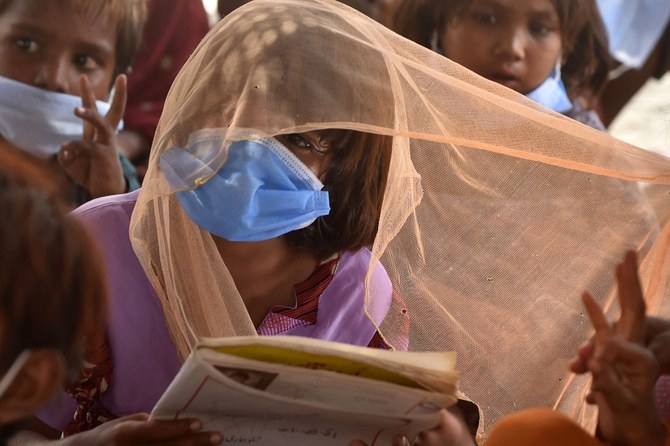
In this file photo, gypsy children wearing facemasks as a preventive measure against the spread of the COVID-19 coronavirus attend a tuition class at a slum area in Lahore on July 10, 2020. (AFP)
Short Url
Updated 15 February 2021
Follow

In Pakistan’s northwest, gypsy children get their first school

  • Dera Ismail Khan’s nomadic community has been living on the banks of the Indus River, relying on odd jobs and begging for sustenance
  • School was established by a young philanthropist whose own family was uprooted during a military operation in 2009

PESHAWAR: In northwestern Pakistan, a young philanthropist has opened the first school for nomadic children to get them off the streets and break the cycle of illiteracy and poverty that has for generations consumed their community.

The Muhammad Trust School was founded in Dera Ismail Khan, Khyber Pakhtunkhwa province in November last year by Muhammad Mehsud, a business administration graduate. It has since enrolled over 60 boys and girls from the vulnerable community that for decades has been living on the banks of the Indus River, relying on odd jobs and begging for sustenance.

Since the children support their families in earning a living, Mehsud had to convince their parents to give them a chance for an education and better future.

"Initially, these people were reluctant since they were afraid of losing their income, but they started taking interest in my proposal when I offered these children uniform and books without charging them anything," he told Arab News on Saturday.

"With every passing day now, we see new admissions ... Today, 34 girls and 30 boys are enrolled in my school."
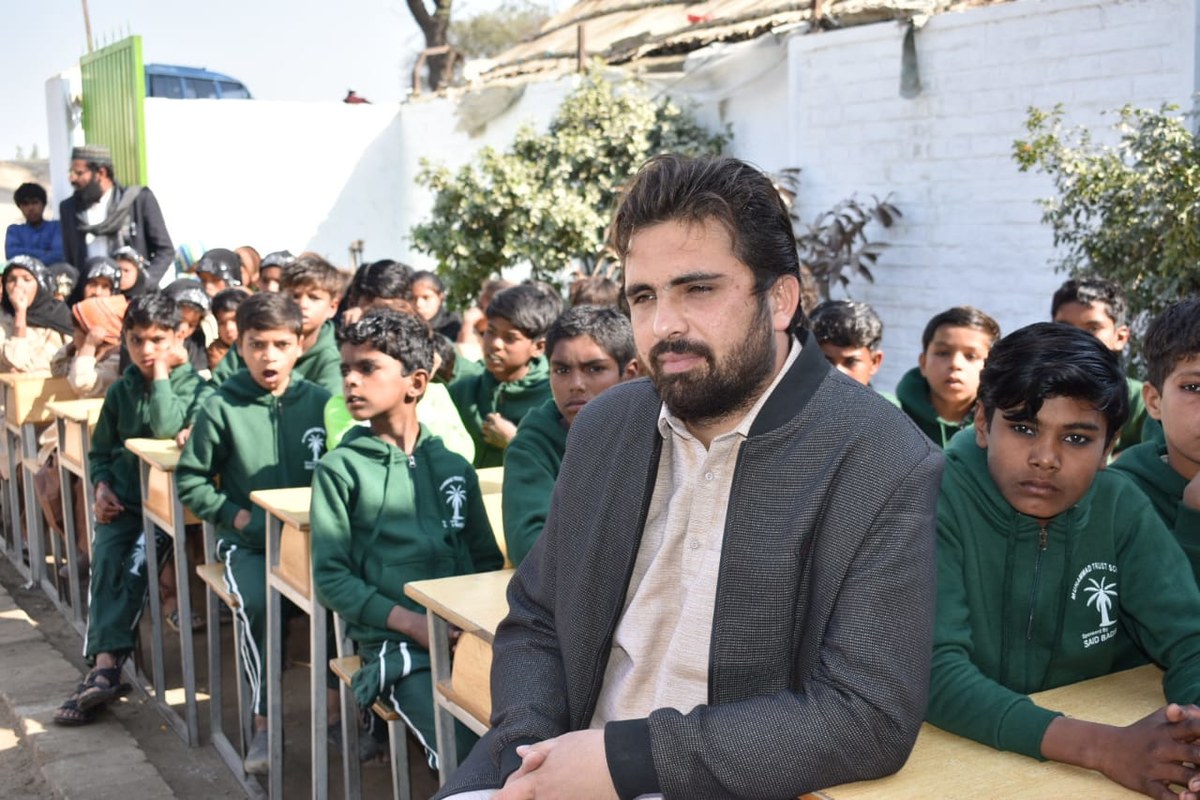


Muhammad Mehsud, the founding principal of the Muhammad Trust School, can be seen along with his students in Dera Ismail Khan on February 5, 2021. (Photo courtesy: Muhammad Trust School)

Mehsud's initiative springs from his own experience of being displaced and homeless.

He was in sixth grade when his family was uprooted from his hometown in South Waziristan due to a military operation in 2009 against militant outfits operating in the area.

“Suddenly, we found ourselves in tents like members of this community,” he said. “The experience significantly changed my life and I thought about setting up a school to improve the lives of vulnerable children from impoverished backgrounds."

According to Sahibzada Muhammad Naeem, district social welfare officer, Dera Ismail Khan’s nomadic community, which now comprises about 800 families, has lived near the Indus River since the independence of Pakistan in 1947. He said that they relocate from one area to another in response to changing weather conditions.

With the school, community members say their life will now change.
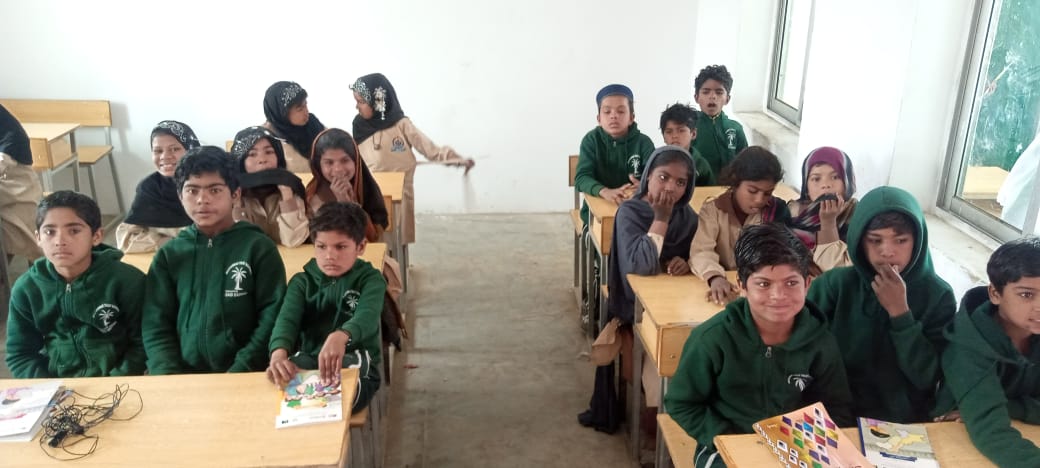


Children belonging to a nomadic community can be seen at the Muhammad Trust School in Dera Ismail Khan on February 13, 2021. The school was opened last November. (Photo courtesy: Muhammad Trust School)

Faiz Muhammad, 60, who like the rest of the group never got a chance to attend a school as his family would not stay at one place for longer durations.

“I spent my life in misery like others before me ... My 12 children used to collect money, food and other items from different parts of the city,” he told Arab News.

"I have enrolled my two daughters and sons with a hope to see a better tomorrow."

His eight-year-old daughter, Najma Bibi, said that since joining the school she is no longer begging for money on the streets and is hopeful to become a doctor one day.

"When I go home after attending my classes now, my father says I will become a doctor and treat patients.”

While Mehsud said that he had reached an agreement with families whose children attend his school that they would not relocate, if they do he will not stop supporting them.

“We have an alternative plan to set up tent schools if these families decide to move from this area at some stage,” he said. "I’m firm to make them stand on their own feet.”


Islamabad dismisses claims about paying up to 8 percent interest on foreign loans as ‘misleading’

Updated 22 February 2026
Follow

Islamabad dismisses claims about paying up to 8 percent interest on foreign loans as ‘misleading’

  • Pakistan has long relied on external loans to help bridge persistent gaps in public finances and foreign exchange reserves
  • Pakistan’s total external debt, liabilities stand at $138 billion at an overall average cost of around 4 percent, ministry says

KARACHI: Pakistan’s finance ministry on Sunday dismissed as “misleading” claims that the country is paying up to 8 percent interest on external loans, saying the overall average cost of external public debt is approximately 4 percent.

Pakistan has long relied on external loans to help bridge persistent gaps in public finances and foreign exchange reserves, driven largely by a narrow tax base, chronic trade deficits, rising debt-servicing costs and repeated balance-of-payments pressures.

Over the decades, successive governments have turned to multilateral and bilateral lenders, including the International Monetary Fund, the World Bank and the Asian Development Bank, to support budgetary needs and shore up foreign exchange reserves.

The finance ministry on Sunday issued a clarification in response to a “recent press commentary” regarding the country’s external debt position and associated interest payments, and said the figures required contextual explanation to ensure accurate understanding of Pakistan’s external debt profile.

“Pakistan’s total external debt and liabilities currently stand at $138 billion. This figure, however, encompasses a broad range of obligations, including public and publicly guaranteed debt, debt of Public Sector Enterprises (both guaranteed and non-guaranteed), bank borrowings, private-sector external debt, and intercompany liabilities to direct investors. It is therefore important to distinguish this aggregate figure from External Public (Government) Debt, which amounts to approximately $92 billion,” it said.

“Of the total External Public Debt, nearly 75 percent comprises concessional and long-term financing obtained from multilateral institutions (excluding the IMF) and bilateral development partners. Only about 7 percent of this debt consists of commercial loans, while another 7 percent relates to long-term Eurobonds. In light of this composition, the claim that Pakistan is paying interest on external loans ‘up to 8 percent’ is misleading.

The overall average cost of External Public Debt is approximately 4 percent, reflecting the predominantly concessional nature of the borrowing portfolio.”

With respect to interest payments, public external debt interest outflows increased from $1.99 billion in Fiscal Year (FY) 2022 to $3.59 billion in FY2025, representing an increase of 80.4 percent, not 84 percent as reported. In absolute terms, interest payments rose by $1.60 billion over this period, not $1.67 billion, it said.

According to the State Bank of Pakistan’s records, Pakistan’s total debt servicing payments to specific creditors during the period under reference were as follows: the IMF received $1.50 billion, of which $580 million constituted interest; Naya Pakistan Certificates payments totaled $1.56 billion, including $94 million in interest; the Asian Development Bank received $1.54 billion, including $615 million in interest; the World Bank received $1.25 billion, including $419 million in interest; and external commercial loans amounted to nearly $3 billion, of which $327 million represented interest payments.

“While interest payments have increased in absolute terms, this rise cannot be attributed solely to an expansion in the debt stock,” the ministry said. “Although the overall debt stock has increased slightly since FY2022, the additional inflows have primarily originated from concessional multilateral sources and the IMF’s Extended Fund Facility (EFF) under the ongoing IMF-supported program.”

Pakistan secured a $7 billion IMF bailout in Sept. 2024 as part of Prime Minister Shehbaz Sharif’s efforts to stabilize the South Asian economy that narrowly averted a default in 2023. The government has since been making efforts to boost trade and bring in foreign investment to consolidate recovery.

“It is also important to note that the increase in interest payments reflects prevailing global interest rate dynamics. In response to the inflation surge of 2021–22, the US Federal Reserve raised the federal funds rate from 0.75-1.00 percent in May 2022 to 5.25–5.50 percent by July 2023. Although rates have since moderated to around 3.75 percent, they remain significantly higher than 2022 levels,” the finance ministry said.

“The government remains committed to prudent debt management, transparency, and the continued strengthening of Pakistan’s macroeconomic stability,” it added.