

A timeless love story from heart of Saudi Arabia’s AlUla

1 / 4
Now more than ever, the limestone formations of AlUla provide an enchanting atmosphere for tourists and locals alike. (AN file photo)
2 / 4
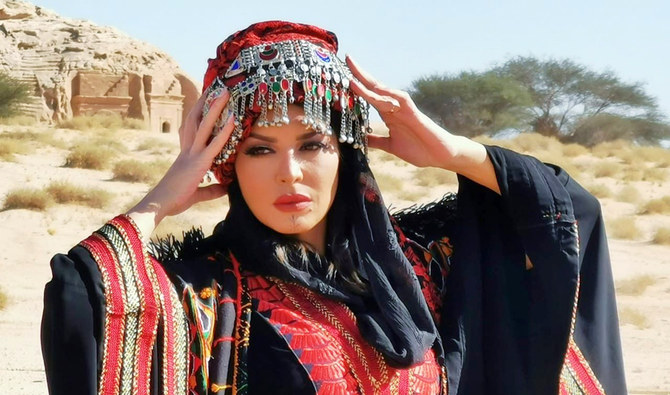
A lovely women in ancient costumes is seen at the tourism site of AlUla. (Supplied)
3 / 4
A lovely women in ancient costumes is seen at the tourism site of AlUla. (Supplied)
4 / 4
A lovely women in ancient costumes is seen at the tourism site of AlUla. (Supplied)
Short Url
Updated 07 April 2021
Follow

A timeless love story from heart of Saudi Arabia’s AlUla

  • Jamil Buthainah was a pioneer in the poetic style of ghazal poetry, an element of Islamic literature that approaches themes of love in a lyrical style

JEDDAH: As Valentine’s Day arrives, celebrations of joy and romance can be found across all languages. However, one story has found its way out of the AlUla desert sands.
The patron St. Valentine was a priest who served during the third century in Rome and was prosecuted for performing marriages for young lovers in secret. The unions angered Emperor Claudius II, who believed that unmarried men made better soldiers. Canonized by the Catholic Church, St. Valentine was given an annual feast day on Feb. 14. At some point in medieval England, the festival drifted away from being a commemoration of ultimate sacrifice in the name of faith and evolved into a more general celebration of love.
Though the tale of St. Valentine and that of many Arab love stories have been inextricably linked, it is the mystery and the power of love and the adventures that came along with it that became appealing. The enchanting desert lands of AlUla and its rich history continues to mesmerize Saudis and those interested in historical reference to the land.
The story of Jamil and Buthainah is one of forbidden love.



The late seventh-century Bedouin love poetry was written by Jamil ibn Mamar, a poet from the Bani Udhra tribe of Madinah during the Umayyad period. (Social media)

The late seventh-century Bedouin love poetry was written by Jamil ibn Mamar, also known as Jamil Buthainah, a poet from the Bani Udhra tribe of Madinah during the Umayyad period. He was a pioneer in the poetic style of ghazal poetry, an element of Islamic literature that approaches themes of love in a lyrical style. He was renowned for his poetic tradition of chaste love, a common theme in Beduin tribes of that era.

HIGHLIGHTS

Verses of poetry by Jamil ibn Mamar.

• If only the prime of the youth were new and old times come back, Buthayna. Should my poetry spend a night in Wadi AlQura, then I’m happy.  

• I took to loving her from childhood,   and up til today this love continues to thrive and grow.

The poems tell of Jamil’s intense but unrequited love for Buthainah bin Hayyan bin Thalabah from the Uthrah tribe, a beautiful maiden from a tribe residing near Bani Udhra in Al-Qura Valley in AlUla.
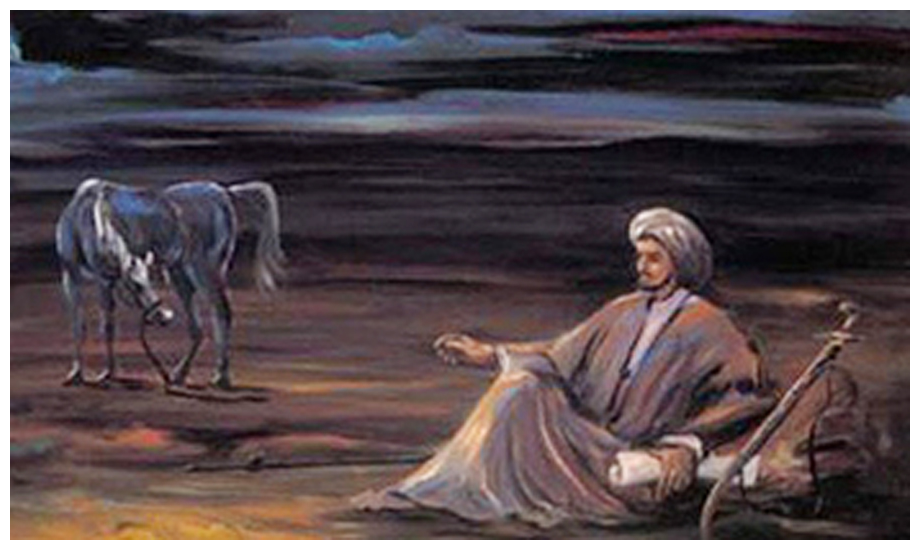
Infatuated by her beauty from a young age, Jamil wrote poems praising their love for years. The brave equestrian was proud of his love and his sword. He asked for his love’s hand in marriage but was rejected as Buthainah was promised to another man. Almost driven by madness, it did not deter the love-struck soldier, who continued to create beautiful and romantic poetry.
Much to the disdain of her family, Buthainah’s love for Jamil was true. His pleas fell on deaf ears as they would meet secretly in the plush oasis of AlUla, her homeland.
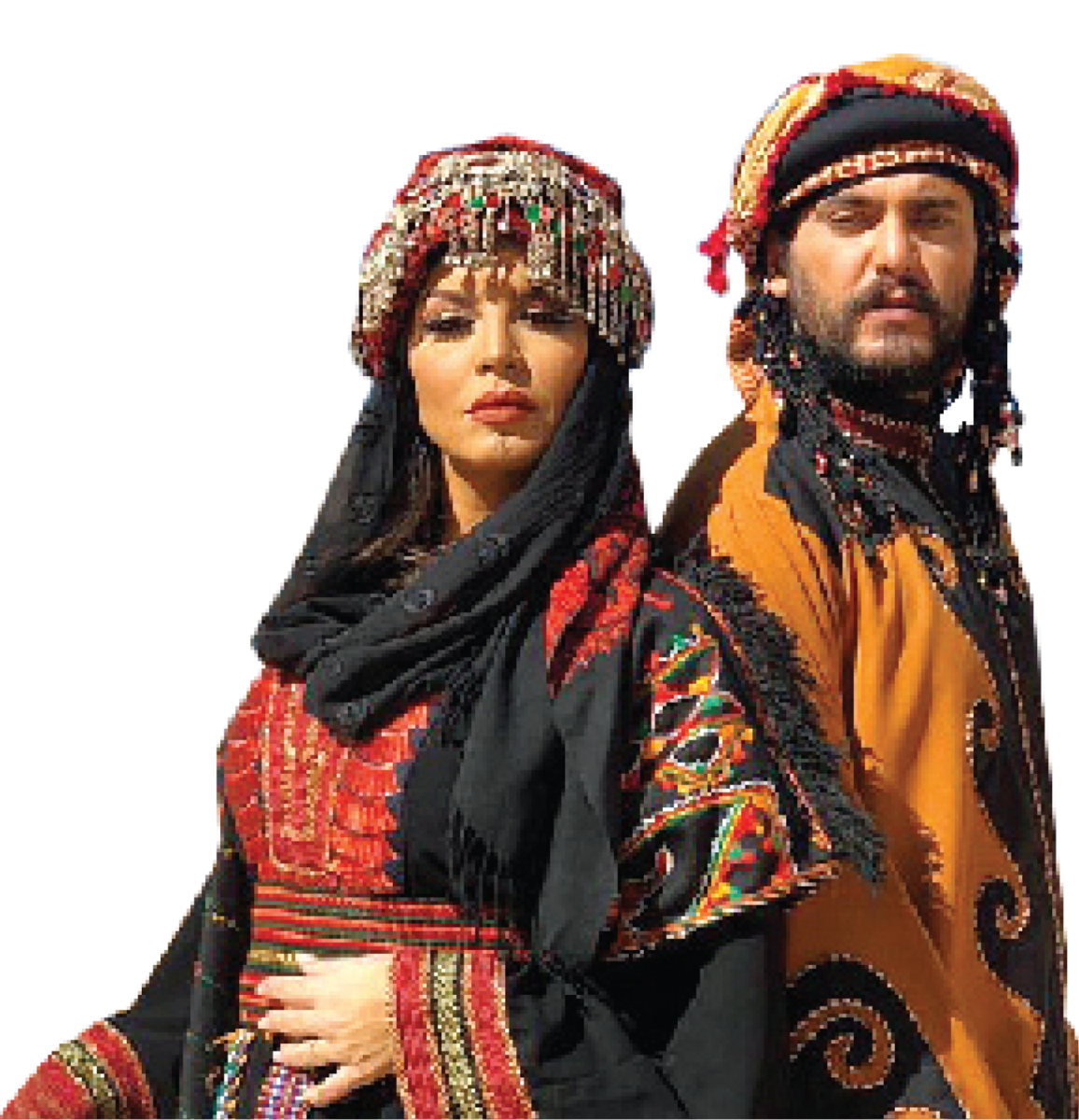

As time passed, Jamil left for Egypt and the star-crossed pair were separated, but their love will forever be told through the beauty of his love poems.
With thousands of years of history, it is no surprise that a love story would emerge from the sand of AlUla. The story of love and loss portrayed by the late Palestinian poet Mahmoud Darwish and can be felt through the verses:
“We grew older, Jameel Bouthaina and I, each alone, in two separate eras . . .
It is time that does what sun and wind do: It polishes us then kills us whenever the mind bears the heart’s passion, or whenever the heart reaches its wisdom Jameel! does she grow old, like you, like me, Bouthaina?
She grows old, my friend, outside the heart in others’ eyes. But inside me the gazelle bathes in the spring that pours out of her being”

 The way in which this poem has been transmitted over time was demonstrated beautifully a year ago when the world-renowned theater company Caracalla performed “Jamil and Buthainah: A love legend from the oasis of AlUla” at the Maraya Concert Hall. The performance, fitting for the Valentine’s Day weekend, came alive through song, music, dance and theater.
 This year, we celebrate the love story of the lost love emerging from the sands of one of the Kingdom’s gems. It is a story that has withstood the test of time and emerged again to retell the story of the star-crossed pair.


Is sourdough Saudi Arabia’s latest craft food?

Updated 5 sec ago
Follow

Is sourdough Saudi Arabia’s latest craft food?

  • Saudi home bakers point to a practice that was once routine, not artisanal
  • Naturally fermented bread reflects a broader shift toward process-driven, premium food culture

ALKHOBAR: Sourdough has started to shift from a niche interest into a mainstream feature of home kitchens, cafes and specialty bakeries across the Kingdom.

The rise of sourdough is part of a wider shift in Saudi Arabia’s food landscape, where artisanal production and slower preparation methods are gaining traction.

Specialty coffee seems to have set the early template for this transition, normalizing premium pricing, craftsmanship and an interest in process.

The rise of sourdough is part of a wider shift in Saudi Arabia’s food landscape, where artisanal production and slower preparation methods are gaining traction. (Supplied/creativecommons)

Bread is now undergoing a similar shift, with fermentation replacing extraction and roasting as the central point of differentiation.

In both cases, the appeal is rooted in the product’s perceived authenticity, reduced additives, and a clearer link between raw ingredients and final consumption.

Home bakers in Riyadh, Jeddah and the Eastern Province have adapted natural yeast cultures to the Saudi environment, adjusting feeding schedules, hydration ratios, and fermentation times to accommodate higher temperatures and lower humidity in the summer months.

HIGHLIGHTS

• Home bakers in Riyadh, Jeddah and the Eastern Province have adapted natural yeast cultures to the Saudi environment.

• They adjust feeding schedules, hydration ratios, and fermentation times to accommodate higher temperatures and lower humidity in the summer months.

Cafes and specialty bakeries have responded by adding sourdough loaves, baguettes and focaccia to their menus, often positioned as premium alternatives to conventional commercial bread.

For younger home bakers, the appeal lies in the craft and the learning curve rather than nostalgia. “It feels more real and more intentional,” home baker Sarah Al-Almaei told Arab News. She began experimenting with natural yeast at home after watching starter tutorials online.

The technical aspect — hydration percentages, fermentation control and starter maintenance — has become content in its own right, with TikTok and Instagram compressing trial-and-error learning into short videos and recipe cards.

But the practice of maintaining a natural yeast culture is not new in Saudi Arabia. Long before sourdough became a global trend, Saudi households kept what was commonly referred to as the “mother dough,” a natural yeast starter fed and used daily.

“We used to maintain it every day and bake with it,” said Hessa Al-Otaibi, 56, a Saudi home baker with more than four decades’ experience. “People today call it sourdough. For us, it was simply bread.”

Her comment highlights a cultural continuity that has remained largely unrecognized, partly because the practice was not framed as artisanal or health-oriented, but as a routine household function.

The modern sourdough trend differs in its market positioning. While the older model was practical and domestic, the current model is commercial, aesthetic and often health-coded. Bakeries justify higher pricing through longer fermentation times, higher ingredient costs and smaller batch production.

Consumers justify their purchases through digestibility, perceived health benefits, flavor and product integrity.

“Once you get used to it, it’s hard to go back,” said Amina Al-Zahrani, a regular buyer of sourdough from specialty bakeries in Alkhobar.

Digestibility and texture are often cited as reasons for substitution, especially among buyers who report discomfort from standard commercial bread.

Another consumer, Majda Al-Ansari, says sourdough has become part of her weekly routine, noting that availability and quality have improved significantly in the past year.

The social media component has played an outsized role in accelerating adoption. Home bakers document starter feeding cycles, cold proofing and first bakes, turning a once-private domestic process into visible public content.

This has also created micro-markets of home-based sellers, where individual bakers offer loaves to local buyers, often fulfilling orders through direct messaging.

What remains to be seen is how far the trend will scale. If specialty bakeries continue to expand and consumers maintain willingness to pay premium prices, sourdough could establish a long-term place in Saudi food culture.

If not, it may revert to a smaller niche of committed home bakers and specialty cafes. For now, however, sourdough occupies an unusual position: both a newly fashionable trend and a quiet continuation of an older Saudi baking practice.