NEW YORK: The UN Security Council has unanimously adopted a resolution that extends the mandate of a group of experts on Sudan that assists the committee overseeing sanctions related to the country.
The preamble to Resolution 2562, which was drafted by the US, welcomed the “historic” Sudanese Peace Agreement as “an important milestone of the transition period toward a peaceful, stable, democratic and prosperous future for Sudan.” The peace deal was signed in Juba, the capital of South Sudan, on Oct. 3 last year by the government of Sudan and a number of rebel groups including the Sudanese Revolutionary Front and the Sudan Liberation Movement.
The resolution encourages the signatories to swiftly implement the agreement and urges those who have yet to join the peace process “to do so immediately, constructively and without preconditions.”
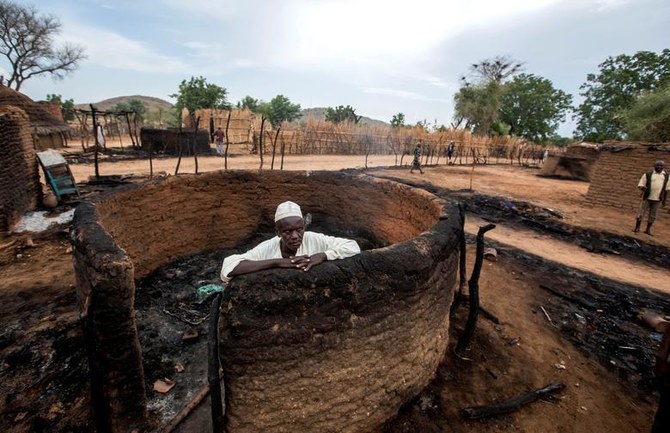
It also highlights the precarious security situation in Darfur, and warns of the risk of “a relapse into conflict” and the dangers to civilians arising from inter-communal violence, human-rights abuses, violations of international humanitarian law and continued displacements.
Noting the provisions of a constitutional declaration on transitional justice and accountability measures, the Security Council also urged the Sudanese government to ensure the perpetrators of past violations are held accountable. It added that the situation in Sudan “continues to constitute a threat to international peace and security in the region.”
The mandate of the panel of experts, which was established as part of Resolution 1591 in March 2005 and is periodically reviewed, was extended until March 12, 2022. It is tasked with monitoring, among other things, an arms embargo on Darfur. Council members asked the experts to provide updates every three months.
The council also instructed the Sudanese government to seek the prior approval of the committee overseeing sanctions for any movement of military equipment and supplies into the Darfur region, particularly in the context of the implementation of the peace agreement.
The resolution recommends that the UN secretary-general, in consultation with the Sudanese government, the UN Consolidated Transition Assistance Mission in Sudan and other relevant parties, conducts a review of the situation in Darfur, including the implementation of measures to tackle the proliferation of weapons.
It also requests the secretary-general to offer recommendations “for clear and well-identified key benchmarks that could serve in guiding the Security Council to review the measures on Darfur.”

UN extends mandate of experts monitoring developments in Sudan
Short Url
https://arab.news/grh5e
UN extends mandate of experts monitoring developments in Sudan
- Newly adopted Security Council resolution also calls on those yet to join the peace process in the country to do so
- Council warns the situation in Sudan continues to pose a threat to regional security and international peace
US backs Pakistan’s ‘right to defend itself’ after strikes on Afghanistan
ISLAMABAD: Pakistan air strikes on Afghanistan drew diplomatic support from Washington as Islamabad said on Saturday it would not stop military operations pressuring the Afghan government, which it accuses of backing militancy.
The Taliban government has denied harboring militants and its spokesperson has called for “dialogue” to resolve a previously simmering conflict that Pakistan’s defense minister said on Friday was now “open war.”
After both countries’ forces clashed at the border intermittently for months, Pakistan launched the strikes in the early hours of Friday morning in response to a cross-border Afghan offensive on Thursday night.
Pakistan’s information minister said on Saturday that 37 locations across Afghanistan had been subject to aerial targeting since its operation began.
It was not clear if strikes had taken place on Friday night, but authorities signaled operations were still taking place.
“Pakistan’s immediate and effective response to aggression continues,” Mosharraf Zaidi, a spokesman for Pakistan’s prime minister, posted on X late on Friday.
The United States “expressed support for Pakistan’s right to defend itself against Taliban attacks,” Allison Hooker, the under secretary of state for political affairs, wrote on X after talks with her Pakistani counterpart.
The operation was Pakistan’s most widespread bombardment of the Afghan capital Kabul and its first air strikes on the city of Kandahar, the southern power base of the Taliban’s supreme leader since they returned to power in 2021.
Zaidi did not confirm whether Pakistan had carried out air strikes overnight between Friday and Saturday.
- Surge in hostilities -
The sharp surge in hostilities drew international concern, with China, Britain, the United Nations and the International Committee of the Red Cross calling for immediate de-escalation and return to dialogue.
Taliban government spokesman Zabihullah Mujahid said on Friday Afghan forces had killed 55 Pakistani soldiers and captured several others, while putting the death toll among Afghan troops at 13.
Zaidi, the Pakistan government spokesman, said 297 Afghan Taliban and militants had been killed. Islamabad earlier said 12 of its soldiers had been killed.
The Afghan government’s deputy spokesman Hamdullah Fitrat said at least 19 civilians had been killed in eastern Khost and Paktika provinces.
Casualty claims from both sides are difficult to verify independently.
This week’s escalation marked the first time in on-off fighting that Pakistan had focused its air strikes on Afghan government facilities, analysts noted, a stark change from previous operations it had carried out on Afghan territory that it said were targeting militants.
Relations between the neighbors have plunged in recent months, with land border crossings largely shut since deadly fighting in October that killed more than 70 people on both sides.
Islamabad accuses Afghanistan of failing to act against militant groups that carry out attacks in Pakistan, which the Taliban government denies.
Most of the attacks have been claimed by the Tehreek-e-Taliban Pakistan (TTP), a militant group that has stepped up assaults in Pakistan since 2021.
Zaidi told AFP on Saturday that there had been no reports of border clashes during the night, but that gunmen — who he said were associated with the Pakistani Taliban — had attacked a checkpoint in northwest Pakistan near Afghanistan’s Khost province. No group immediately claimed responsibility for the attack.
- Push for negotiations -
Iran, which shares an eastern border with Afghanistan and Pakistan, offered on Friday to help “facilitate dialogue,” while Saudi Arabia and Qatar moved to allay tensions, and China said it was “working with” both countries while calling for calm.
In Geneva, ICRC president Mirjana Spoljaric said the organization was preparing relief operations but stressed that “no humanitarian response can compensate for political will to respect the rules of war and prioritize de-escalation.”
Last year, several rounds of negotiations between Pakistan and Afghanistan followed a ceasefire brokered by Qatar and Turkiye, but the efforts have failed to produce a lasting agreement.
After repeated breaches of the initial truce, Saudi Arabia intervened this month, mediating the release of three Pakistani soldiers captured by Afghanistan in October.
Just days later, Pakistan carried out strikes in eastern Nangarhar and Paktika provinces, which the UN mission in Afghanistan said killed at least 13 civilians.
The Taliban government has denied harboring militants and its spokesperson has called for “dialogue” to resolve a previously simmering conflict that Pakistan’s defense minister said on Friday was now “open war.”
After both countries’ forces clashed at the border intermittently for months, Pakistan launched the strikes in the early hours of Friday morning in response to a cross-border Afghan offensive on Thursday night.
Pakistan’s information minister said on Saturday that 37 locations across Afghanistan had been subject to aerial targeting since its operation began.
It was not clear if strikes had taken place on Friday night, but authorities signaled operations were still taking place.
“Pakistan’s immediate and effective response to aggression continues,” Mosharraf Zaidi, a spokesman for Pakistan’s prime minister, posted on X late on Friday.
The United States “expressed support for Pakistan’s right to defend itself against Taliban attacks,” Allison Hooker, the under secretary of state for political affairs, wrote on X after talks with her Pakistani counterpart.
The operation was Pakistan’s most widespread bombardment of the Afghan capital Kabul and its first air strikes on the city of Kandahar, the southern power base of the Taliban’s supreme leader since they returned to power in 2021.
Zaidi did not confirm whether Pakistan had carried out air strikes overnight between Friday and Saturday.
- Surge in hostilities -
The sharp surge in hostilities drew international concern, with China, Britain, the United Nations and the International Committee of the Red Cross calling for immediate de-escalation and return to dialogue.
Taliban government spokesman Zabihullah Mujahid said on Friday Afghan forces had killed 55 Pakistani soldiers and captured several others, while putting the death toll among Afghan troops at 13.
Zaidi, the Pakistan government spokesman, said 297 Afghan Taliban and militants had been killed. Islamabad earlier said 12 of its soldiers had been killed.
The Afghan government’s deputy spokesman Hamdullah Fitrat said at least 19 civilians had been killed in eastern Khost and Paktika provinces.
Casualty claims from both sides are difficult to verify independently.
This week’s escalation marked the first time in on-off fighting that Pakistan had focused its air strikes on Afghan government facilities, analysts noted, a stark change from previous operations it had carried out on Afghan territory that it said were targeting militants.
Relations between the neighbors have plunged in recent months, with land border crossings largely shut since deadly fighting in October that killed more than 70 people on both sides.
Islamabad accuses Afghanistan of failing to act against militant groups that carry out attacks in Pakistan, which the Taliban government denies.
Most of the attacks have been claimed by the Tehreek-e-Taliban Pakistan (TTP), a militant group that has stepped up assaults in Pakistan since 2021.
Zaidi told AFP on Saturday that there had been no reports of border clashes during the night, but that gunmen — who he said were associated with the Pakistani Taliban — had attacked a checkpoint in northwest Pakistan near Afghanistan’s Khost province. No group immediately claimed responsibility for the attack.
- Push for negotiations -
Iran, which shares an eastern border with Afghanistan and Pakistan, offered on Friday to help “facilitate dialogue,” while Saudi Arabia and Qatar moved to allay tensions, and China said it was “working with” both countries while calling for calm.
In Geneva, ICRC president Mirjana Spoljaric said the organization was preparing relief operations but stressed that “no humanitarian response can compensate for political will to respect the rules of war and prioritize de-escalation.”
Last year, several rounds of negotiations between Pakistan and Afghanistan followed a ceasefire brokered by Qatar and Turkiye, but the efforts have failed to produce a lasting agreement.
After repeated breaches of the initial truce, Saudi Arabia intervened this month, mediating the release of three Pakistani soldiers captured by Afghanistan in October.
Just days later, Pakistan carried out strikes in eastern Nangarhar and Paktika provinces, which the UN mission in Afghanistan said killed at least 13 civilians.
© 2026 SAUDI RESEARCH & PUBLISHING COMPANY, All Rights Reserved And subject to Terms of Use Agreement.


