ISLAMABAD: Pakistan is to allow private companies to import coronavirus vaccines and has agreed to exempt such imports from price caps, according to documents reviewed by Reuters, even as the nation scrambles to secure supplies.
The documents show the National Health Services, Regulations and Coordination division had sought a special cabinet exemption to allow for such imports, while excluding the imported vaccines from the strict price cap regime that is typically applied to all drug sales within the country.
The documents show the cabinet of Prime Minister Imran Khan has approved the proposal. Health Minister Faisal Sultan confirmed the cabinet decision to Reuters.
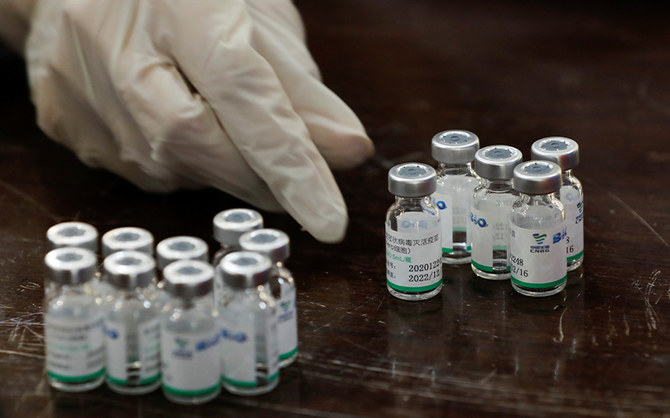
The decision is significant as Pakistan has yet to secure substantive volumes of vaccines from any companies and it only this month launched a vaccination drive with 500,000 doses of Sinopharm’s vaccine donated by long-time ally China.
Those shots are first being given out to frontline health workers on a priority basis.
Sultan said that Pakistan still planned to inoculate its population for free and only a “small minority” who wish to pay for the shots will have that option in the open market.
“Only those who wish to get it via private sector will pay anything,” he said. “Personally, my assessment is that when the vaccines are available and we have market competition, that will automatically set the prices.”
Pakistan, which has recorded more than 550,000 cases of COVID-19 and more than 12,000 deaths, is still largely reliant on the GAVI/WHO COVAX vaccine initiative that is aiming to provide shots to poorer nations.
Pakistan has yet to receive any of the 17 million doses it is expected to get through the COVAX initiative.

Pakistan to allow private firms to import COVID shots, exempt from price caps
https://arab.news/v68t8
Pakistan to allow private firms to import COVID shots, exempt from price caps
- Documents show National Health Services division had sought a special cabinet exemption to allow for such imports
- The imported vaccines will be excluded from the strict price cap regime typically applied to all drug sales within the country
Pakistan mulls 'Super App' for public services, document verification in major technology push
- Pakistan has been urging technology adoption in public, private sectors as it seeks to become a key tech player globally
- The country this month launched the Indus AI Week to harness technology for productivity, skills development and innovation
KARACHI: Pakistan is planning to launch a “Super App” to deliver public services and enable digital document verification, the country's information technology (IT) minister said on Sunday, amid a major push for technology adoption in public and private sectors.
Pakistan, a country of 240 million people, seeks to become a key participant in the global tech economy, amid growing interest from governments in the Global South to harness advanced technologies for productivity, skills development and innovation.
The country's information and communications technology (ICT) exports hit a record $437 million in Dec. last year, according to IT Minister Shaza Fatima Khawaja. This constituted a 23% increase month on month and a 26% increase year on year.
Pakistan's technology sector is also advancing in artificial intelligence (AI) and cloud computing, marked by the launch of Pakistan’s first sovereign AI cloud in November, designed to keep sensitive data domestic and support growth in the broader digital ecosystem.
“In developed countries, citizens can access all government services from a mobile phone,” Fatima said, announcing plans for the Super App at an event in Karachi where more than 7,000 students had gathered for an AI training entrance test as part of the ‘Indus AI Week.’
“We will strive to provide similar facilities in the coming years.”
Khawaja said the app will reduce the need for in-person visits to government offices such as the National Database and Registration Authority (NADRA) and the Higher Education Commission (HEC).
The Indus AI Week initiative, which ran from Feb. 9 till Feb. 15. was aimed at positioning Pakistan as a key future participant in the global AI revolution, according to the IT minister.
At the opening of the weeklong initiative, Prime Minister Shehbaz Sharif announced that Pakistan would invest $1 billion in AI by 2030 to modernize the South Asian nation’s digital economy.
“These initiatives aim to strengthen national AI infrastructure and make the best use of our human resource,” Khawaja said, urging young Pakistanis to become creators, inventors and innovators rather than just being the consumers of technology.


