

Global hedge funds predict jump in oil prices, as Brent crude picks up

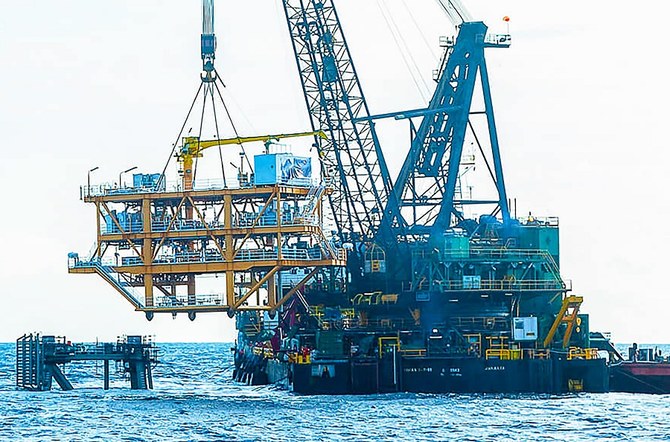
Brent crude prices have risen by around 59 percent since the beginning of November on the back of the discovery of COVID-19 vaccines. (File/AFP)
Short Url
Updated 08 February 2021
Follow

Global hedge funds predict jump in oil prices, as Brent crude picks up

  • The funds’ outlook on future trends of crude prices has changed from their prediction of declines last year as a result of global lockdowns

RIYADH: The world’s major hedge funds are betting on a jump in oil prices.

Their forecast has been based on what they see as the inability of many companies to increase production due to the ongoing economic impacts of the coronavirus disease (COVID-19) pandemic, which would mean a balance in supply and demand, according to Al Arabiya.

The funds’ outlook on future trends of crude prices has changed from their prediction of declines last year as a result of global lockdowns, a forecast that led to gains of about 26.8 percent, revealed eVestment data.

Brent crude crossed the $60 mark on Monday, boosted by supply cuts from major producers and amid hopes for further US economic stimulus measures.

International benchmark Brent crude was trading up 0.9 percent at $59.89 per barrel, at 8.55 am Makkah time, after it rose to $60.06 earlier in the day.

David Tawil, co-founder of the Maglan Capital hedge fund, said that crude prices would recover quickly as the world vaccination program and a return to international travel picked up speed, hitting between $70 and $80 per barrel by the end of the year.

“(Oil) demand will recover across the board, led by Asia-Pacific and North America,” Reuters reported, citing a recent research note by Fitch Solutions.

Oil prices derive their upward momentum from supply reduction in the market. Global crude and condensate production volume decreased around 8 percent in December compared to February, just before the COVID-19 outbreak started take hold around the world, according to Rystad Energy data.

Meanwhile, hedge funds increased their holdings in major US oil companies such as Exxon Mobil, ConocoPhillips, and Chevron Corp., said Al Arabiya.


Arab Energy Fund approved for Panda bonds, first MENA multilateral issuer in China

Updated 5 sec ago
Follow

Arab Energy Fund approved for Panda bonds, first MENA multilateral issuer in China

RIYADH: The Arab Energy Fund has received regulatory approval to issue Panda bonds in China, marking a significant step in linking Middle Eastern and Chinese capital markets.

This decision makes the Riyadh-based institution the first multilateral financial institution from the Middle East and North Africa region to secure such approval, granting it direct access to China’s domestic bond market.

According to a press release, the approval was granted by the Asian country’s National Association of Financial Market Institutional Investors, the regulator overseeing the interbank bond market.

This milestone reflects rapidly deepening ties between the Gulf Cooperation Council, especially Saudi Arabia, and China.

Recent high-level engagements have prioritized strategic investment and technology transfer in Vision 2030 sectors, resulting in dozens of agreements, and in December Foreign Minister Wang Yi described the China-GCC partnership as vital for safeguarding common interests and strengthening Global South resilience.

Under the program, TAEF is authorized to issue up to 10 billion Chinese yuan ($1.4 billion) in Renminbi-denominated bonds. The fund can issue these Panda bonds in multiple tranches over a two-year period, providing flexible, long-term capital for its strategic investments.

Vicky Bhatia, chief financial officer of the Arab Energy Fund, said: “This milestone allows us to further diversify our funding sources by tapping into a deep pool of Chinese investors, while laying a strong foundation for closer collaboration between a highly rated multilateral financial institution from the MENA region and China’s capital markets.”

This access represents a major diversification of TAEF’s funding strategy. Panda bonds provide a stable and direct source of Renminbi financing, strengthening the Fund’s capital planning capabilities as it supports projects across the energy spectrum. 

With a 50-year history, strong governance, and a high international credit rating, TAEF invests in conventional energy, energy infrastructure, and broader energy transition solutions.

By entering the onshore Panda bond market, the Arab Energy Fund reinforces its position as a trusted multilateral partner and an active, innovative participant in global capital markets. 

The move signals China’s growing role as a pivotal source of capital for international energy projects and highlights the increasing financial interconnectivity between the MENA region and Asia.