

Abu Dhabi eyes $275m worth of investments in Turkmenistan

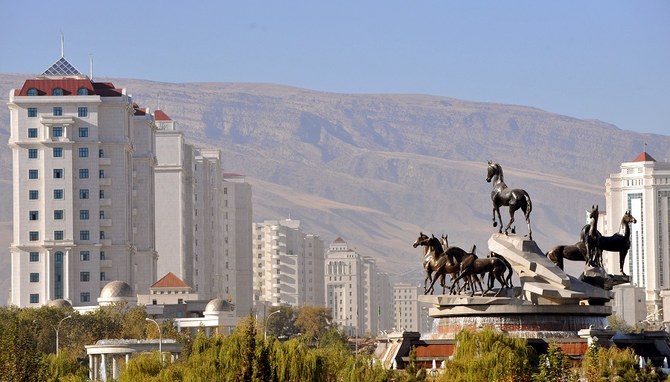
ADFD first began investing in Turkmenistan in 1999. (File/AFP)
Short Url
Updated 04 February 2021
Follow

Abu Dhabi eyes $275m worth of investments in Turkmenistan

  • The first MoU will see the establishment of an investment company in Turkmenistan with a target capital of $100 million

DUBAI: The Abu Dhabi Fund for Development (ADFD) on Wednesday signed three memoranda of understanding (MoUs) with the government of Turkmenistan to invest in a variety of potential projects including renewable energy, air transport, agriculture, and tourism.

The first MoU will see the establishment of an investment company in Turkmenistan with a target capital of AED370 million ($100 million), where Turkmenistani officials will present possible schemes to ADFD for investment.

Both parties will initially contribute AED58.7 million between them and the areas targeted for potential backing include sectors such as energy, agriculture, tourism, and industry.

The second MoU will study the feasibility of Abu Dhabi backing the establishment of a AED642.7 million chemical industry complex in Turkmenistan to produce polyvinyl acetate.

The final MoU will study other potential areas for investment in infrastructure projects, including renewable energy and air transport.

“The memoranda of understanding reflect ADFD’s keenness to expand its investment and economic partnerships with the government of Turkmenistan,” Mohammed Saif Al-Suwaidi, ADFD director general, told UAE state news agency WAM.

ADFD first began investing in Turkmenistan in 1999 with the financing of the rehabilitation of the Archman Hospital and establishment of a specialty hospital in Ashkhabad, for a total investment of around AED182 million.


Aramco achieves 70% local content target through iktva program 

Updated 13 sec ago
Follow

Aramco achieves 70% local content target through iktva program 

RIYADH: Saudi Aramco said its supply chain localization program has reached a target of 70 percent local content, underscoring the company’s push to deepen domestic industrial capacity. 

The state energy giant said its iktva program has added more than $280 billion to Saudi Arabia’s economy since its launch, converting procurement spending into local manufacturing, investment and job creation. 

Aramco plans to raise local content in its procurement of goods and services to 75 percent by 2030, extending a strategy aimed at strengthening supply chain resilience and supporting long-term economic diversification. 

Saudi Arabia has been accelerating local manufacturing and supply chain development as part of Vision 2030 reforms designed to diversify the economy beyond oil and create private-sector employment. 

Amin H Nasser, president and CEO of Aramco, said: “I am immensely proud of the transformational effect iktva has had on Aramco and its positive impact on Saudi Arabia’s economy.”  

He added: This announcement marks a major milestone in the program’s journey and reflects an important leap in the Kingdom’s industrial development, which is largely aligned with our ambitious national vision.”  

Nasser said that iktva is a core pillar of Aramco’s strategy to build a competitive national industrial ecosystem that supports the energy sector while enabling broader economic growth and creating thousands of job opportunities for Saudi nationals.  

“By localizing the supply chain, iktva ensures operational reliability while mitigating disruption. Its 10-year cumulative impact reflects the depth and sustainability of the value it continues to generate,” he added.  

Over the past decade, the program has identified more than 200 localization opportunities across 12 sectors representing an annual market worth about $28 billion. 

These have triggered more than 350 investments from companies in 35 countries, backed by $9 billion in capital, enabling 47 strategic products to be manufactured domestically for the first time, Aramco said. 

The initiative has also supported the creation of more than 200,000 direct and indirect jobs across the Kingdom, helping expand Saudi Arabia’s industrial base. 

Saudi Arabia’s local content programs aim to keep more spending within the national economy by encouraging companies to manufacture goods, source services and develop expertise domestically rather than relying on foreign suppliers.