OPEC+ ministers cautiously optimistic about global oil market

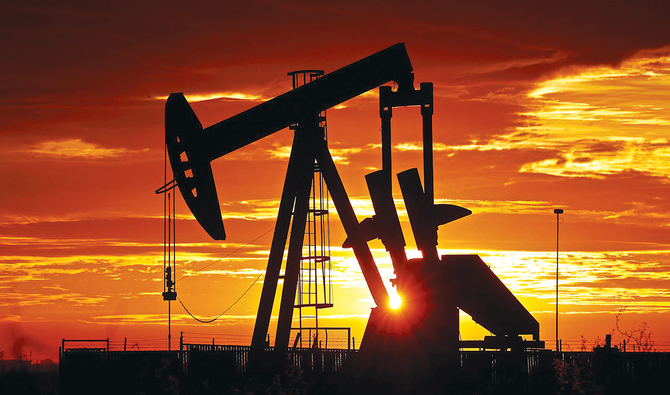
OPEC+ achieved another month of compliance to the cuts last year. (Shutterstock)
Short Url
Updated 03 February 2021
Follow

OPEC+ ministers cautiously optimistic about global oil market

  • Energy ministers warned members of the 23-country alliance not to be complacent as oil prices recover, nor to go for quick output increases in the face of economic difficulties

DUBAI: Energy ministers from the OPEC+ alliance of oil producers, led by Saudi Arabia and Russia, struck a note of cautious optimism about global oil markets in 2021.

Gathering virtually under the auspices of the Organization of Petroleum Exporting Countries in Vienna, the ministers agreed that “while economic prospects and oil demand would remain uncertain in the coming months, the gradual rollout of vaccines around the world is a positive factor for the rest of the year, boosting the global economy and oil demand.”

But they warned members of the 23-country alliance not to be complacent as oil prices recover, nor to go for quick output increases in the face of economic difficulties.

Instead, they were urged “to remain vigilant and flexible given the uncertain market conditions, and to stay on the decided course which has hitherto reaped rewards.”

The meeting was the latest in the regular monthly sessions of the OPEC+ joint ministerial monitoring committee which assesses market conditions among the 23-strong membership.

It has no power to change OPEC+ policy, but will set the tone for a full decision-making meeting next month.

Global oil markets have been steadied this year by the surprise decision of Saudi Arabia to cut an extra 1 million barrels from monthly production, which came into effect this week and has led to a surge in prices.

Brent crude, the global benchmark, had another strong day, rising to above $58 a barrel, its highest level for 12 months.

“The committee noted, with gratitude, the significant voluntary extra supply reduction made by Saudi Arabia, taking effect on Feb. 1, 2021 for two months, exemplifying its leadership, and the need for a flexible and pre-emptive approach by all members,” the ministers said.

OPEC+ members achieved another strong month of compliance to the historic cuts last year that have been credited with rebalancing global markets.

Since last April, about 2.1 billion barrels of oil have been removed from a fragile market, with demand hit by the pandemic lockdowns and travel restrictions, the meeting noted.

There was also progress on the schedule of compensation whereby overproducers make up their obligations in subsequent months.

The participants “pledged to achieve full conformity and make up for previous compensation shortfalls, and stressed the importance of accelerating market rebalancing without delay. The progress of Nigeria in this respect was well noted,” the ministers said.

The recovery in global markets was underlined by the fact that oil stocks in developed economies had fallen for the fifth consecutive month.


Saudi Arabia’s foreign reserves rise to a 6-year high of $475bn

Updated 22 February 2026
Follow

Saudi Arabia’s foreign reserves rise to a 6-year high of $475bn

RIYADH: Saudi Arabia’s foreign reserves climbed 3 percent month on month in January to SR1.78 trillion, up SR58.7 billion ($15.6 billion) from December and marking a six-year high.

On an annual basis, the Saudi Central Bank’s net foreign assets rose by 10 percent, equivalent to SR155.8 billion, according to data from the Saudi Central Bank, Argaam reported.

The reserve assets, a crucial indicator of economic stability and external financial strength, comprise several key components.

According to the central bank, also known as SAMA, the Kingdom’s reserves include foreign securities, foreign currency, and bank deposits, as well as its reserve position at the International Monetary Fund, Special Drawing Rights, and monetary gold.

The rise in reserves underscores the strength and liquidity of the Kingdom’s financial position and aligns with Saudi Arabia’s goal of strengthening its financial safety net as it advances economic diversification under Vision 2030.

The value of foreign currency reserves, which represent approximately 95 percent of the total holdings, increased by about 10 percent during January 2026 compared to the same month in 2025, reaching SR1.68 trillion.

The value of the reserve at the IMF increased by 9 percent to reach SR13.1 billion.

Meanwhile, SDRs rose by 5 percent during the period to reach SR80.5 billion.

The Kingdom’s gold reserves remained stable at SR1.62 billion, the same level it has maintained since January 2008.

Saudi Arabia’s foreign reserve assets saw a monthly rise of 5 percent in November, climbing to SR1.74 trillion, according to the Kingdom’s central bank.

Overall, the continued advancement in reserve assets highlights the strength of Saudi Arabia’s fiscal and monetary buffers. These resources support the national currency, help maintain financial system stability, and enhance the country’s ability to navigate global economic volatility.

The sustained accumulation of foreign reserves is a critical pillar of the Kingdom’s economic stability. It directly reinforces investor confidence in the riyal’s peg to the US dollar, a foundational monetary policy, by providing SAMA with ample resources to defend the currency if needed.

Furthermore, this financial buffer enhances the nation’s sovereign credit profile, lowers national borrowing costs, and provides essential fiscal space to navigate global economic volatility while continuing to fund its ambitious Vision 2030 transformation agenda.