

Lebanese illustrator fills baby bookshelf gap with Arabic high contrast read

Lebanese illustrator and graphic designer Celia Jaber and her son. Supplied
Short Url
Updated 03 February 2021
Follow

Lebanese illustrator fills baby bookshelf gap with Arabic high contrast read

DUBAI: Inspired by the birth of her newborn son, Lebanese illustrator and graphic designer Celia Jaber has published a new bedtime board book for parents struggling to find high contrast reads for newborns in Arabic.

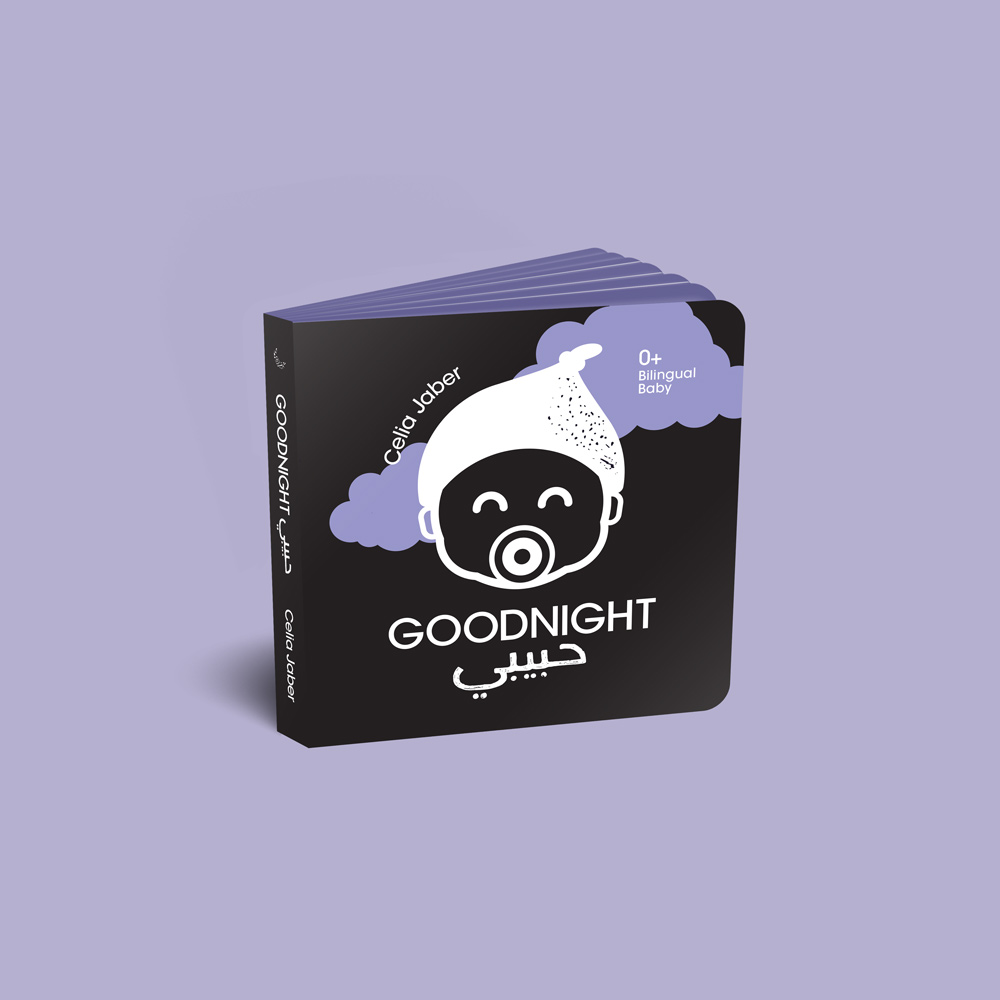
“Goodnight Habibi” (my love, in Arabic) is bilingual and high contrast — making it stimulating enough for newborns whose perception of color develops over their first five months. Because high contrast images are easier for babies to interpret, it is widely advised that parents opt for simple, high contrast books for the youngest bookworms in the house. Surprisingly, such books are difficult enough to find in English in the Gulf market, but now parents have another choice to add to their bookshelves.


“Goodnight Habibi” (my love, in Arabic) is bilingual and high contrast. Supplied

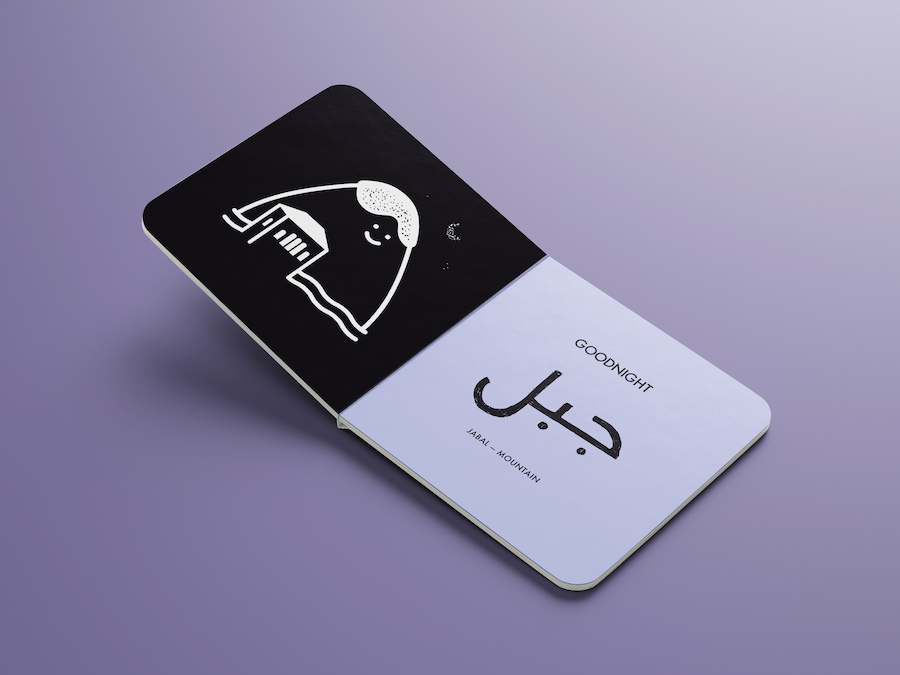
Jaber’s book presents simple everyday words in both Arabic and English, accompanied by endearing and modern illustrations.

It tells the story of a baby being gentle and kind by saying goodnight to its surroundings in a Lebanese village – from the moon to the mountain and the family. At the heart of it, the picture book represents a sentimental offering from mother to child.

“I created this book for Rami (Jaber’s son), but also for his generation,” San Francisco-based Jaber told Arab News. “My husband is not Arab and both our native languages in the house will be Arabic and English.

“I would love for Rami to grow up in the US but also have the Arabic language as an interest to him. I really do care about representation – having an actual book that meets my standards of modern parenting and also be beautiful, so I created that as a present for him and others.”
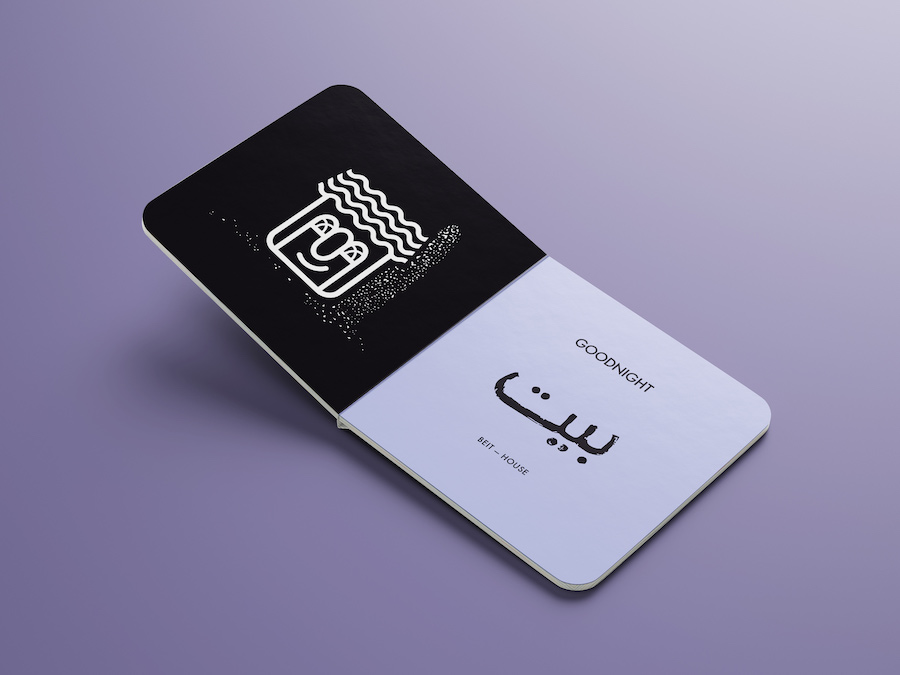


Jaber’s book presents simple everyday words in both Arabic and English, accompanied by endearing and modern illustrations. Supplied

Raised in Beirut and educated in Milan, Jaber belongs to a small but creative community of young entrepreneurs and artists, who are thoughtfully elevating the quality and content – from outdated to engaging – of Arabic children’s books.

“There is still a huge gap and there’s a lot that we, each designer and publisher, can also bring in as an experience that’s a little bit personalized or different from each other,” she said.


Linguistically, the chosen words are informal, short, and sweet – written in Arabic and transliterated into English for non-Arabic speakers. Supplied

“I’ve been inspired to start a book that meets my baby at the moment that he was born. Newborns cannot see colors, everything around them is very blurry and they only see in high contrast. This would actually attract their attention and that’s a way for them to connect to the world,” Jaber added.

Linguistically, the chosen words are informal, short, and sweet – written in Arabic and transliterated into English for non-Arabic speakers.

“It’s a book primarily for Arabs, English bilingual readers. I would love for it to expand beyond that just to share a bit of our culture,” she said.


Haifaa Al-Mansour discusses her latest film, ‘Unidentified’ 

Updated 5 sec ago
Follow

Haifaa Al-Mansour discusses her latest film, ‘Unidentified’ 

  • The Saudi filmmaker looks to ‘challenge the audience’ with new crime thriller  

DUBAI: “I was drawn to making a crime thriller because it’s a genre that allows you to ask uncomfortable questions in a very accessible way,” Haifaa Al-Mansour says. 

The acclaimed Saudi filmmaker is talking about her latest feature, “Unidentified,” in which a young Saudi police officer, Nawal (Mila Al-Zahrani), investigates the death of a young woman whose body is found in the desert. Initially, the identity of the dead girl is a mystery, and the tight-knit community in which she lived — including her own family — are unwilling to identify her and acknowledge her death.  

“The case becomes a confrontation with fear, silence, and the cost of truth, both for the community and for herself,” says Al-Mansour. “I enjoy thrillers because they create momentum, and draw you in, but beneath that surface you can explore social tensions, power structures, and moral ambiguity. For me, the genre was a way to talk about silence, complicity, and courage without making the film feel like a lecture.” 

Shafi Alharthi and Mila Al-Zahrani on the set of ‘Unidentified.’ (Supplied)

It later transpires that the dead girl is called Amal, and that she had headed out into the desert for a secret romantic rendezvous. That partly explains her family’s reluctance to admit that the body is hers, but, Al-Mansour explains, “more broadly it is about how a woman’s private choices can be treated as a family’s public burden. I wanted to highlight how silence can feel safer than truth, especially in close-knit communities. No one believes they are doing something cruel.  They believe they are protecting themselves. That moral gray area interested me as a filmmaker. The tragedy is not only Amal’s death, but how quickly she is erased.” 

The only person who seems determined to uncover the truth about Amal is Nawal. But as a very junior member of staff at the police station, her ideas about the case, despite often being correct, are generally ignored by her seniors (who are almost all men). There are clear — and deliberate — parallels between Nawal’s career and the early stages of Al-Mansour’s.  

“Nawal’s experience — being questioned, underestimated, told to be patient or quiet — is something I know very well,” the filmmaker says. “I wanted her struggle to feel authentic: not heroic in a loud way, but persistent. Her strength is not that she never doubts herself, it’s that she continues anyway. That felt honest to my own journey and to the journeys of many women I know.” 

Haifaa Al-Mansour (R) on set during the filming of ‘Unidentified.’ (Supplied)

Nawal does have at least one supporter: her boss and mentor Majid, played by Shafi Alharthi. Again, Al-Mansour’s experience was similar. “I was fortunate to have people who may not have fully understood my perspective at first, but who chose to listen and stand beside me. Those allies matter enormously,” she says. “Majid is not perfect; he hesitates, he is shaped by the same system as everyone else. But his willingness to support Nawal, even quietly, reflects the kind of allyship that can make real change possible.” 

The chemistry between the two actors is a crucial part of the movie. Both appeared in Al-Mansour’s previous feature, 2019’s “The Perfect Candidate,” and the director says that she wrote “Unidentified” with the two of them in mind and “designed the characters around them.”  

She explains: “I didn’t want Nawal to feel like a symbol; she needed to feel human. Mila has an incredible ability to communicate inner conflict with restraint. She doesn’t overplay emotion — you see it in her eyes, in her stillness. She brought vulnerability and strength in equal measure. And Shafi is such a big teddy bear, I knew that he would be sympathetic as a mentor figure, and not too intimidating or rough. Their connection is subtle, based on respect rather than romance, and that was important. Shafi brings warmth and intelligence to Majid. He makes the character believable as someone who is evolving, not suddenly enlightened. That dynamic supports the emotional core of the film.” 

Mila Al-Zahrani as Nawal in ‘Unidentified.’ (Supplied)

As she suggested earlier, Al-Mansour was not looking just to create a “whodunnit,” but to use the crime as a way of exploring social and cultural issues. Throughout the film, several of the young female characters express dissatisfaction with gender roles and societal expectations.  

“These conversations are happening more openly now (in the Kingdom), especially among younger women,” says Al-Mansour. “There is ambition, impatience, hope, and frustration all existing at the same time. That is what happens during periods of rapid change like the kind we are seeing now. And that is very healthy!  

“As a Saudi filmmaker, I’m really excited to add to the discussion on these subjects, and I believe it is important to reflect lived-reality honestly. Cinema has a responsibility not just to celebrate progress, but also to ask what still hurts, what still needs work. For me, storytelling is a way to participate in that conversation, not to give answers but to create space for dialogue,” she continues. “My main goal with this film was to challenge the audience, to present problems that seem to have ‘tidy’ solutions, and then present additional information that throws everything into question.” 

What she hopes “Unconditional” will achieve, she says, is to make audiences think about “the cost of silence — and the courage it takes to name what others would rather ignore” and to “question the root causes of these issues, and look beyond the expected conclusion to the difficult questions beyond.” 

She concludes: “If the film encourages empathy, conversation, and a willingness to look closer at what we choose not to see, then it has done its job.”