

Aramco’s entrepreneurship arm Wa’ed invests $500k in fitness app

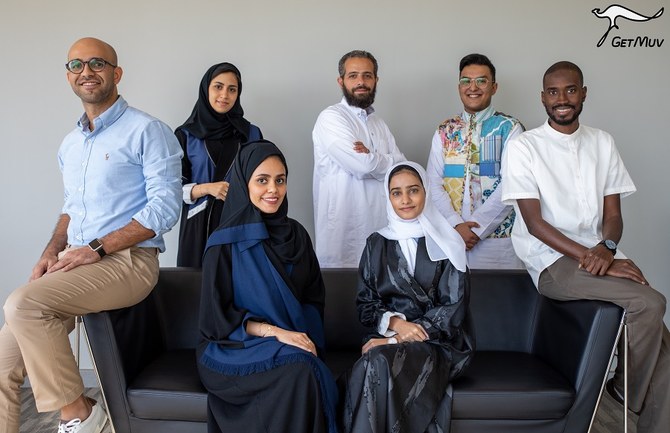
The GetMuv app gives Saudi men and women the opportunity to flexible health and wellness memberships to gyms throughout the Kingdom. (Supplied)
Short Url
Updated 30 January 2021
Follow

Aramco’s entrepreneurship arm Wa’ed invests $500k in fitness app

  • The investment is the second injection of cash in GetMuv, following on from a $1.5 million investment in 2019

RIYADH: Wa’ed, the entrepreneurship arm of Saudi Aramco, has announced a $500,000 bridge investment in GetMuv, the Jeddah-based app dedicated to fitness clubs and health centers.

The investment was through the company’s venture capital arm, Wa’ed Ventures, and is the second injection of cash in GetMuv, following on from a $1.5 million investment in 2019.

The app, which gives Saudi men and women the opportunity to have flexible health and wellness memberships at gyms throughout the Kingdom, plans to use the new funding to expand into the Kingdom’s corporate health and wellness sector.

Wassim Basrawi, Wa’ed managing director, said: “This latest funding reflects our confidence in GetMuv’s business model and clear value to the Kingdom’s future. As an innovative, digital solution that is helping boost fitness levels nationwide, GetMuv is another example of ingenuity that is ‘Made in Saudi Arabia’.”

Ibrahim Yousef, GetMuv CEO and co-founder, said: “Since our start-up was created at the end of 2017, GetMuv has developed a loyal customer base of 130,000 registered sport and fitness enthusiasts who gain flexible, affordable and on-demand access to over 100 top gyms, including Body Masters, KORE, Arena, NuYu and other sports clubs across Saudi Arabia.”

The GetMuv deal comes soon after the announcement of Wa’ed’s $500,000 investment in Ynmo, the first Arabic-English software platform for teachers of students with disabilities. The funding, through Wa’ed Ventures, will help the Makkah-based startup invest in its software, hire more staff and expand its services.

Earlier this year, Wa’ed reported that it had tripled the amount of money loaned to startups in the Kingdom last year.

The Dhahran-based initiative gave out 12 loans to small and medium-sized enterprises (SMEs), up from four in 2019, with the value surging to SR31 million ($8.27 million), up from SR10 million in 2019.

In terms of venture capital funding, Wa’ed deployed SR43 million to SMEs, up 34 percent year-on-year.

“In a very challenging year, I am proud of the Wa’ed family, which includes my team and our resilient entrepreneurs, for rising to the challenges and keeping us on track to deliver an even greater impact in 2021,” Basrawi said.


Saudi businesses step up AI use as adoption reaches 27.6%: GASTAT 

Updated 5 sec ago
Follow

Saudi businesses step up AI use as adoption reaches 27.6%: GASTAT 

RIYADH: Artificial intelligence adoption among businesses in Saudi Arabia rose to 27.6 percent in 2024, reflecting a steady expansion in the use of advanced digital tools across the Kingdom’s private sector, according to official data. 

The information and communications sector recorded the highest uptake of AI technologies at 52.8 percent, followed by finance and insurance at 44.7 percent and education at 42.1 percent, the General Authority for Statistics said in its Establishments’ ICT Access and Usage Statistics 2024 report. 

This data underscores the growing digital maturity of the Kingdom’s private sector, with certain industries leading the transition toward advanced technologies.   

The professional services sector showed a notable 39.2 percent adoption rate, while other sectors, such as real estate at 28.2 percent, wholesale and retail trade at 25 percent, and manufacturing at 26 percent, reflected varying levels of engagement with AI tools.    

In contrast, sectors like construction at 25.8 percent, human health and social work at 29.9 percent, and arts, entertainment and recreation at 20.1 percent lagged behind, highlighting differences in AI integration across the economy.   

Other sectors showing moderate uptake of AI technologies include transportation and storage at 38.3 percent and mining and quarrying at 32.4 percent.   

Meanwhile, industries such as administrative and support services at 25.2 percent, and electricity and gas supply at 25.7 percent, reported lower levels of AI adoption compared to digital frontrunners.    

The report also revealed that internet access among establishments across Saudi Arabia reached 98 percent in 2024, marking a 0.3 percentage point increase over the previous year.    

Social media usage was reported by 63 percent of establishments, and 76.3 percent of businesses used internet platforms to conduct electronic banking transactions.   

In addition to AI, the adoption of cloud computing technologies grew significantly. A total of 46.8 percent of establishments reported using cloud services, with the most common uses being ready-made office applications at 53.5 percent, email services at 50.3 percent, and file storage at 41.1 percent. 

Meanwhile, Internet of Things technologies were widely employed for building security at 68.4 percent, energy management at 36.5 percent, and maintenance purposes at 21.1 percent.  

The Establishments’ ICT Access and Usage Survey is conducted using internationally aligned methodologies and follows the Statistical Business Process Guide and standards set by the UN Conference on Trade and Development, GASTAT stated.