





MAKKAH: More than 13 types of inscriptions from ancient civilizations, mostly written in Arabic, have been found the Arabian Peninsula, experts have revealed.
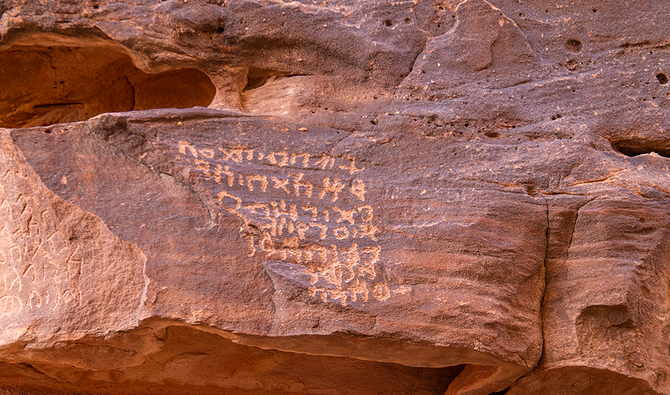
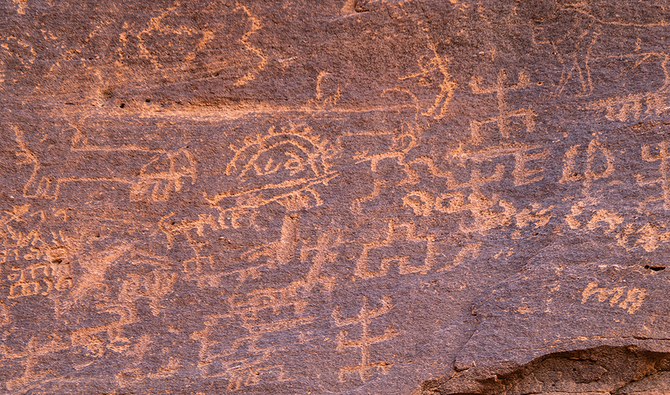
The best known inscriptions are rock inscriptions on mountains, Dr. Sulaiman Al-Thiaeb, professor of ancient Arabic writings and cultural consultant at the King Faisal Center for Research and Islamic Studies, told Arab News.
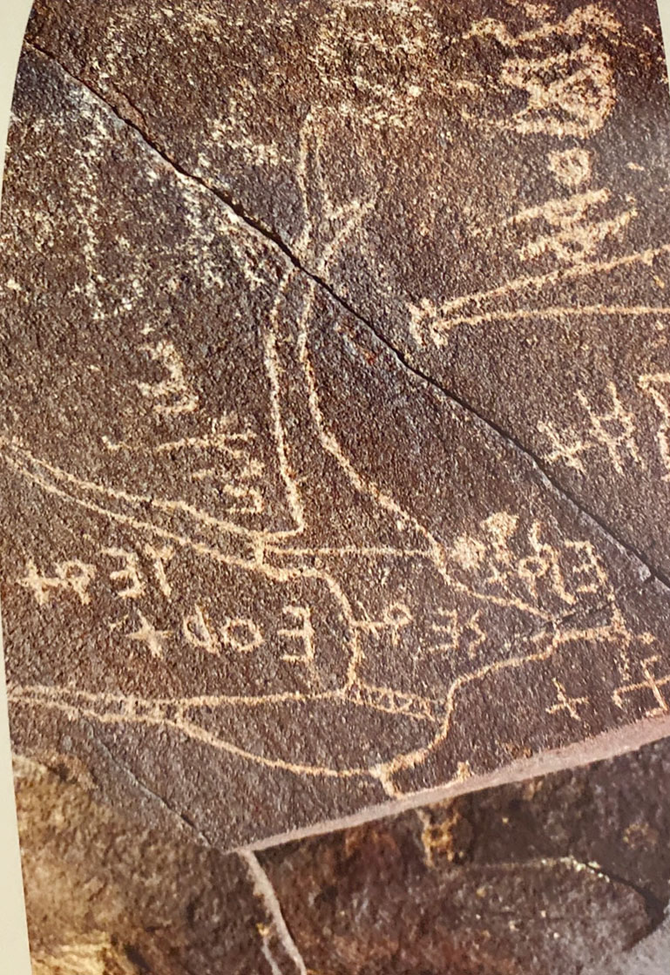
“The oldest Arabian Islamic and Arabic-related inscriptions are the Thamudic inscriptions that date as far back as 1200 B.C.,” he said. “We did not find political Thamudic inscriptions because most of them are social and reflect the thoughts of ancient Thamudic or Arab individuals. We mostly find them in deserts, along trade routes and inside cities such as AlUla, Najran, Tayma and Al-Jouf, which were the capitals of kingdoms.”
The second most famous inscriptions, according to the professor, are the Aramaic ones, which can be found in AlUla, the capital city of Dadanite and Lihyanite Kingdoms, and date back to 1000 B.C. “These two kingdoms lasted from the 10th century B.C. to the first century B.C., when the Nabataeans overthrew them.”
The Lihyanite inscriptions found in northwestern Arabia are similar to the Thamudic, Safaitic, Nabati and Aramaic dialects and the dialects of the South Arabian script, such as the Sabaean and Minaean dialects, he said.
He added that the most prominent of these inscriptions are found in northwestern and southwestern Arabia and in the region of Hail. This is considered one of the richest regions in terms of ancient history and is the home of Jubbah, which has been recognized by UNESCO.
The inscriptions include writings in Palmyrene, Hebrew, Latin, Greek, ancient Egyptian and Babylonian, some of which will have been written by merchants or soldiers who came to Arabia for various reasons.
“There are numerous local and foreign studies, including German, French, British, American, Canadian and Japanese works, on Arabia’s inscriptions,” Al-Thiaeb said.
Dr. Salma Hawsawi, professor of ancient history at King Saud University (KSU), said that the first writing in the region dates back thousands of years.
The practice spread due to the people’s need to codify their laws, and trade contracts. Writings started off as drawings, then symbols and syllables, before taking on the form of an alphabet, she said.
HIGHLIGHTS
• In northern Arabia, the Thamudic calligraphy became known in the eighth century B.C. along with the Safaitic, Aramaic, Dadanite, Lihyanite and Nabati calligraphies, which are found in more than 5000 inscriptions across the Kingdom.
• Archeological studies focusing on the Arabian Peninsula started with the arrival of Western travelers such as Johann Ludwig Burckhardt, Charles Huber, Joseph Halevy, Eduard Glaser, William Palgrave, Jaussen and Savignac, John Philby, Peter Cornwall, Jeffrey Pepe, Ryckmans, Albert Jamme, Jacqueline Byrne and Wiseman.
• The Lihyanite inscriptions found in northwestern Arabia are similar to the Thamudic, Safaitic, Nabati and Aramaic dialects and the dialects of the South Arabian script, such as the Sabaean and Minaean dialects.
“Arabia had inscriptions across the region. These inscriptions provided information regarding the various aspects of the Arab society,” she said. “They referred to religious matters such as deities and religious rites, social matters such as marriage and divorce, geographical matters such as the names of tribes and locations, economic matters such as professions, crafts, commercial clauses, currencies, imports, exports and so on.”
Some inscriptions were related to politics and featured the names of kings and rulers, wars and the rise and fall of nations, while others are considered memorials and represent an important source of knowledge on the region’s history and culture.
The number of inscriptions, she said, reflects a society’s cultural level and its interest in documenting.
“The inscriptions are found on rocks in an arranged or random manner depending on the writer’s skill, on the facades of buildings such as temples and houses, on tombstones or sealed on clay tablets that are burned after the texts have been written to solidify them so that they can last for long periods of time without fragmenting or crumbling,” Hawsawi added.
“We can extract historical information from these inscriptions as they reflect the feelings of love, fear, longing, sadness and happiness felt by people back then,” said Hawsawi. “That is why inscriptions are seen as a true witness of what the people of that era have experienced, which highlights the region’s cultural depth.”
In northern Arabia, the Thamudic calligraphy became known in the eighth century B.C. along with the Safaitic, Aramaic, Dadanite, Lihyanite and Nabati calligraphies, which are found in more than 5,000 inscriptions across the Kingdom.
She noted that opinions differ over the language used in the inscriptions and whether it was Canaanite, Aramaic or Arabic.
However, she added, most archeologists agreed on their Arabism “given the fact that they contain Arabic letters such as the “B” and the “F,” words referring to the desert, animal names such as “camel,” Arabic proper nouns such as Al-Hareth, Taym and Qais, in addition to the names of Arab deities accompanied by Arabic names such as Abdullat, Taym Al-lat, Abd Monat, Abd Manat, Abd Rab El bin Aqabi and Rab El bin Taym.
Archeological studies focusing on the Arabian Peninsula started with the arrival of Western travelers such as Johann Ludwig Burckhardt, Charles Huber, Joseph Halevy, Eduard Glaser, William Palgrave, Jaussen and Savignac, John Philby, Peter Cornwall, Jeffrey Pepe, Ryckmans, Albert Jamme, Jacqueline Byrne and Wiseman.
According to Hawsawi, one of the most important missions was the one sent by the American Institute for the Study of Man to southern Arabia in 1950 and 1951, which excavated a number of sites and published numerous volumes and articles on its results.
“Philby is considered among the most prominent people that have written about the Arabian Peninsula, as he wrote several books, official reports and articles that described most of the Kingdom’s regions,” she said. “These activities included excavations in northwestern Saudi Arabia between the years 1951 and 1953, the results of which were published in 1957 in 2 volumes.”
She said that Albert Jamme published the inscriptions that Philby had gathered from the site of Al-Faw village.
“We should not forget the efforts of KSU’s College of Tourism and Antiquities, represented by the university’s archeology department, in its excavations across the Kingdom,” she said.


