Fahad Al-Mubarak appointed as new Saudi central bank governor

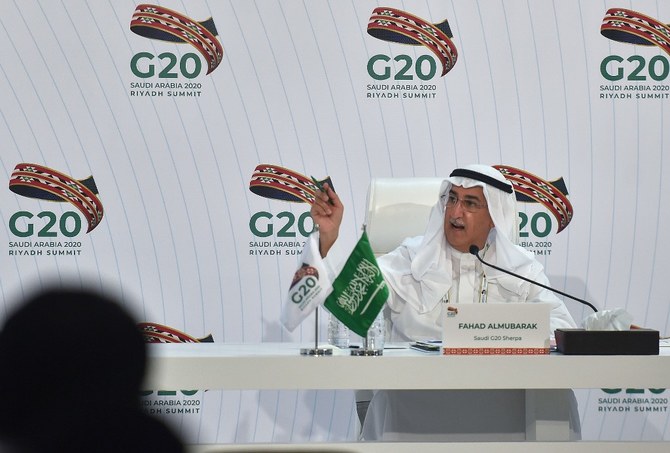
Fahad Al-Mubarak previously headed the Saudi central bank from 2011 until 2016. (AFP)
Short Url
Updated 25 January 2021
Follow

Fahad Al-Mubarak appointed as new Saudi central bank governor

  • He also served as chairman of the Saudi stock exchange

LONDON: Saudi Arabia's king appointed Fahad Al-Mubarak as central bank governor, his second stint in one of the most sensitive positions in the kingdom replacing Ahmed al-Kholifey, a decree carried on state media on Sunday said.

Mubarak, who had helmed the Saudi Central Bank (SAMA) from 2011-2016, was previously chairman and managing director of Morgan Stanley, Saudi Arabia, and has also served as chairman of the Saudi stock exchange.
He was succeeded as governor in 2016 by Kholifey, who guided SAMA during a sharp economic contraction last year caused by lower crude prices and COVID-19. Kholifey will become an adviser at the royal court, the decree said.
SAMA last March launched a 50-billion-riyal ($13.3 billion) stimulus package to support the private sector in the world's top oil exporter. In June, it announced the injection of another 50 billion riyals into the banking sector to support liquidity.
In September, as coronavirus restrictions eased and the Saudi economy showed early signs of recovery, Kholifey said he was confident in the country's financial stability but that caution was needed in decreasing monetary support to avoid a deterioration of assets.
The central bank last year transferred $40 billion to the sovereign wealth fund, the Public Investment Fund, to boost its firepower in overseas investments. That contributed to a sharp drop in Saudi central bank foreign assets when the Saudi economy was being hit hard by the coronavirus pandemic.
Kholifey oversaw the Saudi banking sector at a critical time for Saudi Arabia, as banks' liquidity suffered after the 2014-2015 oil price crash.
Under his guidance in 2016 the central bank introduced new monetary tools to lower market interest rates, which had soared amid shrunken flows of petrodollars.
Liquidity in the Saudi banking system also improved because Riyadh that year started borrowing tens of billions of dollars in the overseas markets, reducing pressure on Saudi banks.


Emerging markets driving global growth despite rising risks: Saudi finance minister 

Updated 47 min 50 sec ago
Follow

Emerging markets driving global growth despite rising risks: Saudi finance minister 

RIYADH: Emerging markets now account for a growing share of global output and are driving the bulk of world economic expansion, Saudi Arabia’s finance minister said, even as those economies grapple with rising debt and mounting geopolitical risks. 

Speaking at the opening of the annual AlUla Conference for Emerging Market Economies on Feb. 8, Mohammed Al-Jadaan said the role of emerging and developing nations in the global economy has more than doubled since 2000, underscoring a structural shift in growth away from advanced economies. 

The meeting comes as policymakers in developing markets try to keep growth on track while controlling inflation, managing capital flows and repairing public finances after years of heavy borrowing. Saudi Arabia has positioned the forum as a platform to coordinate policy responses and strengthen the voice of emerging economies in global financial discussions. 

“This conference takes place at a moment of profound transition in the global economy. Emerging markets and developing economies now account for nearly 60 percent of the global gross domestic product in purchasing power terms and 70 percent of global growth,” Al-Jadaan said. 

He added: “Today, the 10 emerging economies and the G20 alone account for more than half of the world’s growth. Yet, emerging markets face a more complex and fragmented environment, elevated debt levels, slower trade growth and increasing exposure to geopolitical shocks.” 

Launched in 2025, the conference this year brings together economic decision-makers, finance ministers, central bank governors, leaders of international financial institutions, and a select group of experts and specialists from around the world.