

Pakistan expects to save about $8 million on LNG procurement

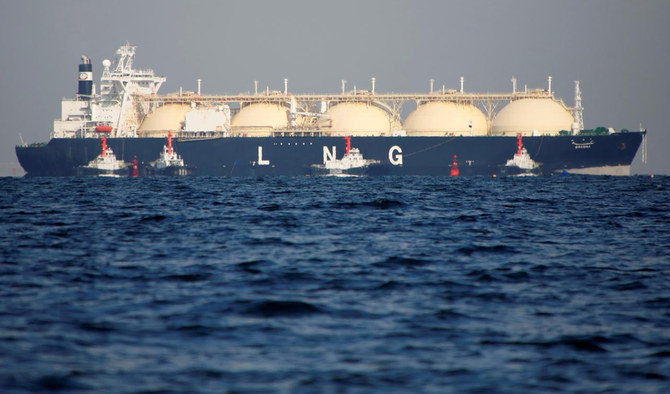
A liquefied natural gas (LNG) tanker is tugged towards a thermal power station in Futtsu, east of Tokyo on Nov. 13, 2017. (REUTERS/File)
Short Url
Updated 02 March 2021
Follow

Pakistan expects to save about $8 million on LNG procurement

  • Energy experts believe the country should secure long-term contracts with foreign companies to ensure continuity of economic activities
  • Pakistan’s energy managers need to understand the dynamics of LNG trading, say experts

KARACHI: Pakistan expects to save about $8 million by importing low-cost liquefied natural gas (LNG) after Dubai’s Emirates National Oil Company Limited (ENOC) defaulted on its supply commitment last week, a senior official confirmed while talking to Arab News on Saturday. 

Pakistan LNG Limited (PLL), a state-owned entity that procures and imports the commodity, said on Friday it had arranged one more LNG cargo at low price for the month of February by floating an urgent tender. 

“The price is approximately 22% lower than the price of the bidder that withdrew its bid earlier,” said the PLL statement. 

Pakistan is expected to benefit from the situation since it may be able to save around $8 million on the cargo, according to a senior PLL official. “We will know the actual price after Brent of January is closed,” the official, who declined to be named, said. 

Last week, ENOC refused to deliver the cargo when spot LNG prices increased to an all-time high of $32.50 per mmbtu from an all-time low of $1.825 per mmbtu in April 2020. The prices cooled down this week, however, after Japan, China and South Korean reduced their procurements from the spot market.

The spot LNG market rates now hover around $6 per mmbtu which is 12 percent of Brent for April contracts.

“Japan, China and South Korea have procured what they wanted,” said Muhammad Riazuddin, former CEO of the Khyber Pakhtunkhwa Oil and Gas Company Limited. “What is left in the market is the residue, which is why the prices are dropping.” 

Pakistan faces gas shortages in winter due to its growing demand. This is usually managed by diverting the supplies to domestic consumers from industries, fueling stations and captive power plants. Experts believe, however, that only long-term contracts can provide viable solution to the problem.

“The government should realize the gravity of the situation and try to secure long-term contracts with companies,” Riazuddin said. “The price is only one dimension of the problem. A bigger consideration relates to the working of industry and economy that cannot be imperiled.” 

“Countries cannot just rely on spot market which is about 10-12 percent of the bulk market,” he continued, adding: “Pakistan’s energy managers need better understanding of the dynamics of LNG trading.”


Pakistan says $50 million meat export deal with Tajikistan nearing finalization

Updated 09 December 2025
Follow

Pakistan says $50 million meat export deal with Tajikistan nearing finalization

  • Islamabad expects to finalize agreement soon after Dushanbe signals demand for 100,000 tons
  • Pakistan is seeking to expand agricultural trade beyond rice, citrus and mango exports

ISLAMABAD: Tajikistan has expressed interest in importing 100,000 tons of Pakistani meat worth more than $50 million, with both governments expected to finalize a supply agreement soon, Pakistan’s food security ministry said on Tuesday.

Pakistan is trying to grow agriculture-based exports as it seeks regional markets for livestock and food commodities, while Tajikistan, a landlocked Central Asian state, has been expanding food imports to support domestic demand. Pakistan currently exports rice, citrus and mangoes to Dushanbe, though volumes remain small compared to national production, according to official figures.

The development came during a meeting in Islamabad between Pakistan’s Federal Minister for National Food Security and Research Rana Tanveer Hussain and Ambassador of Tajikistan Yusuf Sharifzoda, where agricultural trade, livestock supply and food-security cooperation were discussed.

“Tajikistan intends to purchase 100,000 tons of meat from Pakistan, an import valued at over USD 50 million,” the ambassador said, according to the ministry’s statement, assuring full facilitation and that Islamabad was prepared to meet the demand.

The statement said the two sides agreed to expand cooperation in meat and livestock, fresh fruit, vegetables, staple crops, agricultural research, pest management and standards compliance. Pakistan also proposed strengthening coordination on phytosanitary rules and establishing pest-free production zones to support long-term exports.

Pakistan and Tajikistan have long maintained political ties but bilateral food trade remains below potential: Pakistan produces 1.8 million tons of mangoes annually but exported just 0.7 metric tons to Tajikistan in 2024, while rice exports amounted to only 240 metric tons in 2022 out of national output of 9.3 million tons. Pakistan imports mainly ginned cotton from Tajikistan.