

‘Star Trek: Lower Decks’ explores strange new worlds to great effect

‘Star Trek: Lower Decks’ is now streaming on Amazon Prime Video. Supplied
Short Url
Updated 23 January 2021
Follow

‘Star Trek: Lower Decks’ explores strange new worlds to great effect

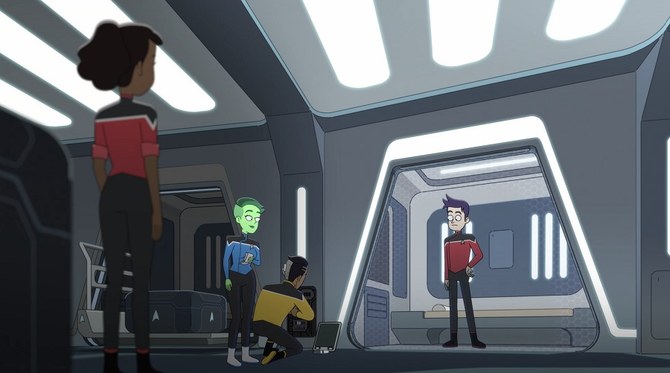
LONDON: Ever wondered what happens in the hallways of Starfleet’s high-tech spaceships while Captain Kirk et al are off saving the galaxy? Curious about what the 99 percent of the crew who are usually off screen get up to? Well, wonder no longer. Originally created for CBS All Access, new animated series “Star Trek: Lower Decks” has launched internationally on Amazon Prime Video, offering a glimpse into a hitherto unexplored corner of the long-running show’s universe. While recent “Star Trek” shows have taken the franchise in a more adult direction (the excellent “Discovery” and “Picard” have included the first F-bombs in Trek history), “Lower Decks” takes a decidedly more comic approach.

Ensigns Mariner, Boimler, Tendi and Rutherford serve aboard the USS Cerritos — but the closest the quartet get to the action is when they share a turbolift with one of the senior staff. While the captain and her officers get the lion’s share of the important missions, Boimler (voiced by Dennis Quaid of “The Boys” fame) and Mariner (“Space Force” star Tawny Newsome) usually wind up delivering supplies, cleaning spilled coffee, or dealing with the administrative side of meeting new alien species. It’s a clever riff on the tried-and-tested “Star Trek” format — though readers of John Scalzi’s “Redshirts” will recognize the premise at least — and there is some fun to be had by gently mocking many of the series’ tropes.

As far as adult animation goes, “Lower Decks” is far from breaking new ground. The short, sharp episode arcs are easy to follow, and boast more than a few genuine laughs (and no shortage of Trek easter eggs), but the humor is on the safe side of risqué, and the visual style feels safe and familiar. For the “Star Trek” universe, however, the kind of self-awareness that comes from mocking its own source material represents a welcome surprise. In true “Star Trek” spirit, “Lower Decks” is seeking to explore strange new worlds.


Review: ‘Relay’

Updated 21 December 2025
Follow

Review: ‘Relay’

RIYADH: “Relay” is a thriller that knows what its role is in an era of overly explained plots and predictable pacing, making it feel at once refreshing and strangely nostalgic. 

I went into the 2025 film with genuine curiosity after listening to Academy Award-winning British actor Riz Ahmed talk about it on Podcrushed, a podcast by “You” star Penn Badgley. Within the first half hour I was already texting my friends to add it to their watchlists.

There is something confident and restrained about “Relay” that pulls you in, and much of that assurance comes from the film’s lead actors. Ahmed gives a measured, deeply controlled performance as Ash, a man who operates in the shadows with precision and discipline. He excels at disappearing, slipping between identities, and staying one step ahead, yet the story is careful not to mythologize him as untouchable. 

Every pause, glance, and decision carries weight, making Ash feel intelligent and capable. It is one of those roles where presence does most of the work.

Lily James brings a vital counterbalance as Sarah, a woman caught at a moral and emotional crossroads, who is both vulnerable and resilient. The slow-burn connection between her and Ash is shaped by shared isolation and his growing desire to protect her.

The premise is deceptively simple. Ash acts as a middleman for people entangled in corporate crimes, using a relay system to communicate and extract them safely. 

The film’s most inventive choice is its use of the Telecommunications Relay Service — used by people who are deaf and hard of hearing to communicate over the phone — as a central plot device, thoughtfully integrating a vital accessibility tool into the heart of the story. 

As conversations between Ash and Sarah unfold through the relay system, the film builds a unique sense of intimacy and suspense, using its structure to shape tension in a way that feels cleverly crafted.

“Relay” plays like a retro crime thriller, echoing classic spy films in its mood and pacing while grounding itself in contemporary anxieties. 

Beneath the mechanics and thrills of the plot, it is about loneliness, the longing to be seen, and the murky ethics of survival in systems designed to crush individuals. 

If you are a life-long fan of thrillers, “Relay” might still manage to surprise you.