KARACHI: The patients of Dr. Omar Taimoor Atiq, an oncologist in the United States, got an unexpected surprise ahead of Christmas break last year.
The greeting cards sent to them from Atiq’s Arkansas Cancer Clinic in Pine Bluff had a special message: their outstanding payments, which collectively amounted to $650,000 across patients, had been written off.
“There were around 200 patients who owed the clinic $650,000,” Atiq told Arab News in a telephone interview from Little Rock, the capital of Arkansas, earlier this week. “But we felt we did not need the money.”
“They wanted to pay their dues but we realized that many of them could not afford our services since their ability to pay was badly hit by the [coronavirus] pandemic,” he said. “We thought it was a wise thing to write off their debt and we did it.”
Atiq described what he had done as a “blessed opportunity” to help the community: “Anybody else would probably have done the same.”
Born and raised in the northwestern Pakistani city of Peshawar, Atiq graduated from Khyber Medical College before going to the United States, namely Chicago and New York, for higher education in the early 1990s.
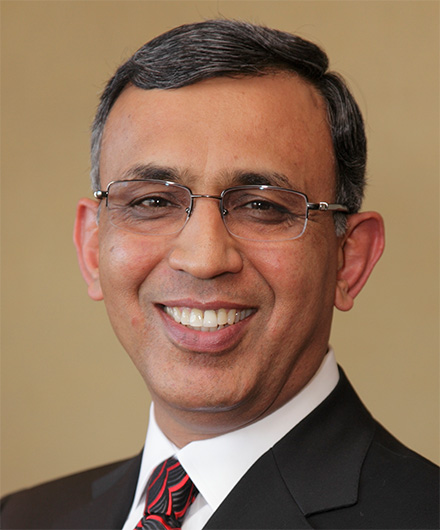
An undated mugshot of Dr. Omar Taimoor Atiq, a Pakistani-American oncologist, who has done significant social work for communities in the United States and Pakistan. Last year, he made headlines for writing off $650,000 in debt owed by his clinic's patients. (Photo courtesy: Dr. Omar Taimoor Atiq)
The oncologist set up the Arkansas Cancer Clinic in 1999 to treat patients from an underserved community of Pine Bluff. The clinic, which provided cancer treatment from the diagnostic stage to chemotherapy, merged with a local hospital last year in February after Atiq decided to devote more time to research work at a state university.
Around five years ago, Atiq started working at a medical center at the University of Arkansas for Medical Sciences, appointing two oncologists at his clinic to see patients in his absence. Eventually both left and Atiq had to make a decision:
“Either I could give full time to my clinic or stay at the university where I was doing some important work for the state,” Atiq said. “Ultimately, I thought it was necessary for me to stay at the university. That is when I decided to merge the clinic with the local hospital,.”
Despite his professional engagements, Atiq also remains actively involved in community development work not only in the US but also in Pakistan where he has been supporting various health and social initiatives, including projects launched by the Pakistan Human Development Fund (PHDF).
“The Fund is working on basic health care in rural areas where villagers are explained how to disinfect water,” the oncologist said. “The midwives are also trained under the same initiative to handle deliveries with sterilized instruments. At one point, we also agreed to focus on adult literacy, especially among women who play a vital role in bringing up children.”
People familiar with Atiq describe him as a patriotic Pakistani who cares a lot about his community back home in Pakistan.
“I first met Dr. Atiq in 2006, so I have known him for almost 14 years,” said Shoaib Kothawala, a Los Angeles-based Pakistani-American business tycoon and a major donor to the PHDF. “He is an exceptional human being who is very honest and dedicated to his profession. I also believe he is a very patriotic Pakistani who has done a great deal for the people of the two countries he embraces.”