VIENNA: AN Italian man of Turkish origin who claimed to have been tasked with killing public figures in Austria has been expelled from the country, his lawyer said Tuesday.
Feyyaz Ozturk, 53, turned himself in to the Austrian intelligence services last year.
According to former MP Berivan Aslan who is active on Kurdish issues, Ozturk had been charged with assassinating her and two others who had expressed views critical of Turkish President Recep Tayyip Erdogan.
“The authorities considered him to be an imminent danger to public security and he was taken to the Italian border before Christmas,” Ozturk’s lawyer Veronika Ujvarosi told AFP.
Prosecutors confirmed that they had opened an investigation against Ozturk in September and subsequently charged him with conducting “military espionage on behalf of a foreign state.”
He risks up to two years in jail if convicted.
Ozturk’s trial is scheduled for February 4, Vienna’s criminal court confirmed Tuesday.
According to local press reports, Ozturk had admitted to investigators that he gave false testimony to a Turkish court in a case which ended in the conviction of an employee at the US consulate in Istanbul last June on terror charges.
As Ozturk could no longer be held in pre-trial detention, authorities decided to expel him rather than allow him to remain on Austrian soil, Ujvarosi said.
“My client is well and he would like to return to Austria,” she said, adding that she had asked for a temporary lifting of his ban from Austria so that he can attend his trial.
Aslan told AFP this week that she was still under police protection, first extended to her when the plot allegations came to light last year.
Turkish authorities have vehemently denied any connection to Ozturk.
A neutral country which plays host to a wide range of international organizations, Austria has a reputation as a center of espionage.
However, allegations of plots such as that involving Ozturk have been rare.


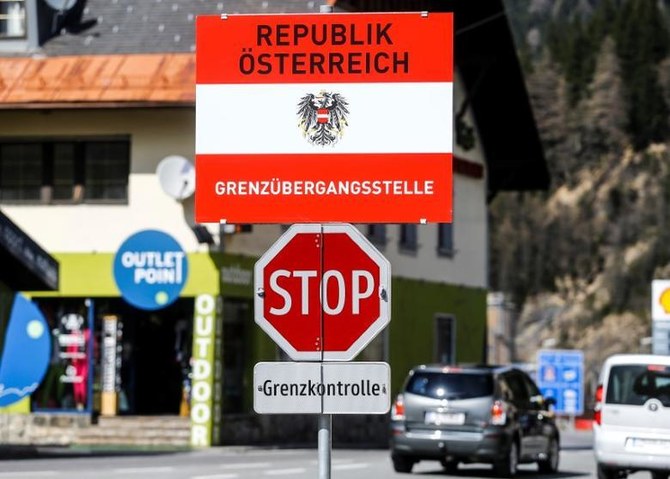
Austria expels alleged Turkish spy accused of assassination plots
https://arab.news/w29qc
Austria expels alleged Turkish spy accused of assassination plots

- According to former MP Berivan Aslan who is active on Kurdish issues, Ozturk had been charged with assassinating her and two others
- As Ozturk could no longer be held in pre-trial detention, authorities decided to expel him rather than allow him to remain on Austrian soil


Hungary to release 1.8 million barrels of crude oil from strategic reserves
- Croatia’s JANAF pipeline operator, however, said there was no need for Budapest to tap its reserves
- Hungary and Slovakia have been trying to secure supply since flows were halted on January 27
BUDAPEST: Hungary’s government will release about 1.8 million barrels of crude oil from its strategic reserves after a drone attack on the Druzhba pipeline late last month stopped oil flow, according to a government decree published late on Thursday.
Croatia’s JANAF pipeline operator, however, said there was no need for Budapest to tap its reserves after Hungary’s oil company MOL said on Friday JANAF must allow transit of Russian seaborne oil to Hungary and Slovakia during the Druzhba outage.
“At this moment, a significant quantity of non-Russian crude oil is being transported via JANAF’s pipeline for MOL Group, while three additional tankers carrying non-Russian oil, also for MOL Group, are on their way to the Omisalj Terminal,” JANAF said in a statement.
“There was no need to tap into (their) reserves since oil transport via the JANAF pipeline toward MOL’s refineries is being carried out continuously and without delays.”
Hungary and Slovakia, which have the only remaining refineries in the EU using Russian oil through Druzhba, have been trying to secure supply since flows were halted on January 27 following what Ukraine said was a Russian drone attack that damaged pipeline infrastructure.
Both countries have blamed Ukraine for the delay in restarting the flows for political reasons.
SCRAMBLE FOR CRUDE SUPPLIES
MOL is entitled to priority access to released crude oil reserves, and it will have access to the freed reserves until April 15 and has to return them by August 24, the Hungarian government decree said.
At the end of January, Hungary had enough crude oil and petroleum product reserves to cover 96 days, according to data on the Hungarian Hydrocarbon Stockpiling Association’s website.
As the two countries scramble to ensure supplies, MOL ordered tankers delivering Saudi, Norwegian, Kazakh, Libyan and Russian oil to supply its Hungarian and Slovak refineries and halted diesel deliveries to Ukraine earlier this week.
MOL said that first shipments were expected to arrive at the port of Omisalj in Croatia in early March. After that, it will take a further 5-12 days for the crude oil to reach its refineries.
The Slovak government has also declared an oil emergency situation and has pledged to release 1.825 million barrels of oil following a request from Slovakia’s Slovnaft refinery, which is owned by MOL.


