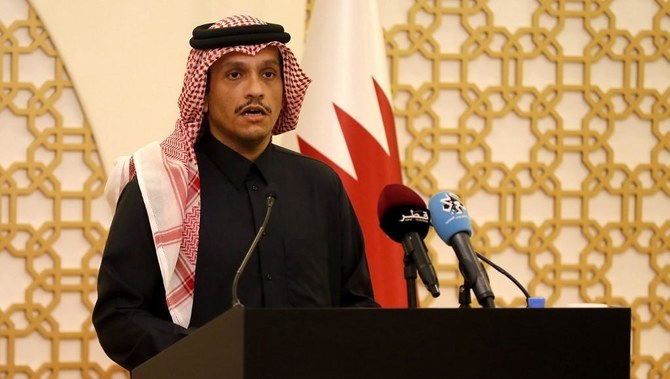
DUBAI: Qatar’s foreign minister has said that the country’s sovereign wealth fund could invest in Saudi Arabia and other Gulf states as diplomatic tensions ease following the AlUla agreement.
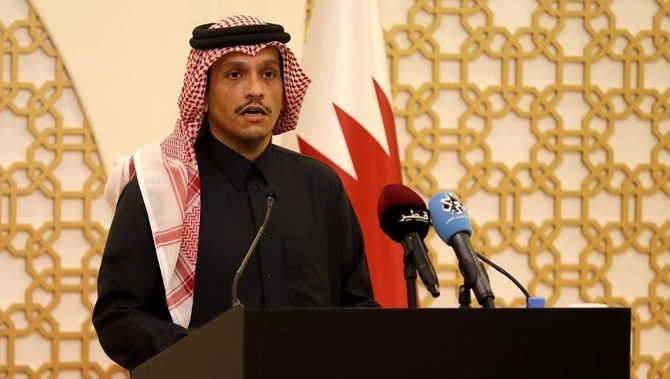
Sheikh Mohammed bin Abdulrahman Al-Thani, who is also chairman of the Qatar Investment Authority, told the Financial Times that “if there are opportunities that we see in the future and we see a continuation of the political will of the countries to engage, we are very open.”
He added: “The Qatar Investment Authority is an investment fund that takes its decisions based on business benefit and the feasibility of projects. I am sure that we saw some ambitious opportunities in the Kingdom of Saudi Arabia, and if we see opportunities there, the Qatar Investment Authority will certainly explore them.”
The Kingdom is keen to attract foreign investment backing Crown Prince Mohammed bin Salman’s ambitious plans to modernize the Saudi economy and overhaul its dependency on oil.
The minister said that Doha had agreed to suspend legal cases against Saudi Arabia and its allies, including lawsuits filed at the World Trade Organization and the International Court of Justice. “When it comes to the appropriate schedule, these legal cases should then be terminated,” he added.
He said that through the easing of tensions in the region, “every state is a winner.”
However, the minister warned that Qatar “will not change relations” with Iran and Turkey, in a sign that it has made few concessions after securing a deal with Saudi Arabia and its allies to end a bitter dispute between the rival Gulf states.
“Doha had agreed to cooperate on fighting against terrorism and transnational security with Saudi Arabia and three states that had imposed an embargo on Qatar,” he said, adding that “bilateral relationships are mainly driven by a sovereign decision of the country and national interest.
“That is why there is no effect on our relationship with any other country.” he said.
“We hope that things take the steps to come back to normal within a week from the signing.
“It will take some steps among the countries to rebuild the relationship. There will be differences and some pending issues that will be discussed bilaterally between the countries, as each country has a different set of disagreements with Qatar,” the minister added.


![]()
Qatar FM: Sovereign fund could invest in Saudi Arabia as tensions ease
Short Url
https://arab.news/z8faz
Qatar FM: Sovereign fund could invest in Saudi Arabia as tensions ease
- The minister said that Doha had agreed to suspend legal cases against Saudi Arabia and its allies
- He said that through the easing of tensions in the region, “every state is a winner”

Latest updates


© 2026 SAUDI RESEARCH & PUBLISHING COMPANY, All Rights Reserved And subject to Terms of Use Agreement.