PESHAWAR: Students at Hazara University in Pakistan’s northwestern city of Mansehra have said the institution’s newly issued dress code reflects an ‘extreme level of conservatism,’ after a notification released by the institution’s academic council last week.
The notification issues a ban on certain items of clothing, including tight jeans, makeup, jewellery, T-shirts and heavy hand bags for female students and fitted jeans, shorts, slippers, long hair and jewellery for its male students and faculty members.
The university, in the socially conservative province of Khyber Pakhtunkhwa where segregation between the sexes is common, has more than 10,000 male and female students studying in different faculties at the varsity.
Irfanullah Khan, a former MPhil student at the varsity, told Arab News on Sunday that the move would go on to create a stifling learning environment.
“Such restrictions reflect an extreme level of conservatism,” Khan said.
“In this era, the university needs to improve its rank in global rankings instead of wasting energy on petty issues,” he said.
Shahid Rabbani, a public relations officer at Hazara University, said the decision had been taken following the directives of the Khyber Pakhtunkhwa governor who is also the chancellor of the varsity.
“In light of the chancellor’s directives, the university has introduced a new dress code which is basically meant to bridge the class difference among students of different social classes,” Rabbani told Arab News on Sunday.
The copy of the notification viewed by Arab News said that female students were recommended to wear abayas, scarves and the traditional 'shalwar kameez.'
A female student who declined to be named fearing backlash from the administration, said most students viewed the new notification as a “strange development.”
“We are university students, and I think every person (already) knows her/ his respect well,” she said.
“The dress code restrictions are unnecessary and the university should focus on curricular activities to improve the quality of education instead,” she added.
But Rabbani said the new dress code would lead to greater harmony among students, which would remove the perception of “status” and create a “decent environment.”
Ibrash Pasha, an educationist, said “grooming students” would provide the country with a generation able to take on emerging challenges.
“Education institutions should focus on grooming students...to deal with emerging challenges,” he said.
The country’s universities (also) need to take measures to control spiralling cases of harassment, he added.
Tehseenullah Khan, a student at the university, said that the university should have introduced reforms to facilitate the students in improving their learning skills.
“If they want to facilitate poor students through this naïve notification, then they should announce more scholarships and make education free for all,” he said.
Another female student who declined to be named said there was already segregation in place, and that it “isn’t a good idea,” to define the characters of students by the way they dressed.
“Our university already has in place restrictions on students’ gathering and it isn’t a good idea to recognize someone’s character by his or her clothes,” she said.
“Girls and boys are already not allowed by the university to sit together within university premises,” she added.


![]()

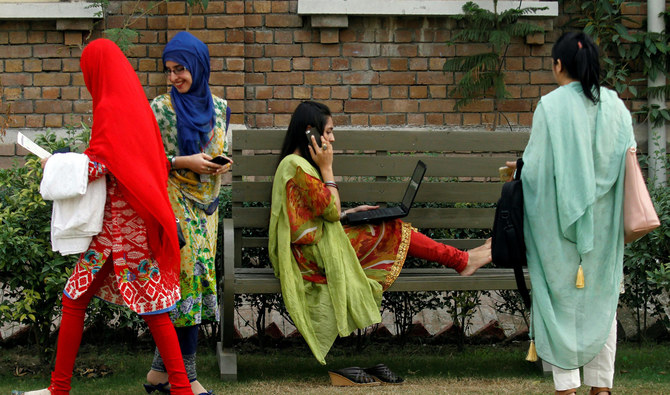
In Pakistan’s northwest, university students lament 'extreme conservatism' in new dress-code
Short Url
https://arab.news/zme23
In Pakistan’s northwest, university students lament 'extreme conservatism' in new dress-code
- A ban issued on tight jeans, makeup, jewellery, T-shirts and heavy hand bags for female students
- Decision taken following directives of Khyber Pakhtunkhwa governor who is also chancellor of the varsity
Latest updates


© 2026 SAUDI RESEARCH & PUBLISHING COMPANY, All Rights Reserved And subject to Terms of Use Agreement.