



SANGHAR, SINDH: In the heart of Pakistan’s rural south, culinary innovation and social media have turned a small-town fish chef into a celebrity, attracting food writers and connoisseurs to the region from all over the country-- leading him to consider opening a fish stall in the Middle East.
Sajji, a way of slow roasting meat which is popular in the Sanghar district of Sindh and in neighboring Balochistan, is traditionally reserved for lamb and goat dishes, but Abdul Jabbar Mallah tried it on rohu, a freshwater fish species common to the region.
“I can make 20 fish dishes. However, people outside Sanghar didn’t know me. Due to social media, people not only in Pakistan but also living abroad have started knowing me,” Mallah told Arab News last week.
“Recently, I have started thinking about trying my luck in the Middle East,” he said. “Had there been no publicity through social media, it would have not become possible.”
Mallah has been cooking fish for two decades, but says it was only two years ago, when travel vloggers began visiting his stall, that his ‘fish sajji’ became a culinary magnet.
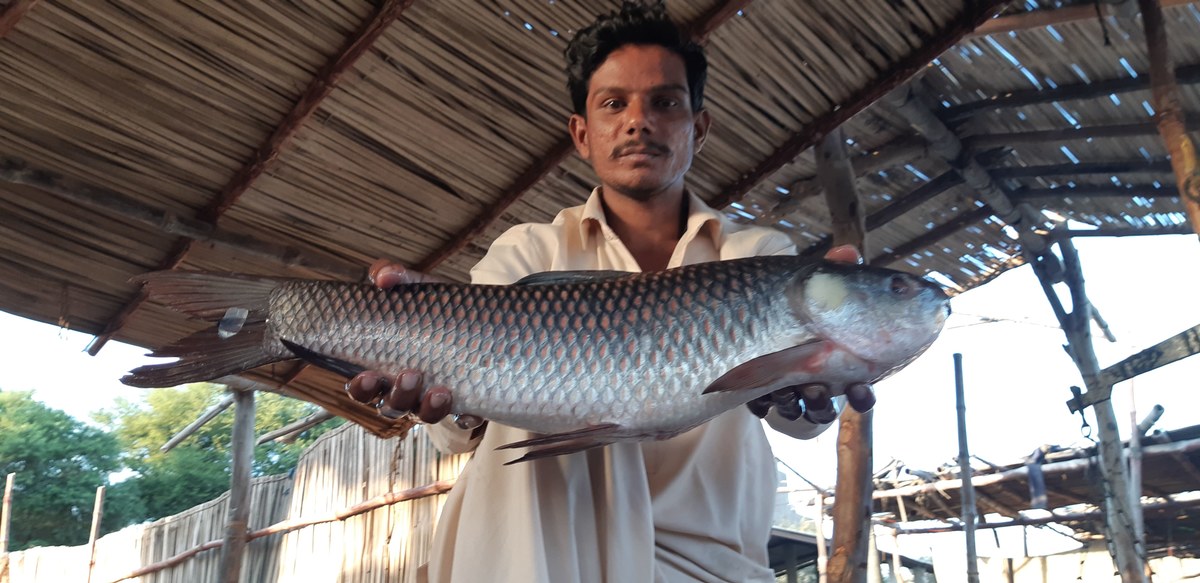
Fisherman vendor Piyar Ali Mallah poses with a ‘Rohu’ fish at a fish outlet in Sanghar, Sindh on January 08, 2021 (AN photo by Zulfiqar Kunbhar)
“Fish sajji was kind of my invention. It was the unique way of cooking fish that first drew attention on social media,” he said.
On New Year’s Eve, travel bloggers arrived in Sanghar for a tourism event in Baqaar Lake Resort, a recreational point and gateway to Achro Thar, the white desert of Sindh. Among them was Karachi-based traveler Maria Soomro.
“We have heard a lot about famous sajji, therefore we stopped here,” Soomro told Arab News. “It is an amazing place.”
Muhammad Amer Butt, a Lahore-based manager of a multinational company, told Arab News that he had been around the world, but had never tasted fish like Mallah’s sajji.
“First time I tasted it was two years ago when I was in Hyderabad for a business assignment,” Butt said.
“My host specially ordered sajji fish from Sanghar which is 100 km away. Since then, whenever I visit Sindh, I taste (Mallah’s) sajji every time,” he said.
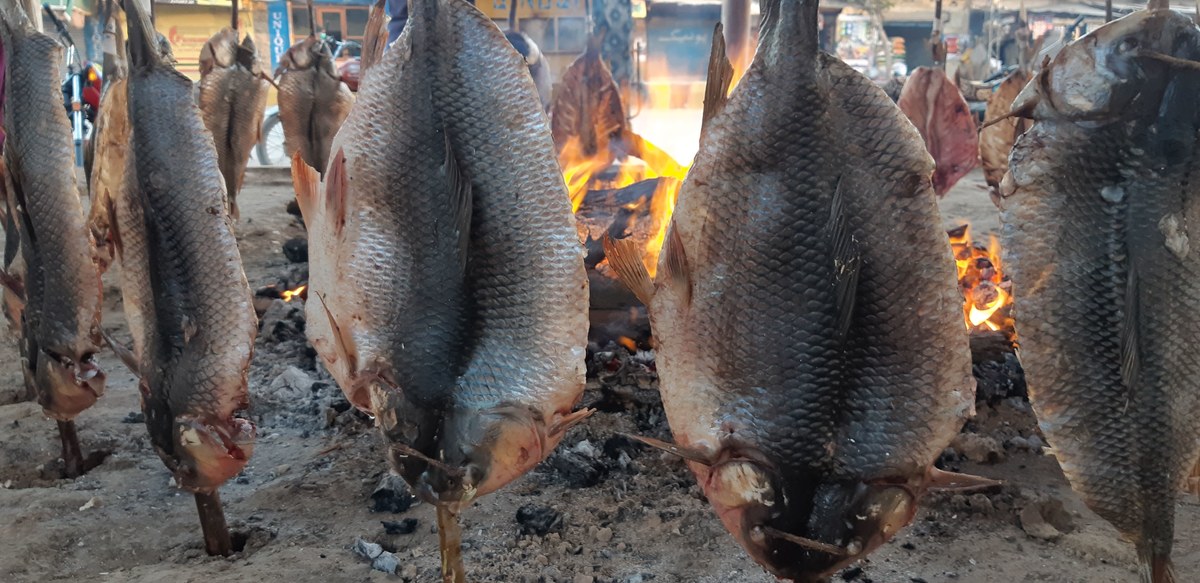
Rohu fish left for sajji roasting at an outlet in Sanghar, Sindh on January 08, 2021. (AN photo by Zulfiqar Kunbhar)
“I have come to the conclusion that this sajji is the best fish offered anywhere in Pakistan. It is very light to eat. Its flavour makes you want to taste it again and again.”
Pakistanis who live outside of Sindh order Mallah sajji to take away. Wrapped in aluminum foil, it will be good for ten hours or so, Mallah said.
Pakistanis living abroad had also encouraged him to open a restaurant in other countries, he continued, because the demand for South Asian food is high in countries with big Pakistani expat populations, like Canada, Saudi Arabia and the United Arab Emirates.
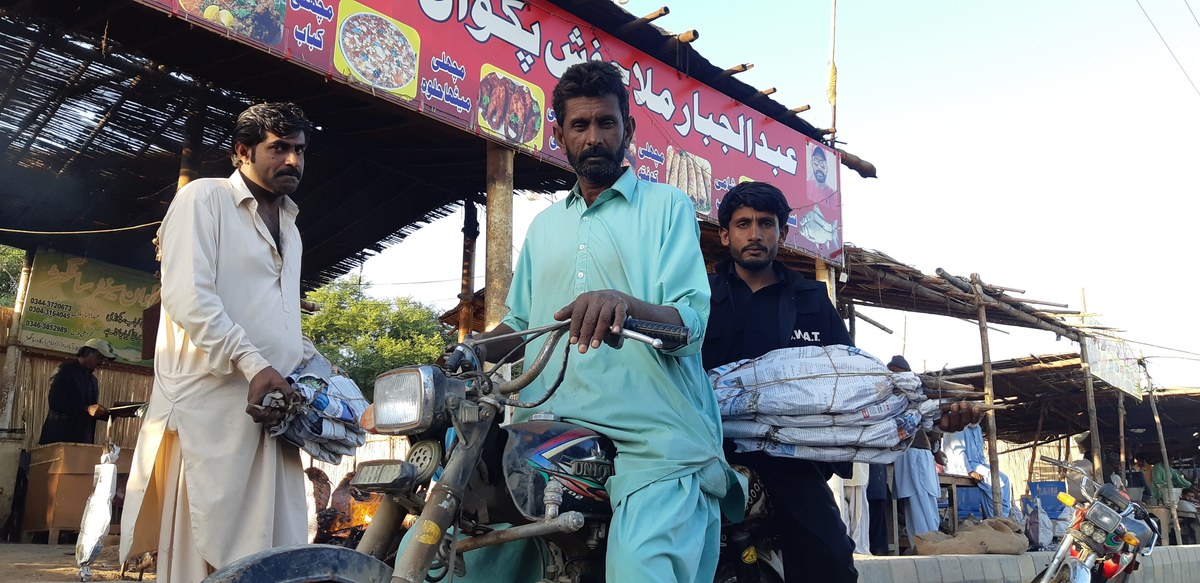
Chef Abdul Jabbar Mallah readies to supply sajji fish at his fish outlet in Sanghar, Sindh on January 08, 2021. (AN photo by Zulfiqar Kunbhar)
Amir Rajpoot, a Sanghar-based influencer, said foodies on social media were always looking out for his food posts.
“It is interesting...that whenever I post sajji posts on my Facebook account, unknown people contact me as they are curious about this unique style of fish cooking.”
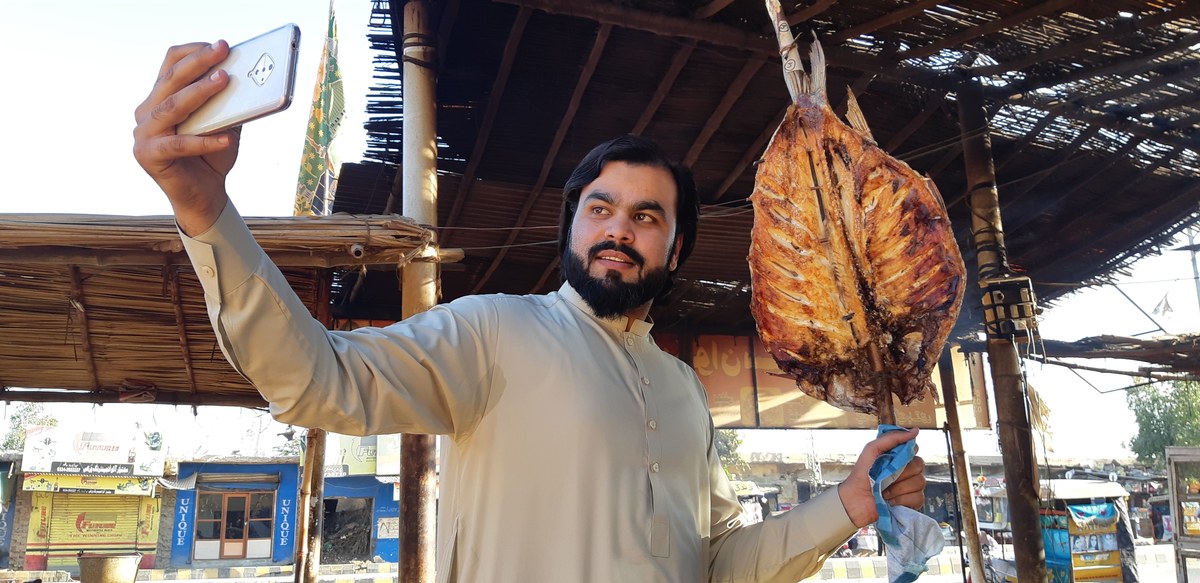
Amir Rajpoot, a Sanghar-based social media influencer takes a selfie with Abdul Jabbar Mallah’s famous fish sajji in Sanghar, Sindh on January 08, 2021 (AN photo by Zulfiqar Kunbhar)
Food bloggers and vloggers from Quetta too were curious about Mallah’s cooking techniques and documented them in detail.
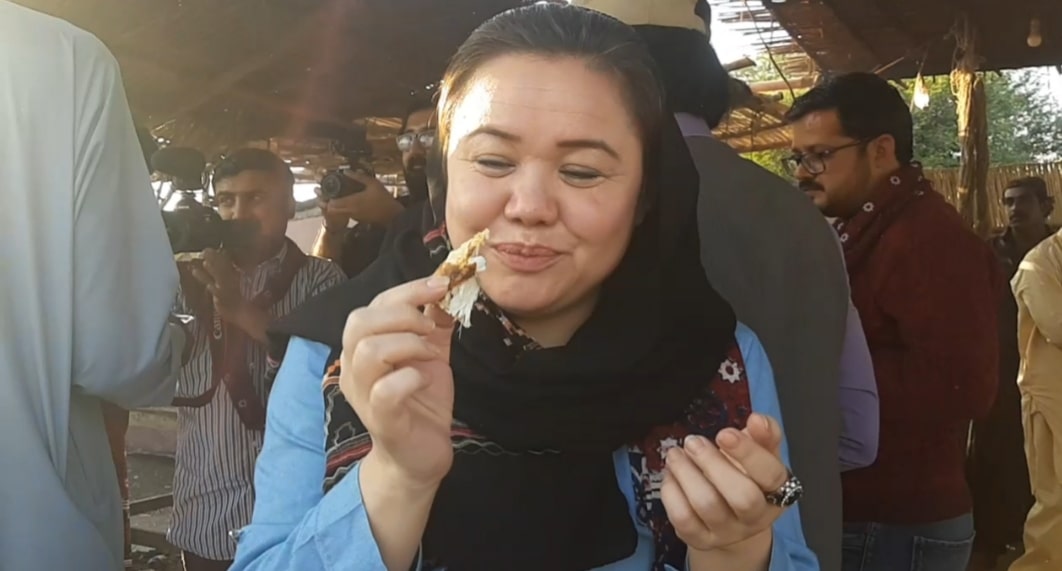
Shazia Khan, an Instagramer from Quetta, takes a bite out of Abdul Jabbar Mallah’s fish sajji on December 31, 2020 at the Jabbar food outlet in Sanghar, Sindh (AN photo by Zulfiqar Kunbhar)
After cleaning the fish and marinating it with salt, Mallah skewers it on wooden rods. The rods are stuck into the ground around a bonfire and left to roast for two hours. Then comes a special ingredient: sweet and sour tamarind chutney. It is used for that extra kick, Mallah said.
For his sajji, Mallah uses rohu, locally known as kuriro, a large carp fish species that measures half a meter on average. Usually, he said, he selects fish that weigh between two to three kg.
“People invite me especially for cooking on wedding parties, from all over Sindh, Balochistan and Punjab areas nearer to Sindh,” he said.
Another happy customer, Raja Sunil Kumar from Hyderabad, said he knew Mallah from social media and had visited his stall when he was in Sanghar.
“I am taking 11 kg of fish for my family and friends,” he said.
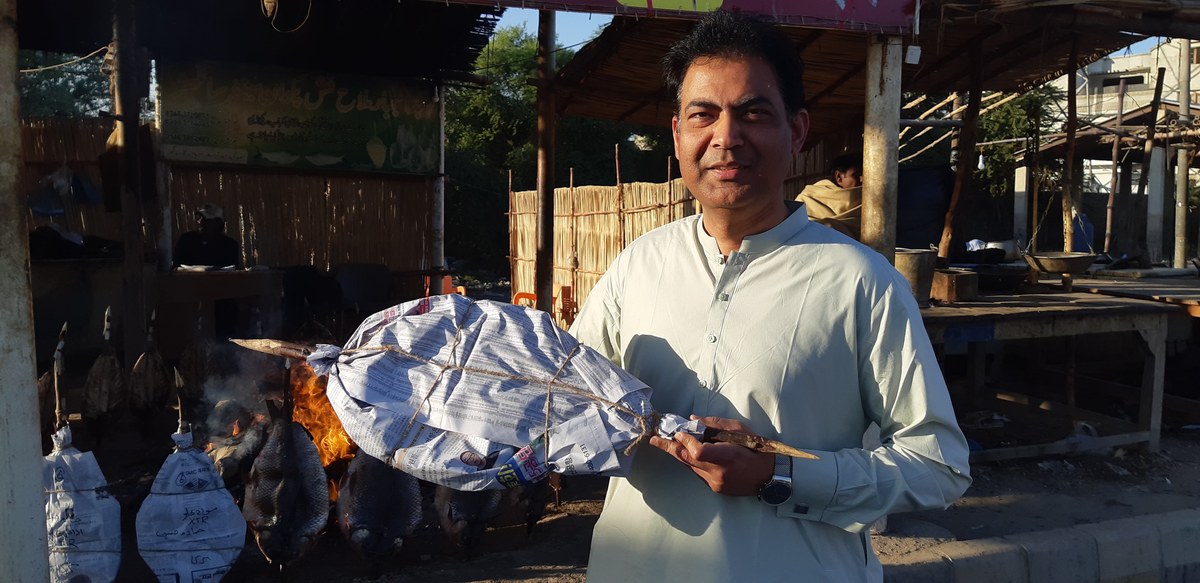
Raja Sunil Kumar, a Hyderabad-based takeaway customer poses with sajji wrapped up in newspaper at Abdul Jabbar Mallah’s fish outlet in Sanghar, Sindh on January 08, 2021 (AN photo by Zulfiqar Kunbhar)


