Mashreq Bank to relocate 47% employees to India, Pakistan and Egypt to rationalize expenses

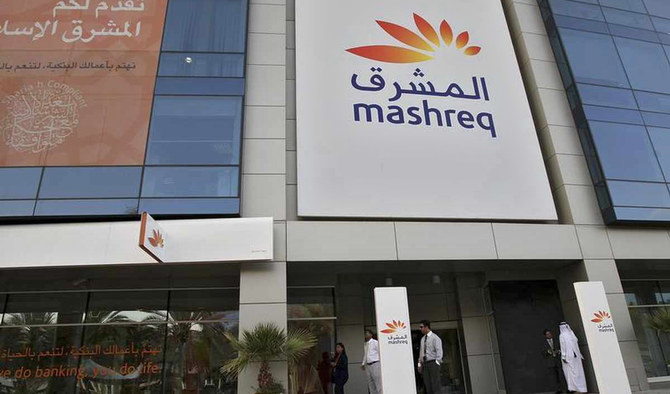
People walk out of a branch of Mashreq bank at Dubai Internet City on Feb. 5, 2012. (REUTERS/File)
Short Url
Updated 02 March 2021
Follow

Mashreq Bank to relocate 47% employees to India, Pakistan and Egypt to rationalize expenses

  • The bank’s decision is expected to immediately impact the lives of about 900 staff members, most of them Indian and Pakistani nationals
  • The relocation plan is likely to increase Pakistan’s remittances and support the local economy, say local financial analysts

KARACHI: One of the largest privately owned banks in the United Arab Emirates has decided to move about 47 percent of its UAE-based employees to India, Pakistan and Egypt to cut down expenses and transform itself into a global digital bank, said a financial expert who works with the organization. 

Mashreq Bank internally announced its relocation plan on Monday, saying it would be implemented in three phases. 

“The bank, which is owned by Al-Ghurair Group, will relocate 47 percent of its staff from the UAE to India, Pakistan and Egypt on the basis of their nationalities,” the bank employee, who did not want to be named since the decision has not been made public, confirmed while talking to Arab News from Dubai on telephone. 

According to the organizational data compiled in September 2019, the total number of employees at Mashreq and its subsidiaries is about 5,000.

The decision, which remained under consideration for a few months, is likely to impact around 900 employees immediately. Most of these staff members belong to India and Pakistan. 

Mashreq was the first bank in the UAE that introduced electronic modes of banking such as ATM cash dispensers, debit and credit cards, and consumer loans.

It also became the first bank in the Arab country to offer chip-based credit cards, digital point-of-sale readers, and investment funds directly linked to global stock markets. 

Industry experts say the bank’s decision will not only help its management save expenses but also give it an opportunity to practice virtual banking at a bigger scale. 

“Mashreq wants to present itself as a model of digital banking to the world,” said the employee. “It wants to operate as a virtual bank that does not require a lot of real estate and investment. The bank was also the first to introduce the concept of digital banking and it seems that its latest move is a continuation of the same vision.” 

The financial results posted on Mashreq’s website show a net profit of AED450 million in the first quarter of 2020 and AED85 million in the second quarter.

The bank posted a loss of AED183 million in the third quarter. 

Financial experts in Pakistan maintain that Mashreq’s move will benefit the country’s economy in several ways. 

“It will increase the amount of remittances. Besides, the relocated employees will also be spending in the local context that will support their home economy,” Samiullah Tariq, Head of Research at the Pakistan Kuwait Investment, commented. 

Under the current economic situation, many banks have already shifted their back offices to other locations. However, Mashreq’s back office will continue to remain in the UAE. 

Last November, Pakistan signed $370 million Syndicated Term Loan and Murabaha Financing Facilities with Dubai-based Emirates NBD. Mashreq Bank was also part of the syndicate along with other companies.


IMF hails Pakistan privatization drive, calls PIA sale a ‘milestone’

Updated 10 January 2026
Follow

IMF hails Pakistan privatization drive, calls PIA sale a ‘milestone’

  • Fund backs sale of national airline as key step in divesting loss-making state firms
  • IMF has long urged Islamabad to reduce fiscal burden posed by state-owned entities

KARACHI: The International Monetary Fund (IMF) on Saturday welcomed Pakistan’s privatization efforts, describing the sale of the country’s national airline to a private consortium last month as a milestone that could help advance the divestment of loss-making state-owned enterprises (SOEs).

The comments follow the government’s sale of a 75 percent stake in Pakistan International Airlines (PIA) to a consortium led by the Arif Habib Group for Rs 135 billion ($486 million) after several rounds of bidding in a competitive process, marking Islamabad’s second attempt to privatize the carrier after a failed effort a year earlier.

Between the two privatization attempts, PIA resumed flight operations to several international destinations after aviation authorities in the European Union and Britain lifted restrictions nearly five years after the airline was grounded following a deadly Airbus A320 crash in Karachi in 2020 that killed 97 people.

“We welcome the authorities’ privatization efforts and the completion of the PIA privatization process, which was a commitment under the EFF,” Mahir Binici, the IMF’s resident representative in Pakistan, said in response to an Arab News query, referring to the $7 billion Extended Fund Facility.

“This privatization represents a milestone within the authorities’ reform agenda, aimed at decreasing governmental involvement in commercial sectors and attracting investments to promote economic growth in Pakistan,” he added.

The IMF has long urged Islamabad to reduce the fiscal burden posed by loss-making state firms, which have weighed public finances for years and required repeated government bailouts. Beyond PIA, the government has signaled plans to restructure or sell stakes in additional SOEs as part of broader reforms under the IMF program.

Privatization also remains politically sensitive in Pakistan, with critics warning of job losses and concerns over national assets, while supporters argue private sector management could improve efficiency and service delivery in chronically underperforming entities.

Pakistan’s Cabinet Committee on State-Owned Enterprises said on Friday that SOEs recorded a net loss of Rs 122.9 billion ($442 million) in the 2024–25 fiscal year, compared with a net loss of Rs 30.6 billion ($110 million) in the previous year.