

Oman begins implementing value-added tax in April, excluding 94 food items

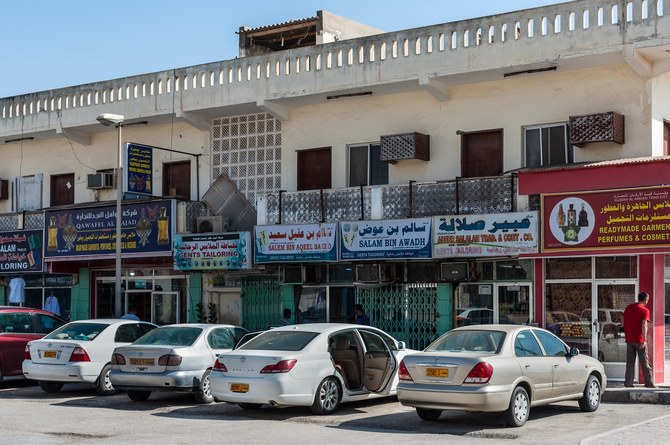
Oman’s Ministry of Finance stressed that the implementation of this tax is estimated to generate over $780m, thus helping fill the budget deficit.  (File/Shutterstock)
Short Url
Updated 07 January 2021
Follow

Oman begins implementing value-added tax in April, excluding 94 food items

  • Oman’s Ministry of Finance stressed that the implementation of this tax is estimated to generate over $780m, thus helping fill the budget deficit
  • Registration to the Tax Authority becomes compulsory if the taxpayer’s annual supplies stand at $100,000 or more or are expected to reach this ceiling

The Tax Authority today issued three executive decisions pertaining to the implementation of the Value Added Tax (VAT), which will enter enforcement stage by April 16, 2021, according to the Oman News Agency, which has revealed that 94 mostly food items have been exempted from tax.   

Oman’s Ministry of Finance stressed that the implementation of this tax is estimated to generate over $780m, thus helping fill the budget deficit. 

The first decision specified that registration to the Tax Authority becomes compulsory if the taxpayer’s annual supplies stand at $100,000 or more or are expected to reach this ceiling. 

The decision set the ceiling of voluntary registration to the Tax Authority at $50,000 and states that, accordingly, the taxpayer may apply for voluntary registration if the applicant’s annual supplies stand at, or cross or expected to go beyond the value of $50,000. 

Determining ceilings for compulsory and optional registration comes within the context of the provisions of the GCC Unified VAT Agreement, which the Sultanate signed in November 2016. 

The second decision states that taxpayers whose value of annual supplies crosses or is expected to cross $2,600 have to register to the Tax Authority during the period from Feb.1 2021 to March 15, 2021. Accordingly, the VAT for this segment becomes applicable from April 16, 2021. 

As for taxpayers whose value of supplies crosses or is expected to cross $1,300, their registration begins from April and the deadline of registration will be July 1, 2021. The deadlines of lower segments follow a similar slope (per volume of supplies) till the minimum level of $100,000 worth supplies. 

The decision grants taxpayers a right to register voluntarily to the Tax Authority with effect from Feb. 1, 2021 in case the value of their supplies crosses or is expected to cross $50,000. in order to ensure that the small and medium-sized business sectors that wish to register the VAT system are not affected, and can take advantage of the generated benefits, such as the refund of the tax right bore on their proceeds. 

The third decision specified the type of foodstuff exempted from the VAT. The list consists of 94 customs tariff items to be exempted from the VAT, namely meats, fish, poultry, dairy products, fresh eggs, vegetables, fruits, coffee beans, tea, cardamom, grains, olive oil, sugar, baby food products, bread, bottled water and table salt.



Lebanese social entrepreneur Omar Itani recognized by Schwab Foundation

Updated 53 min 28 sec ago
Follow

Lebanese social entrepreneur Omar Itani recognized by Schwab Foundation

  • FabricAID co-founder among 21 global recipients recognized for social innovation

DAVOS: Lebanon’s Omar Itani is one of 21 recipients of the Social Entrepreneurs and Innovators of the Year Award by the Schwab Foundation for Social Entrepreneurship.

Itani is the co-founder of social enterprise FabricAID, which aims to “eradicate symptoms of poverty” by collecting and sanitizing secondhand clothing before placing items in stores in “extremely marginalized areas,” he told Arab News on the sidelines of the World Economic Forum in Davos, Switzerland.

With prices ranging from $0.25 to $4, the goal is for people to have a “dignified shopping experience” at affordable prices, he added.

FabricAID operates a network of clothing collection bins across key locations in Lebanon and Jordan, allowing people to donate pre-loved items. The garments are cleaned and sorted before being sold through the organization’s stores, while items that cannot be resold due to damage or heavy wear are repurposed for other uses, including corporate merchandise.

Since its launch, FabricAID has sold more than 1 million items, reached 200,000 beneficiaries and is preparing to expand into the Egyptian market.

Amid uncertainty in the Middle East, Itani advised young entrepreneurs to reframe challenges as opportunities.

“In Lebanon and the Arab world, we complain a lot,” he said. Understandably so, as “there are a lot of issues” in the region, resulting in people feeling frustrated and wanting to move away. But, he added, “a good portion of the challenges” facing the Middle East are “great economic and commercial opportunities.”

Over the past year, social innovators raised a combined $970 million in funding and secured a further $89 million in non-cash contributions, according to the Schwab Foundation’s recent report, “Built to Last: Social Innovation in Transition.”

This is particularly significant in an environment of geopolitical uncertainty and at a time when 82 percent report being affected by shrinking resources, triggering delays in program rollout (70 percent) and disruptions to scaling plans (72 percent).

Francois Bonnici, director of the Schwab Foundation for Social Entrepreneurship and a member of the World Economic Forum’s Executive Committee, said: “The next decade must move the models of social innovation decisively from the margins to the mainstream, transforming not only markets but mindsets.”

Award recipients take part in a structured three-year engagement with the Schwab Foundation, after which they join its global network as lifelong members. The program connects social entrepreneurs with international peers, collaborative initiatives, and capacity-building support aimed at strengthening and scaling their work.