

Pakistan telecoms regulator launches portal for public to report ‘illegal’ content for blocking

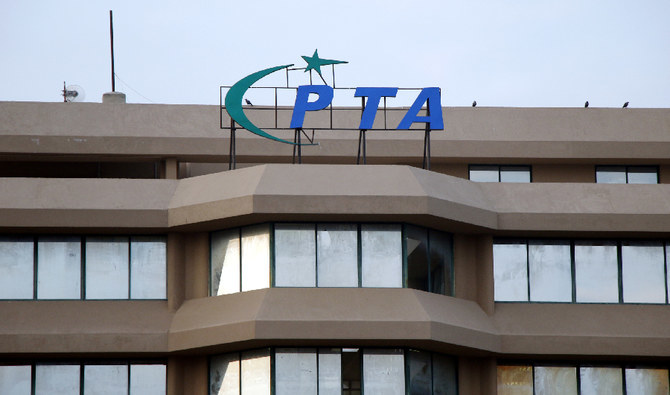
A view of Pakistan Telecommunication Authority (PTA) building in Islamabad, Pakistan, January 22, 2020. (AN photo)
Short Url
Updated 05 January 2021
Follow

Pakistan telecoms regulator launches portal for public to report ‘illegal’ content for blocking

  • Unlawful to share online content against integrity, security or defense of Pakistan or against public order, PTA says 
  • Digital rights activists say Pakistan, using new digital legislation, has sought to rein in free expression on the Internet in recent months

ISLAMABAD: Pakistan Telecommunication Authority on Tuesday launched a portal where members of the public could report for blocking online content that was “against Pakistan’s defense, integrity and security or public order.”

Digital rights activists say Pakistan, using new digital legislation, has sought to rein in free expression on the Internet in recent months, blocking or ordering the removal of content deemed immoral as well as critical of the state.

Last November, Pakistan approved new rules for regulating cyberspace that rights groups and Internet companies like Google, Facebook, Yahoo and eBay have said could be used to stifle dissent and free speech. Under the new regulations, social media companies would be obliged to help law enforcement agencies access data and to remove online content deemed unlawful. Companies that do not comply with the rules risk being blocked in Pakistan.

“Be a responsible Pakistani,” PTA said on Twitter. “Uploading/sharing of content online against the integrity, security or defense of Pakistan or against public order is unlawful. Report such links for blocking to PTA at: https://complaint.pta.gov.pk/RegisterComplaint.aspx 

Many journalists have recently complained of receiving notices from the cybercrime wing of the Federal Investigation Agency for social media posts that “defamed” the army or the government. 

Last October, Pakistan’s telecommunications regulator announced it had banned TikTok over failing to remove “immoral” content from its platform. The ban was subsequently lifted after a court order. 

In August, Pakistan blocked five dating apps, namely Tinder, Tagged, Skout, Grinder and SayHi. On July 21, PTA said it had banned the Singaporean live-streaming app Bigo over “immoral, obscene and vulgar content” and issued a last warning to Tiktok for “similar” reasons. Bigo was subsequently unbanned. The hugely popular online game PUBG also remained banned in Pakistan through last July. 


Pakistan reports current account surplus in Jan. owing to improved trade, remittances

Updated 4 sec ago
Follow

Pakistan reports current account surplus in Jan. owing to improved trade, remittances

  • Pakistan’s exports crossed the $3 billion mark in Jan. as the country received $3.5 billion in remittances
  • Last month, IMF urged Pakistan to accelerate pace of structural reforms to strengthen economic growth

ISLAMABAD: Pakistan recorded a current account surplus of more than $120 million in January, the country’s finance adviser said on Tuesday, attributing it to improved trade balance and remittance inflows.

Pakistan’s exports rebounded in January 2026 after five months of weak performance, rising 3.73 percent year on year and surging 34.96 percent month on month, according to data released by the country’s statistics bureau.

Exports crossed the $3 billion mark for the first time in January to reach $3.061 billion, compared to $2.27 billion in Dec. 2025. The country received $3.5 billion in foreign remittances in Jan. 2026.

Khurram Schehzad, an adviser to the finance minister, said Pakistan reported a current account surplus of $121 million in Jan., compared to a current account deficit of $393 million in the same month last year.

“Improved trade balance in January 2026, strong remittance inflows, and sustained momentum in services exports (IT/Tech) continue to reinforce the country’s external account position,” he said on X.

Pakistan has undergone a difficult period of stabilization, marked by inflation, currency depreciation and financing gaps, and international rating agencies have acknowledged improvements after Islamabad began implementing reforms such as privatizing loss-making, state-owned enterprises (SOEs) and ending subsidies as part of a $7 billion International Monetary Fund (IMF) loan program.

Late last month, the IMF urged Pakistan to accelerate the pace of these structural reforms to strengthen economic growth.

Responding to questions from Arab News at a virtual media roundtable on emerging markets’ resilience, IMF’s director of the Middle East and Central Asia Jihad Azour said Islamabad’s implementation of the IMF requirements had been “strong” despite devastating floods that killed more than 1,000 people and devastated farmland, forcing the government to revise its 4.2 percent growth target to 3.9 percent.

“What is important going forward in order to strengthen growth and to maintain the level of macroeconomic stability is to accelerate the structural reforms,” he said at the meeting.

Azour underlined Pakistan’s plans to privatize some of the SOEs and improve financial management of important public entities, particularly power companies, as an important way for the country to boost its capacity to cater to the economy for additional exports.

“This comes in addition to the effort that the authorities have made in order to reform their tariffs, which will allow the private sector of Pakistan to become more competitive,” the IMF official said.