


DUBAI: The UAE on Sunday recorded 1,590 new coronavirus cases and five virus-related deaths.
Officials from the Ministry of Health and Prevention (MoHAP) said the total number of cases since the pandemic began had reached 213,231. The death toll is 679.
It was also announced that 1,609 people had recovered from the virus in the past 24 hours. The total number of recoveries is 189,709.
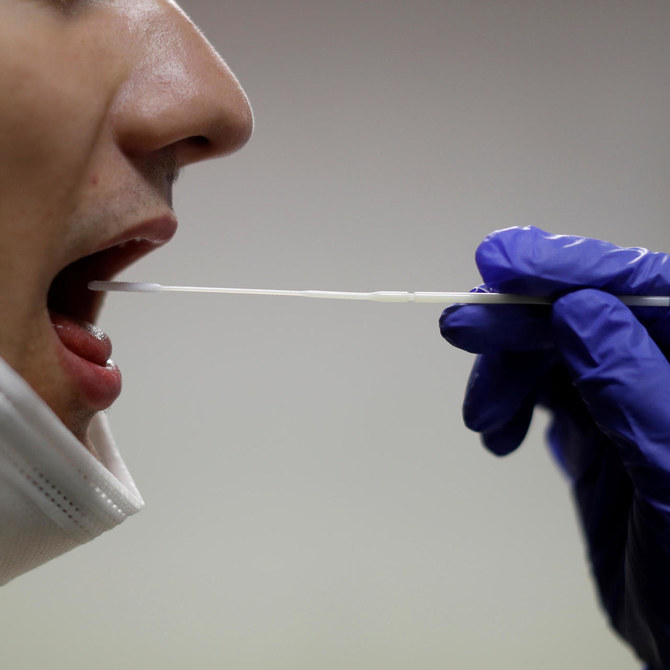
Officials at the Abu Dhabi Public Health Center (ADPHC), the Department of Education and Knowledge (ADEK), and the Biogenics Laboratory, a member of G42 — one of the leading artificial intelligence companies — discussed efforts to develop rapid testing methodologies that reduce burdens on school children and their families, including conducting COVID-19 saliva tests, which produce fast and accurate results and are more child-friendly.
مسؤولون في مركز أبوظبي للصحة العامة ودائرة التعليم والمعرفة ومختبر بيوجينكس، إحدى شركات مجموعة "جي 42"، يتحدثون عن جهود تطوير منهجيات فحوصات سريعة تخفف الأعباء على أطفال المدارس وعائلاتهم، ومنها إجراء فحوصات "كوفيد-19" باستخدام اللعاب. pic.twitter.com/ItAWXANR4L
— مكتب أبوظبي الإعلامي (@admediaoffice) January 3, 2021
The three bodies have already performed saliva testing for more than 2,000 children in Abu Dhabi schools, “in order to adopt effective and advanced examination methodologies for COVID-19 and (for) maintaining a healthy learning environment.”
“Saliva testing was offered for students aged four to 12 across 25 schools” in December, the Abu Dhabi media office said, adding that “the rollout comes after completing phase one of saliva testing in October.”
Tariq Al-Ameri, director of the Licensing and Education Compliance Department at ADEK, said: “The health and safety of the school community in Abu Dhabi remains our top priority, and in line with our efforts to continue maintaining a healthy environment in private and charter schools in the emirate of Abu Dhabi, we were keen to conduct periodic COVID-19 checks for all school personnel as of the beginning of the academic year, while requiring all students over the age of 12 to submit a negative test result before returning to school.”
Ashish Koshy, CEO of G42 Healthcare, said: “Regular COVID-19 checks have become a part of our lives, and we at G42 Healthcare and Biogenix Labs are eager to continue advancing additional innovation in COVID-19 testing for the wider community.”
Meanwhile, Abu Dhabi Department of Economic Development said it has permitted licensed restaurants, cafes and tourist service facilities across the emirate to provide shisha (hookah) services, and that the move conformed with precautionary measures to reduce the spread of COVID-19.
Elsewhere, Kuwait reported 269 new coronavirus cases, raising the total number to 151,343. The death toll remained at 937 after no coronavirus-related deaths were reported in the previous 24 hours.
تعلن #وزارة_الصحة عن تأكيد إصابة 269 حالة جديدة، وتسجيل 281 حالة شفاء، ولم تسجل أي حالة وفاة جديدة بـ #فيروس_كورونا_المستجدّ COVID-19 ، ليصبح إجمالي عدد الحالات 151,343 حالة pic.twitter.com/fhk2O0K3S5
— وزارة الصحة - الكويت (@KUWAIT_MOH) January 3, 2021
Oman’s Health Ministry said that its total number of cases had reached 129,404 and the death toll was 1,501.
#Statement No. 258
January 3, 2021 pic.twitter.com/kcwcW3bmOw— وزارة الصحة - عُمان (@OmaniMOH) January 3, 2021
In Bahrain, zero deaths was reported, keeping the death toll to 352, while 294 new infected cases were confirmed.
Out of 10515 COVID-19 tests carried out on 3 January 2021, 294 new cases have been detected among 149 expatriate workers, 127 new cases are contacts of active cases, and 18 are travel related. There were 128 recoveries from #COVID19, increasing total recoveries to 90686 pic.twitter.com/6DnX4TDcT5
— وزارة الصحة | مملكة البحرين (@MOH_Bahrain) January 3, 2021


